Politics
Johnson Touts $17.6B Proposed Budget for 2027: ‘Let Us Plant the Seeds of a Fair Chicago’
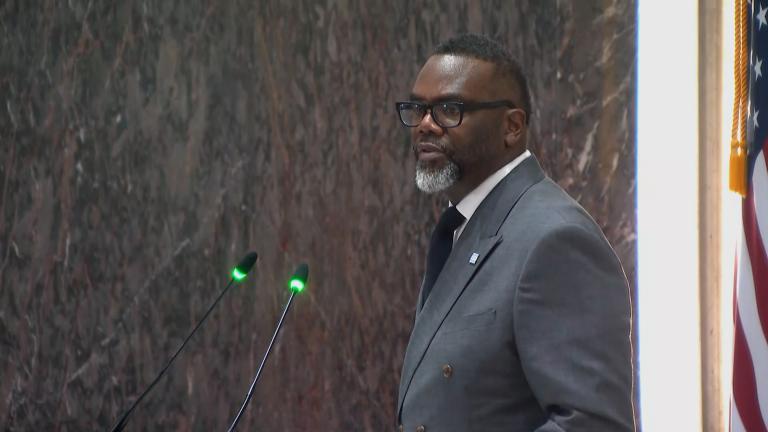
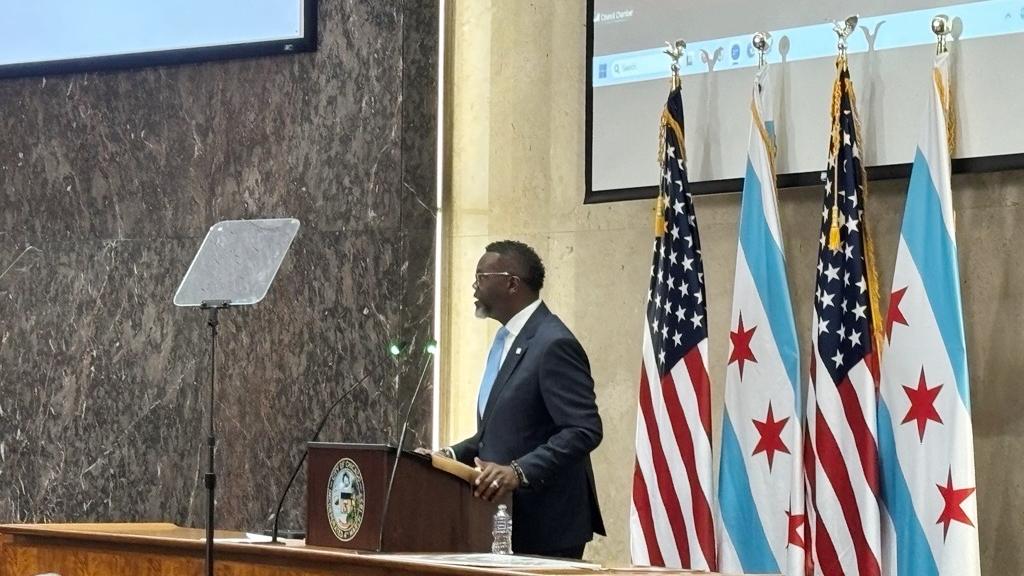 Chicago Mayor Brandon Johnson delivers his budget address on Oct. 21, 2026. (Heather Cherone / WTTW News)
Mayor Brandon Johnson unveiled his proposed 2027 spending plan Wednesday, seeking to frame the debate over the $17.6 billion budget as a choice between the status quo that has left too many Chicagoans scrambling to make ends meet while enriching those who need it the least.
“We do not have to accept the way things are simply because that is the way they have always been,” said Johnson, who is running for reelection. “We know what happens when inequality deepens and we abandon our responsibilities to one another. And we should never accept the notion that asking those with the greatest means to pay their fair share will somehow come at the expense of economic growth.”
For the second year in a row, the heart of Johnson’s spending plan would impose a so-called head tax — which was soundly rejected by the Chicago City Council a year ago — that would impose a $25 per month per employee tax on all firms with more than 125 employees.
That is projected to generate approximately $100 million — after exempting firms whose employees work in areas of the city designated by the federal government to be “socioeconomically disadvantaged areas,” which includes much of the city’s South and West sides.
That could encourage businesses to relocate to areas of the city that have long suffered from disinvestment and have few large employers, Johnson said.
Johnson’s plan also proposes to hike personal property lease taxes from 15% to 20% to generate $234 million. That tax, which gets added to car and equipment rentals as well as cloud-based software, will ensure that “big tech” firms pay their fair share.
Johnson explicitly cast his budget as the continuation of former Mayor Harold Washington’s legacy, cut short by his death in 1987 after he won a second term.
“Following Mayor Washington’s untimely death, our city reverted to prioritizing corporate profits and measuring success by number of cranes in the Loop — forgetting that the success of our city cannot be measured in one neighborhood,” Johnson said. “Our success must be measured by the presence of investment in every part of Chicago, addressing every need.”
In 1986, Washington dubbed his proposed spending plan the “fair share” budget. Johnson, the second Black man to be elected Chicago mayor, often likens the implacable opposition he has faced from the City Council to the revolt that confronted Washington before he won a second term in office.
It is unclear how Johnson plans to convince the City Council to impose a head tax after a nearly veto-proof majority of members refused to do so less than 12 months ago, a period in which his relations with a majority of alderpeople have only soured. Johnson allowed the city’s 2026 spending plan to take effect without his signature.
When he announced his bid for a second term, Johnson said the mayoral contest would pit the “corporate class” and billionaires against the “working class” — and that he was proud to fight on the side of Chicago residents struggling to make ends meet at a time when everything from rent and gas to healthcare and groceries are growing more expensive by the day.
“Let us plant the seeds of a fair Chicago,” Johnson said, his voice rising in a cadence familiar to everyone who has ever attended a Black church in Chicago. We do not have to accept the way things are simply because that is the way they have always been. We know what happens when inequality deepens and we abandon our responsibilities to one another. And we should never accept the notion that asking those with the greatest means to pay their fair share will somehow come at the expense of economic growth.”
This is a developing story. Check back for updates.