Politics
Mayor Johnson Again Proposes Corporate Tax Hikes to Bridge Budget Gap; Says City Must Borrow $481M to Resolve Police Misconduct Lawsuits
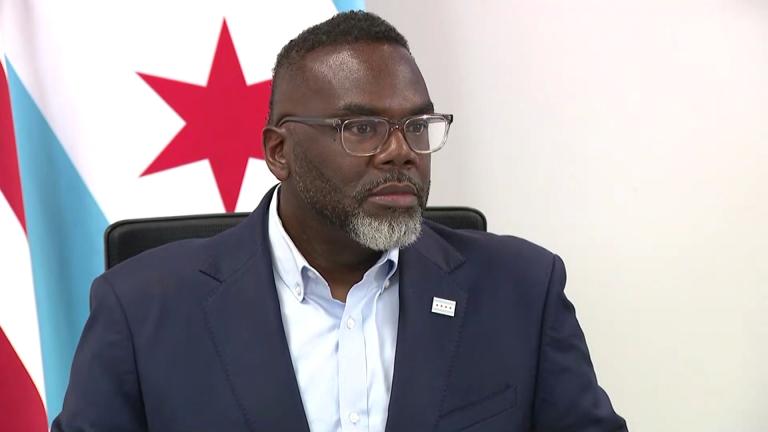
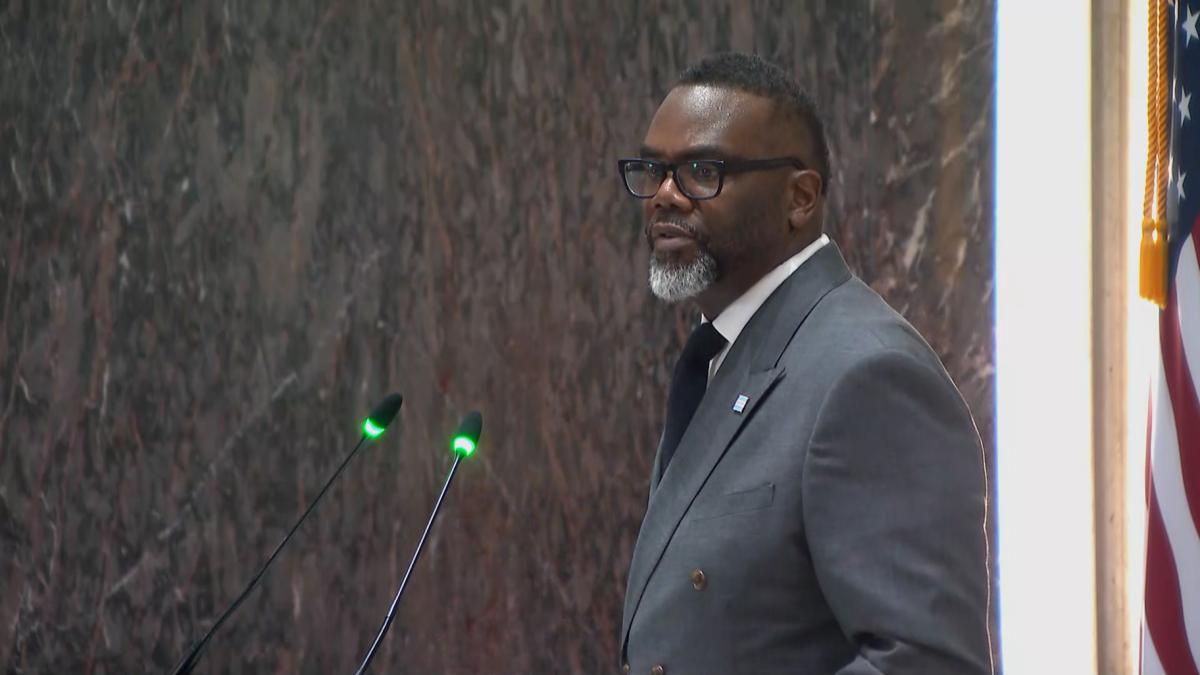 Mayor Brandon Johnson presides over a meeting of the Chicago City Council in October 2024. (WTTW News)
Mayor Brandon Johnson once again proposed levying a per-employee tax on Chicago’s largest firms to help bridge the city’s $882 million budget gap, opening a new front in the ongoing battle over whether corporations should pay more to ease the city’s financial crunch.
In addition, Johnson proposed borrowing $481 million to cover the soaring cost of lawsuits alleging Chicago police officers committed a wide range of misconduct — including wrongful convictions and improper pursuits — as part of the city’s 2027 budget.
As recently as September, Johnson told reporters the city would not borrow to cover those costs, and blamed the Chicago Police Department’s decades of scandals, misconduct and brutality for swelling the deficit to $882.4 million.
By deciding to borrow to cover the cost of resolving those lawsuits, Johnson’s team only had to close a gap of $652.5 million, acting Budget Director Jonathan Ernst told reporters Tuesday.
The spending plan sets aside an additional $132 million to resolve police misconduct lawsuits, Chief Financial Officer Ashlee Gabrysch said.
Head Tax Revival Proposed
Johnson’s revival of the so-called head tax — which was soundly rejected by the Chicago City Council a year ago — would impose a $25 per month per employee tax on all firms that have more than 125 employees, according to the proposal.
That is projected to generate approximately $100 million — after exempting firms whose employees work in areas of the city designated by the federal government to be “socioeconomically disadvantaged areas,” which includes much of the city’s South and West sides.
That could encourage businesses to relocate to areas of the city that have long suffered from disinvestment and have few large employers, officials said.
Johnson dubbed the spending plan, which he hopes will be the final proposal of his first term, Chicago’s “fair share budget,” echoing his long-held belief that the city’s corporations and wealthiest residents must pay more in city taxes.
In 1986, Mayor Harold Washington used the same phrase to refer to his proposed budget. Johnson, the second Black man to be elected Chicago mayor, often likens the implacable opposition he has faced from the City Council to the revolt that confronted Washington before he won a second term in office.
The mayor’s $17.6 billion spending plan, which he is set to detail in a speech set for 10 a.m. Wednesday before the Chicago City Council, does not include a property tax hike or call for any service cuts or layoffs.
It is unclear how Johnson plans to convince the City Council to impose a head tax after a nearly veto-proof majority of members refused to do so less than 12 months ago, during which his relations with a majority of alderpeople have only soured. Johnson allowed the city’s 2026 spending plan to take effect without his signature.
However, Johnson is clearly willing to have the debate over whether large corporations should pay more. When he announced his bid for a second term, Johnson said the mayoral contest would pit the “corporate class” and billionaires against the “working class” — and that he was proud to fight on the side of Chicago residents struggling to make ends meet at a time when everything from rent and gas to healthcare and groceries are growing more expensive by the day.
“Those corporations benefit from city resources, from city workers and continue relocating here at record rates,” Johnson said earlier this month. “It is past time for the city of Chicago to collect what is owed, because when we ask corporations to pay their fair share, we unlock the resources needed to make the investments that strengthen our neighborhoods and improve the lives of working people.”
Johnson’s plan proposes to hike personal property lease taxes from 15% to 20% to generate $234 million. That tax, which gets added to car and equipment rentals as well as cloud-based software, was just 9% in 2020.
Johnson often touts that as a tax on “big tech.”
The tax rate would remain 15% for vehicle rentals, while equipment and facilities leased for motion picture productions would be taxed at just 11%, according to the proposal.
In addition, Johnson proposed hiking the city’s tax on online betting to 20% to raise $37 million. An additional $18 million will come from the expanded use of automated cameras to ticket drivers who block bicycle and bus lanes, according to the proposal.
‘Quite Damaging’ Police Misconduct Settlements
Chicago taxpayers have spent more than $277 million since the start of 2026 to resolve lawsuits alleging a wide range of police misconduct, according to a WTTW News analysis of city records.
Johnson said he decided to propose borrowing funds to cover the cost of resolving police misconduct because it “provides us a little bit of breathing room.”
The cost of police misconduct settlements has proven to be “quite severe” and “quite damaging,” Johnson said.
“It is a drain on our budget,” Johnson said.
The borrowing proposed by Johnson would cover the $260.8 million the City Council agreed to pay to 17 men who spent more than 383 years in prison after they were coerced into confessing to crimes by disgraced former Chicago police Detective Reynaldo Guevara. Those settlements will be paid in four installments in 2027 and 2028.
In addition, it would cover $120 million that the city is already obligated to pay and an additional $100 million to cover future costs, Gabrysch said.
That borrowing will be paid off between five and seven years, Gabrysch said.
In 2026, Chicago borrowed $267 million to cover the cost of police misconduct lawsuits, making Johnson’s proposal the second in a row that would add to the city’s already massive debt to cover operational costs.
Including $166 million to pay firefighters what they were owed for working without a contract — and annual raises — for four years, Chicago’s 2026 budget borrowed an additional $433.3 million to cover operating costs that officials promised to repay with property taxes, records show.
The city has agreed to repay $355.2 million of that loan by 2031, at a cost of $59.3 million in interest, records show.
The remaining balance of $130.5 million is set to be repaid in 2032 and 2033, with the city paying an annual interest rate of approximately 6.2%, records show.
Borrowing even more to cover operational costs could alarm Wall Street ratings agencies and trigger another ratings downgrade, making it more expensive for the city to borrow the money it needs to operate.
Focus on Tax Increment Financing Surplus
Johnson will ask the City Council to declare approximately $525 million in property taxes earmarked to fight blight to be “surplus,” $185 million more than officials expected in September.
With the City Council’s approval, $118 million of those surplus funds will be returned to the city and approximately $260 million will flow to Chicago Public Schools, with the rest going back to other taxing agencies, according to the forecast.
The CPS budget approved by the Chicago Board of Education for the 2026-27 academic year counted on getting $285 million in surplus TIF funds from the city.
CPS’ budget also relies on $150 million in state funding that is not guaranteed and has yet to materialize, records show.
Chicago’s Budget Remains Structurally Unbalanced
The city’s 2027 budget is still structurally unbalanced, with expenses outpacing revenues, according to the forecast.
Chicago’s finances remain out of whack, pinched by soaring pension costs, spiraling personnel costs and a massive amount of debt.
The city faces a pension bill of more than $2.94 billion in 2027 in order to comply with a state law that requires two of Chicago’s pension funds be funded at a 90% level by 2055 and the other two by 2058, ensuring they can pay benefits to employees as they retire, according to the forecast.
That is $90.5 million more than last year, records show.
In addition, the spending plan sets aside $364 million for its pension funds in 2027 to chip away at the debt that has been accumulating during the past 20 years.
That additional pension payment includes the $75 million that the new owners of the city’s parking meters agreed to pay the city once the deal closes. Some alderpeople suggested that windfall should be on top of the $364 million additional pension payment that Johnson had already promised to make before several members of the City Council negotiated the deal.
Chicago’s economic future is not projected to improve significantly in the next two years, ensuring that whoever wins the 2027 mayoral election will be faced with red ink as far as the eye can see.
In 2028, the city is likely to face a budget gap of $943 million, and a gap of more than $1 billion in 2029, according to the forecast.
Contact Heather Cherone: @HeatherCherone | (773) 569-1863 | [email protected]