Business
Mortgages Soar as Fed Hikes Interest Rates
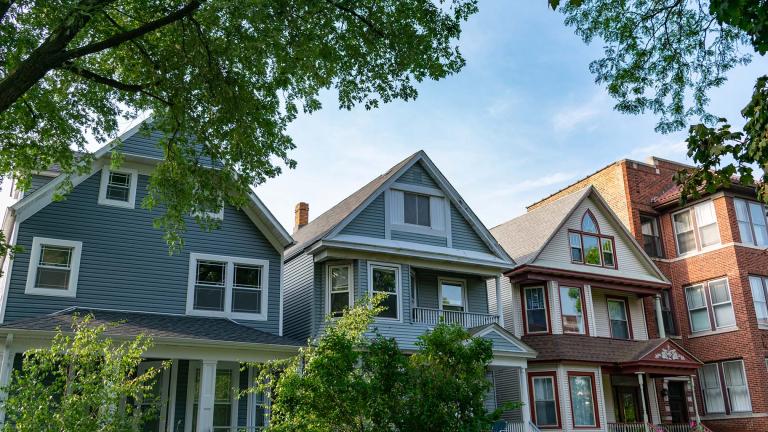
The rate for a 30-year fixed-rate mortgage surpassed 7% for the first time since January 2025 last week, according to federal lender Freddie Mac.
That’s after the Federal Reserve’s first rate hike since 2023, raising rates by a quarter of a percentage point earlier this month.
The Fed said the increase was necessitated by rising inflation, but it could spell bad news for an already strained housing market.
“This will increase monthly housing costs for those that are entering the market,” said Serrater Chapman, director of applied research at the Woodstock Institute. “It will also limit the supply. The people that are currently in their homes will be less likely to sell because they’d have to buy again at a higher rate.”
The national median sale price of a home was $429,000 in August 2026, up from $422,400 at the same time last year, according to data from the Federal Reserve. In Chicago, the median sale price was $405,000 in August 2026, up from $375,000 at the same time last year, according to data from Illinois Realtors.
When the Fed raises rates, it incentivizes banks to hold their money with the central bank rather than loan it out to homebuyers, which carries more risk. Under these conditions, banks charge higher interest rates on mortgages to justify taking their money out of the Federal Reserve.
The higher mortgage rates could have a special impact on millennials, who make up a large portion of prospective homebuyers, Chapman said.
“Millennials are currently 63% of Illinois’s mortgage market,” Chapman said. “We’re finding that the debt that millennials carry is non-mortgage debt. That includes student loan debt, consumer loan debts and installment loans, which also create a barrier for their debt-to-income ratio, making them less desirable or higher risk for lenders.”
Chapman said that even if new homebuyers break into the market and purchase a home, they could be left without the income to maintain their home.
“Even if they do get into their home, they could be cash-strapped,” Chapman said. “They get into their home and all of a sudden their furnace breaks, etc. — we’re creating a generation of financially unstable borrowers.”
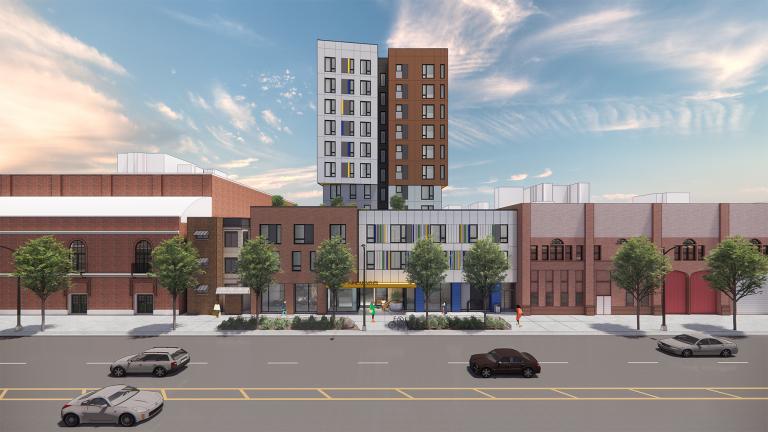
Aside from impacting mortgage rates, the Fed increase will likely increase costs for construction and developers, according to David Doig, president of the real estate development group Chicago Neighborhood Initiatives.
“It makes it more expensive to build, more expensive to borrow,” Doig said. “The commodities and labor costs continue to go up. … When construction costs increase, you get this huge gap between what it costs to build and what people can afford.”
Following the Fed rate hike, developers across the country and in Chicago will find borrowing money to get big projects off the ground much harder, Doig said.
Doig said the Fed’s decision could exacerbate an already grim housing shortage in Illinois. According to Illinois Realtors, Illinois is facing a shortage of 142,000 homes and would need to build 225,000 homes over the next five years to keep pace with demand.
To keep up with building costs, developers will likely push costs onto buyers, Doig said.
“I think they just keep raising prices,” Doig said. “Whether it’s home sales or rents. It’s a good thing to be a homeowner and a good thing to be a landlord. It’s not a good thing to be a first-time homebuyer.”
Despite the Fed’s decision, demand for homes in Chicago has increased, according to an analysis by Crain’s Chicago Business.
More buyers put Chicago homes under contract in the past six weeks than buyers did in the same stretch of 2025, Crain’s found.
“What we’re seeing is that it’s not turning everyone off,” said Dennis Rodkin, a residential real estate reporter at Crain’s. “People are finding ways to afford homes as both sides of the equation rise — the interest rates and prices.”
Steady demand could be driven by a shift in the housing market toward buyers. In August 2026, sellers outnumbered buyers by 58%, according to real estate agency Redfin. That’s the largest gap recorded in their records.
Still, policymakers need to pursue ways to create more affordable housing, Chapman said.
“It is a supply-side issue,” Chapman said. “If we do not create enough affordable housing, people will not be able to get homes.”