Politics
Number of Unhoused Chicagoans Dropped 12% in 2026 But Remains Near All-Time High, Survey Found
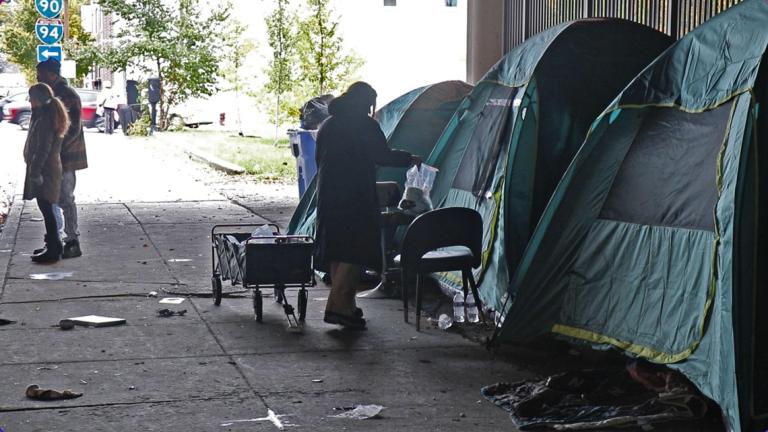
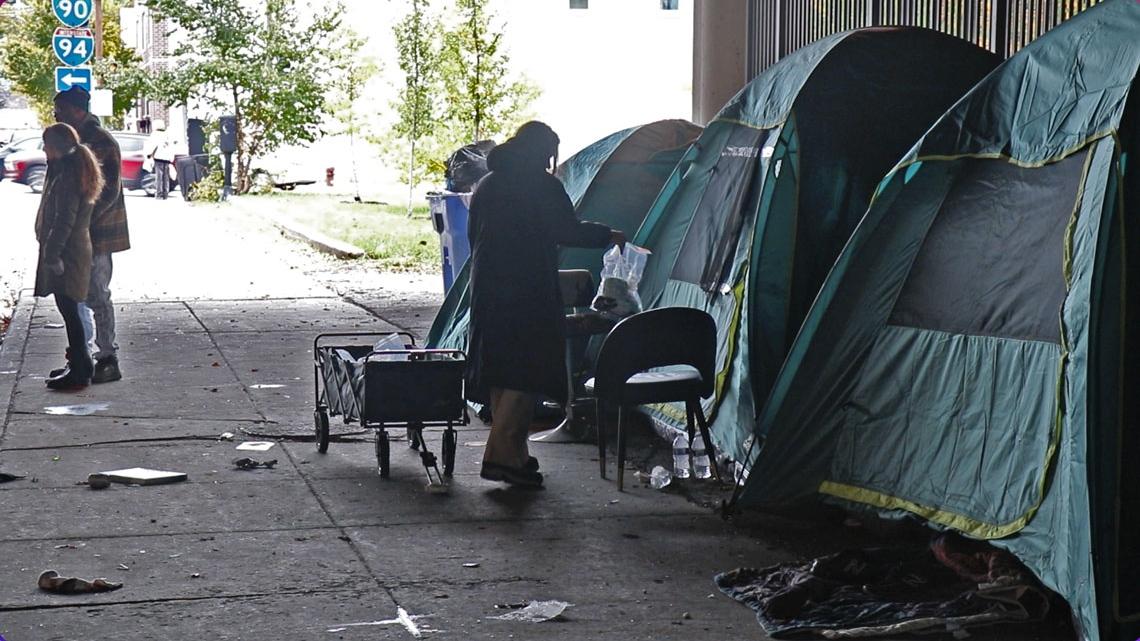 A volunteer with Street Samaritans hands out a care package to a person camping underneath a bridge in November in the Chicago area. (Jacques Abou-Rizk / Medill Illinois News Bureau)
The number of Chicagoans living in city shelters or on city streets dropped 12% between January 2025 and January 2026 but remains near an all-time high, according to the annual survey used by federal officials to track homelessness.
Approximately 6,527 people in Chicago lacked a permanent place to sleep on Jan. 22, according to the annual “point-in-time” count, which sends volunteers out to count the number of unsheltered people on the city’s streets on a single night and is used by U.S. Department of Housing and Urban Development officials to determine federal funding levels.
That reflects a 65% drop from January 2024, when 18,836 men, women and children were living in city shelters or on the streets, including 13,891 new arrivals to the city, records show.
In all, 46,282 migrants arrived in Chicago between August 2022 and December 2024 after requesting asylum, many on buses paid for by Texas Gov. Greg Abbott, a Republican, according to Chicago’s inspector general.
The city’s 2026 survey of unhoused residents is the first since January 2022 not to distinguish between longtime residents and new arrivals to Chicago.
Excluding the surveys conducted during the migrant crisis, homelessness in Chicago in 2026 reached one of the highest levels since 2015, when 6,786 Chicagoans lived in city shelters or on city streets. Approximately 2,055 people were completely unsheltered in 2015, records show.
The number of Chicagoans living in city shelters dropped more than 20% between January 2025 and January 2026, according to the survey.
Chicago officials attribute the drop in the number of people living in city shelters to the significant decrease in the number of Chicagoans city officials once classified as “newcomers” or “new arrivals,” people who were born in another country but recently arrived in Chicago, amid President Donald Trump’s efforts to limit immigration.
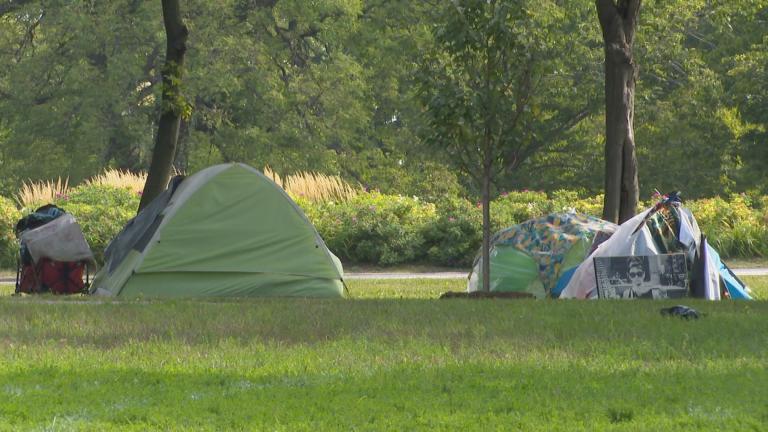
However, approximately 1,641 Chicagoans were completely unsheltered on the city’s streets at the time of the survey, an increase of nearly 25% from the 2025 survey, according to the results.
The point-in-time survey “shows Chicago has a dire problem that must be addressed,” said Mary Tarullo, director of city policy for the Chicago Coalition to End Homelessness.
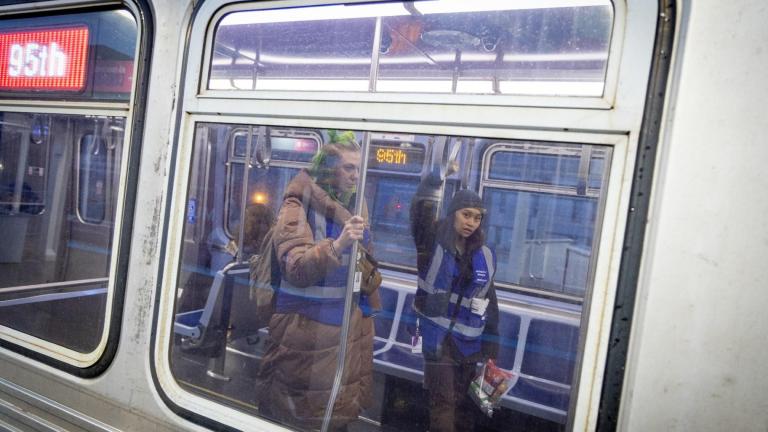
The 2026 survey took place on one of the coldest nights in recent Chicago history, with temperatures dropping to 35 degrees below zero with the wind chill, records show. That led more people to seek refuge indoors in police stations, warming centers, transit stations and on CTA trains and buses, according to the survey results.
“The temporary movement indoors allowed for more people to be engaged and counted in this year’s count,” according to the survey results.
However, the bitter cold was just as likely to drive unhoused Chicagoans indoors at any cost and out of sight of the volunteers who conducted the survey, Tarullo said.
“It only serves to underscore our point that not everyone is getting counted during this survey,” Tarullo said.
A spokesperson for the Department of Family and Support Services, which is charged with making homelessness in Chicago rare, brief and non-reoccurring, declined to comment on the results of the annual count, which was posted to the city’s website without an announcement.
Mayor Brandon Johnson, who kicked off the 2026 annual count, called it vital to understanding and reducing homelessness in Chicago.
“Behind every number is a neighbor who deserves dignity, safety and a place to call their own,” Johnson said in a statement.
Approximately 66% of Chicagoans living in city shelters or on city streets in January 2026 were Black, according to the survey. Black Chicagoans make up less than 29% of the city’s population, according to the 2020 census.
Children account for approximately 33% of Chicago’s unhoused population, unchanged from last year and 2024, according to the survey.
The Chicago Coalition to End Homelessness and other advocates for the unhoused believe the methodology used by the “point-in-time” count is woefully inadequate, since it does not consider people living “doubled-up” with friends or relatives temporarily to be homeless.
Instead, federal officials only consider people who do not have “a fixed, regular, and adequate nighttime residence” outside a shelter to be homeless.
Approximately 58,625 people experienced homelessness in Chicago throughout 2024, according to the most recent data available and compiled by the coalition.
In March, Chief Homelessness Officer Sendy Soto stepped down after releasing a five-year plan designed to prevent and end homelessness that called for the city to create “a dedicated revenue stream so programs can launch and remain sustainable.”
According to the plan, Chicago must build more affordable housing and put new programs in place designed to prevent people from becoming homeless by offering rental assistance, mental health care and legal help to those facing eviction.
In the months since its release, Johnson has not championed the plan’s recommendations or proposed a source of revenue to cover the cost of implementing the recommendations.
Soto’s role was filled by Jonah Anderson, deputy mayor of health and human services.
In addition, the Trump administration is attempting to prevent $4 billion in federal funding, which is distributed to local organizations, from being used to permanently house people experiencing homelessness. Instead, federal funds should only be used to provide temporary housing and services, according to the Trump administration.
Federal judges have blocked those changes from taking place, court records show.
Chicago must find local solutions to help those experiencing homelessness, Tarullo said, especially given the federal government’s actions.
The coalition will ask the Chicago City Council to earmark $30 million in the city’s 2027 spending plan to keep the programs now helping keep Chicagoans off the street running, Tarullo said.
Officials will be hard-pressed to grant that request, as the city faces a deficit of $882 million, records show.
Contact Heather Cherone: @HeatherCherone | (773) 569-1863 | [email protected]