Crime & Law
CPD Officer Who Shot Into Moving Car in 2020, Wounding 2 Men, Won’t Be Fired: Records
 (WTTW News)
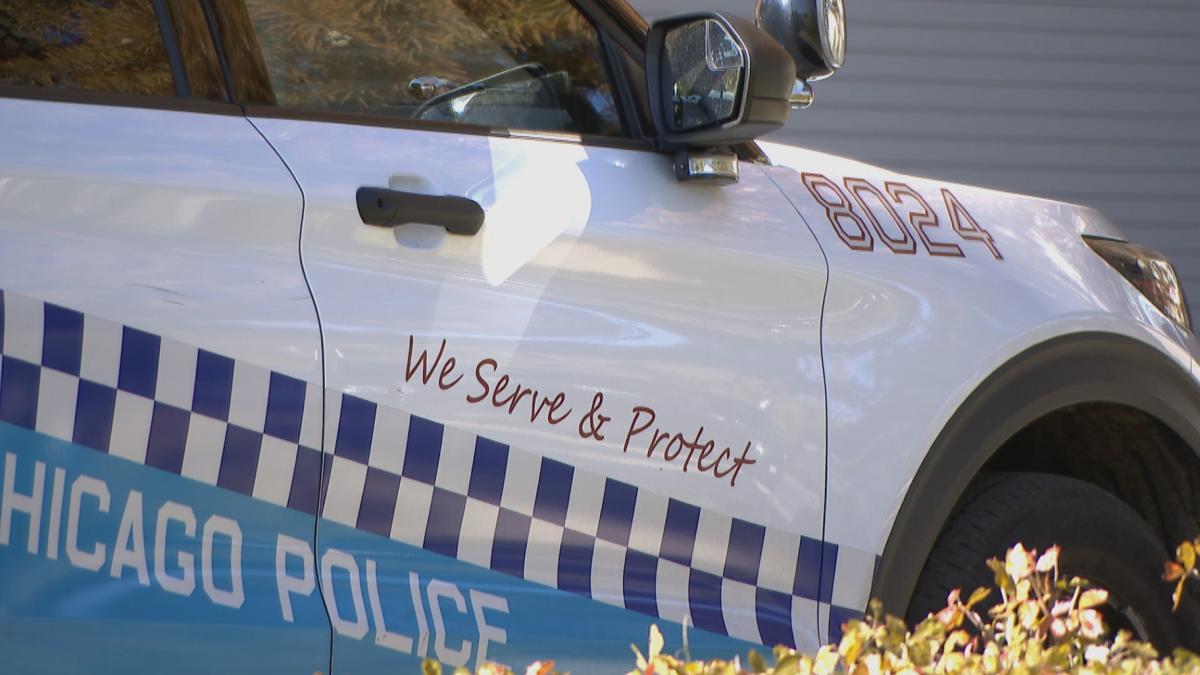
The Chicago police officer who shot into a moving car that investigators concluded posed no threat to officers, wounding two men in June 2020, will not be fired, according to documents obtained by WTTW News.
Instead, Officer Charles Harris II should face a suspension of 30 days, former Chicago Police Supt. Larry Snelling determined, rejecting the recommendation from the Civilian Office of Police Accountability to fire Harris for his actions on June 12, 2020, in Englewood near 71st and Halsted streets, records show.
The disagreement between the city’s former top cop and the agency better known as COPA meant it was up to Chicago Police Board Member Arlette Porter, who was randomly chosen in keeping with the city’s rules, to determine whether Snelling met “his burden of overcoming” former Chief Administrator Andrea Kersten’s recommendation, which was initially upheld by her replacement, LaKenya White.
After Porter asked CPD brass and COPA officials in February to provide her with an analysis about whether the city was prevented from disciplining Harris for using excessive force against the men he shot because the five-year statute of limitations had expired, White dropped COPA’s appeal of Snelling’s objection.
COPA determined Harris should face a 29-day suspension for failing to activate his body-worn camera as required and failing to notify his supervisors that he had fired his gun, records show.
The records published Thursday by COPA do not make clear why the probe of the June 12, 2020, shooting was not completed until Jan. 23, 2024. It was also not clear why COPA chose a 29-day suspension after Snelling recommended 30 days.
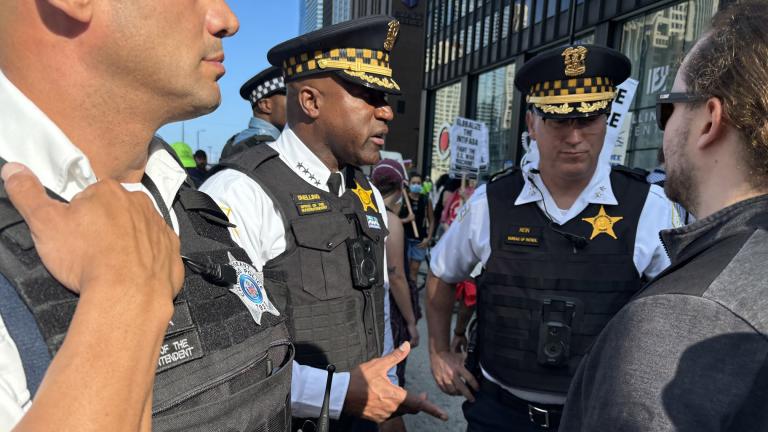
Snelling, who retired from CPD a month ago, frequently objected to COPA’s findings, especially when the agency recommended officers face significant discipline.
In February 2024, Snelling blasted Kersten at a meeting of the Chicago Police Board and accused her of treating CPD officers so unfairly that they were at risk of suicide while compromising public safety.
Snelling refused Kersten’s recommendation to fire Harris a month after that confrontation, records show.
Harris, who earns more than $111,200 annually, has been stripped of his badge and assigned to administrative duties, according to a CPD spokesperson. Harris could not be reached for comment by WTTW News.
One of the men shot by Harris was wounded in his left calf, while the other suffered a gunshot wound to his left forearm, records show. Both were convicted of charges stemming from the altercation with Harris. Neither man sued the city, records show.
The incident began just after 5 p.m. June 12, 2020, after an officer reported he had spotted a Chevrolet Malibu that had been reported stolen. Believing the parked car was unoccupied, an officer approached the car only to see a man “pop his head up” inside the car, which immediately began moving in reverse, according to the probe.
When the driver realized a CPD vehicle was blocking him from behind, he drove forward, striking Officer Eddie Haynie and dragging him before the officer fell “onto the grassy area near the sidewalk,” according to the probe.
After seeing the officer fall from the impact of the car, Harris fired five shots at the car, which shortly afterward crashed into a fence, prompting both men to flee on foot, records show.
Haynie pursued the men first in a police vehicle and then on foot and apprehended one of the men after a brief chase, records show. Haynie was treated at a nearby hospital for “an injured ankle, a swollen elbow, and a scarred knee” before returning to the scene of the shooting, records show.
Harris apprehended the other man who fled from the car, only to be approached by a witness to the altercation who asked him why he fired his weapon, as captured on body-worn camera footage, records show.
“The witness complained, ‘You shot at the car after it passed you up, bro,’ and, ‘Bro, why did you shoot? ... I was walking. They was past you all already. They was past you,’” records show.
While riding to the hospital, the passenger in the car asked Harris, “Why’d your man shoot me?” Harris told him that he was the one who shot him because “your boy ran over my detective,” according to the probe.
Police recovered a gun and illegal drugs in the car, records show.
CPD policy expressly prohibits members from firing “at or into a moving vehicle when the vehicle is the only force used against the sworn member or another person” unless there is no other way “to protect against an imminent threat to life or to prevent great bodily harm.”
Officers must avoid placing themselves “in the path of the vehicle and must make every effort to move out of the path of the vehicle,” according to CPD policy.
COPA determined Harris’ decision to open fire at the car was not reasonable since Haynie was no longer in the path of the vehicle when the first shot was fired, records show.
Haynie told investigators that when the vehicle struck him, he was swept off his feet near the driver’s side rearview mirror and was carried on the windshield through its U-turn from the east side of the street to the west side, where he fell off the vehicle, as he heard the first gunshots and “rolled his legs out of the way of the vehicle’s driver side rear wheel as it passed by him,” according to the probe.
None of the officers present had activated their body-worn cameras by the time Harris fired at the car, in violation of CPD policy, according to the probe.
Harris’ decision to open fire could have “placed Officer Haynie in even greater danger, either from the fired bullets, indirect ricochets or the spray of broken glass,” according to the probe’s conclusion. “Finally, it is evident that any potential danger posed by the Chevy Malibu to the officers or to civilian bystanders would have been greatly increased if the driver had become incapacitated by gunshot wounds and subsequently lost control of the vehicle.”
However, Snelling disagreed with that conclusion, finding that Harris’ decision to fire five shots into a moving car containing two people was “objectively reasonable based on the totality of the circumstances” and complied with CPD policy.
“Officer Harris’ use of force was necessary and he used deadly force as a last resort in this situation,” Snelling’s report concluded, finding that just four seconds elapsed between when the driver of the car struck Haynie, dragged him and threw him from the vehicle. “There was no time for de-escalation in this short time frame.”
WTTW News coverage of policing and police reform is supported by The Joyce Foundation.
Contact Heather Cherone: @HeatherCherone | (773) 569-1863 | [email protected]