Health
Advocates Push for Two Shuttered Safety-Net Hospitals to Reopen in Chicago Area
Community advocates are pushing for two recently shuttered safety-net hospitals in the Chicago area to reopen their doors.
Oak Park’s West Suburban Medical Center and Uptown’s Weiss Hospital both closed this year following federal funding cuts and reports of poor infrastructure and working conditions. However, there may still be hope for the hospitals as a judge weighs a proposed deal that could pave the way for new ownership.
Hospital management company Resilience Healthcare acquired West Suburban and Weiss in 2022. The last four years have been defined by controversies including the hospital closures, allegations of failing management and crippling financial issues.
“The first warning sign was a few years back when the parking lot sale happened for Weiss Hospital,” said Lilly Le, community organizing director of the Vietnamese Association of Illinois. The lot was redeveloped into high-income luxury apartment buildings shortly after the sale.
“The community had warned back then that this was the beginning of the end for the Weiss Hospital,” Le continued. “We saw the current owner, Dr. Prasad, step in and run the hospital to the ground — no proper management, the facility is now shut down as it’s no longer meeting the code, and a few months later, West Suburban also shuts down. We’re seeing this as a private equity, private business owner coming in, exploiting the resources of these two major institutions in our communities.”
Resilience Healthcare CEO Manoj Prasad and Rathnaker Patlola, the landlord who owns the hospital properties, sued each other earlier this year. The two sides reached a tentative agreement in court that would remove Prasad and Resilience Healthcare from managing the hospitals and allow Insight Health, which operates Mercy Hospital in Bronzeville, to take over management of West Suburban and Weiss and potentially create a path to reopening both hospitals under new leadership.
“This is just the beginning,” Le said. “We know that no matter what happens with these hospitals under new, responsible ownership, the community has to be at the table. Any action moving forward has to include the input from the community side, from the worker’s side, on the futures of both of these hospitals in partnership with state leadership.”
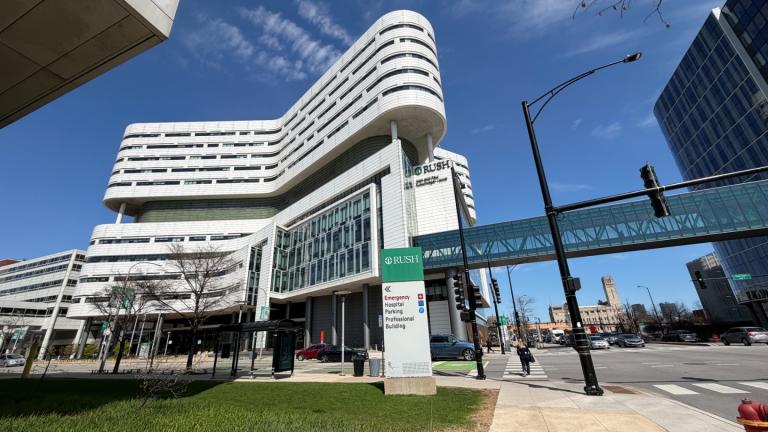
Both hospitals served thousands of patients who come predominantly from Black, Brown and immigrant communities. Other hospitals on the West and North sides — like Austin’s Loretto Hospital, Community First Medical Center in Portage Park, and Rush Oak Park Hospital — are absorbing the patient surge, straining the already understaffed healthcare system.
Other hospitals could be next on the chopping block, warned the Rev. Robin Hood of Redeemed Outreach Ministries.
“Seven grocery stores closed last week,” Hood said. “And now you can’t go to the hospital. All this is happening at once.”
Mount Sinai and Roseland Hospital are also both safety-net hospitals. Years of local disinvestment, coupled with federal cuts to Medicare and Medicaid, put both vulnerable institutions at risk of a similar fate.
“This is life or death,” Hood said. “This is not a game. There needs to be a higher accountability coming from the governor.”
The governor’s office attributes the situation to private business failure and has not indicated whether it’ll take action to help revive Weiss and West Suburban.
In a statement to WTTW News, Gov. JB Pritzker’s office said: “Despite intensive financial and operational support from the State of Illinois throughout Resilience Health’s tenure, West Suburban and Weiss Hospitals are ultimately private facilities whose leadership was both unable and unwilling to do everything in their power necessary to keep their facilities in operation — and they never presented the State with any formal request or viable plan to continue operations. At this time, all former West Suburban patients have been safely transitioned to new providers.”
Community advocates, including Hood and Le, will meet with the governor’s office on Aug. 24. Both call on state legislators to intervene, calling the closures a public health emergency.