Crime & Law
Cook County Has Been Called the Wrongful Conviction Capital of the US. New Book Explores Why
Cook County has been called the wrongful conviction capital of the country.
But who is giving the county this title?
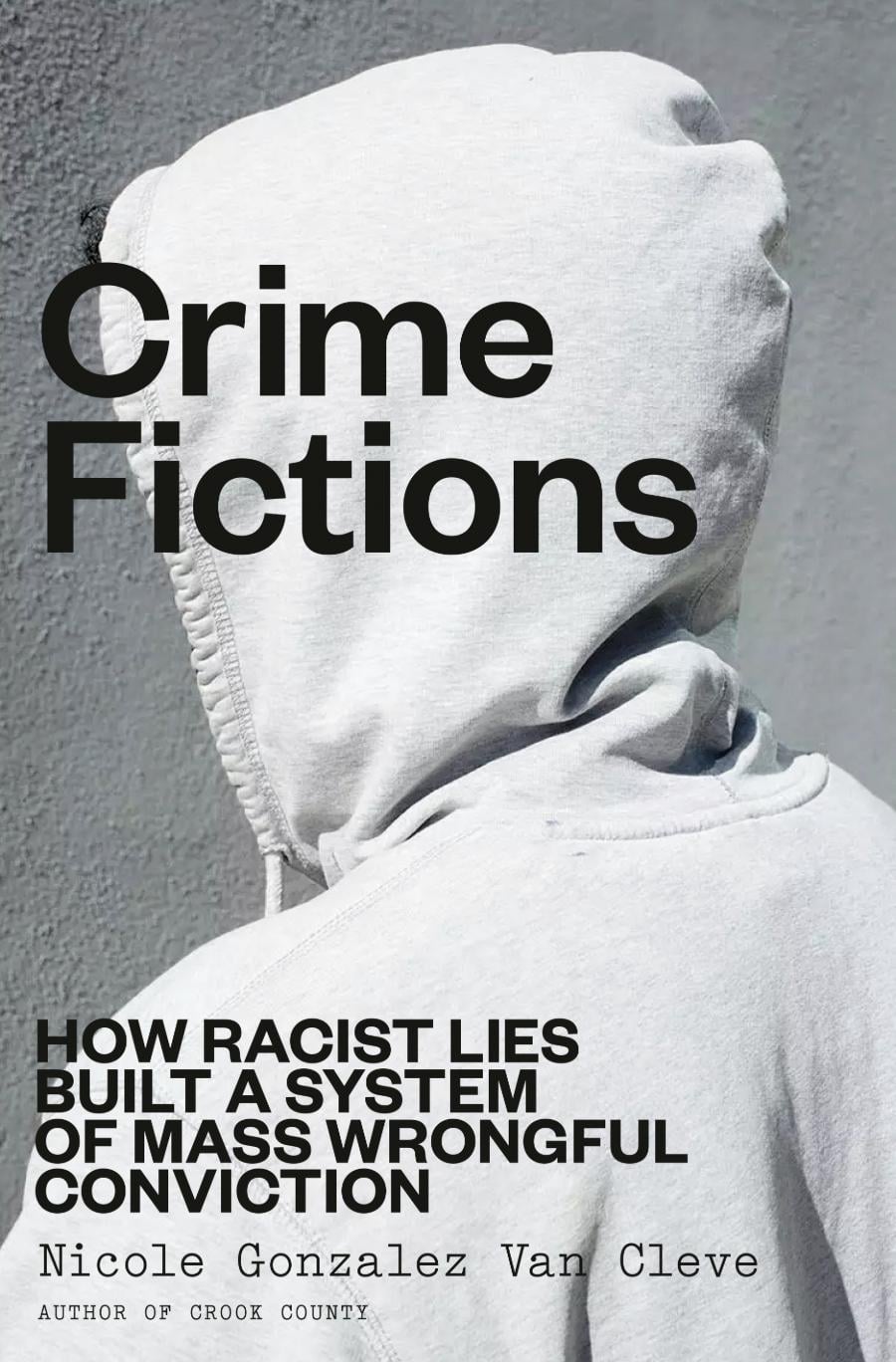
In her new book, “Crime Fictions: How Racist Lies Built a System of Mass Wrongful Conviction,” author Nicole Gonzalez Van Cleve tries to answer that. She identifies cases of Black youth, some as young as 7, who are wrongfully accused and coerced into confessions.
“We often talk about wrongful conviction as though it’s an accident or a series of accidents, and what I’m trying to do in this book … is to think about wrongful conviction as a set of patterns, a systemic way of doing business by police,” Gonzalez Van Cleve said.
She set out by trying to answer how a person becomes guilty in the eyes of the police. After years of interviews, archival research and the excavation of hidden documents, she said she found that police have techniques for creating wrongful convictions.
One detective she focuses on is James Cassidy, who, she writes, specializes in interrogating children. He would isolate children and turn the interrogation room into a confessional booth, holding their hands and saying police would forgive them, just as God would. He’d feed them McDonald’s Happy Meals to build trust. Then, the police could have a false confession.
“False confessions is the engine of wrongful convictions, but police have other ways of coercing witnesses or bringing a kid in as a witness with no lawyer, no parent present, and then changing them into a suspect and framing them as well,” Gonzalez Van Cleve said.
Illinois makes up about 15% of wrongful conviction cases nationwide, according to the book. Of the 3,831 known wrongful conviction cases in the U.S. since 1989, 581 are from Illinois, according to the latest numbers from the National Registry of Exonerations. Of those from Illinois, 150 are cases involving false confessions, according to the registry.
One explanation for the state’s high figures, Gonzalez Van Cleve said, is the local universities and dogged attorneys that help expose these cases.
“We need to be curious as Chicagoans as to why we are doing this the best. What are these techniques and can we create reforms to repair this?” Gonzalez Van Cleve said. “But the issue is, we have never really put our Chicago police in check.”
She said there needs to be a revamp of the State’s Attorney’s Conviction Integrity Unit. Last fall, Injustice Watch found that Cook County State’s Attorney Eileen O’Neill Burke’s Conviction Integrity Unit hadn’t exonerated anyone in her 10 months on the job. She also had done little to confront more than a dozen coercion allegations against a former Chicago police detective and his partners, the investigation found.
“We need to stop making it harder, rather than more thorough and a little bit easier for people who have claims of innocence to, in good faith, have their claims reviewed,” Gonzalez Van Cleve said. “That’s the least we can offer people when we take away their freedom.”
Read an excerpt from the book below:
A significant amount of time and effort in the wrongful conviction movement is spent on examining the most prevalent technical errors in order to identify the causes of wrongful conviction. Some scholars even conduct a “sentinel event review,” treating wrongful conviction like a plane crash or isolated disaster. Rarely do we look at the system itself— examining how supposed outliers are actually patterned, persistent, and essential to our justice system. Only by looking at the commonalities among cases can we see the “shadow system” at work, one that firmly targets Black and Brown children en masse, much like our prison system as a whole. Black people have disproportionately borne the brunt of this wrongful conviction system, but all people— especially those who are poor or disabled or possess a trait that makes them vulnerable to such targeting— can find themselves in this wrongful conviction nightmare. As sociologist Reuben Miller has pointed out— speaking as a Black father and scholar— “the system built for my children could someday harm some of yours.”
We have to ask ourselves why we, as Americans, have such blind faith in police and the cases they create. What is it about our culture that so readily believes that innocent young people—even seven- year-olds—are capable of monstrous acts? Why is a police officer’s word always reason enough for us to take away the liberty and lives of so many young Black people?
These questions drove my investigation into the “evidence of things not seen,” the racism that fills the gaps between the accusations made by the police and the incriminating narratives they create to make it all seem real. It required forcing myself to see the holes and the lies up close, rebuilding iconic wrongful conviction cases from the ground up. I had to walk the old crime scenes, talk to those who had lived through these tragedies, and weed through dusty archives, false confessions, legal documents, and civil case files. It required searching through and analyzing hundreds of pages of media coverage on each of these cases and tracing how police lies became entangled with the reporting of “facts” and how those “facts” triggered a gruesome racial animus. And finally, it required following a handful of officers and their accessories, from case to case, to see how clandestine practices developed over time and across precincts and were passed down like an inheritance to new generations of officers for a new generation of boys. It was through these data, through rebuilding cases and seeing these practices that were meant to be buried like the dead, that I could see the mechanics of the shadow system of justice. So, this book—a how-dun-it of policing in America—is an attempt at a new way of seeing . . . for all of us.
In a court of law, we would hold a trial for the accused perpetrators of a crime. We would do a deep investigation and put forth the evidence. I’ve tried to do the same for the police, and this is my opening statement: Police are not the crime fighters you think they are. They are the perpetrators of wrongful convictions, meting out a type of vigilante justice that just so happens to be woven into the fabric of our criminal justice system. Rather than uncovering evidence, they create crime fictions about the perceived guilt of the accused. These fictions narrate guilt and almost always lead to conviction. They steal decades from the lives of innocent people.
And the majority of these people have one thing in common. They are Black.
Excerpted from CRIME FICTIONS by Nicole Gonzalez Van Cleve. Copyright © 2026 by Nicole Gonzalez Van Cleve. Reprinted by arrangement with Random House, an imprint of Random House, a division of Penguin Random House LLC. All rights reserved.
Contact Blair Paddock: @blairpaddock.bsky.social | [email protected]