Sports
How Luchadoras Are Challenging Machismo in Mexico and Chicago
This story is part of a series of reports on life in Mexico City from Medill School of Journalism students in partnership with WTTW News. Read more about the project.
by Jamie Gareh and Sydney Meyer
Lucha libre, or “free wrestling,” is woven into the fabric of Mexico’s cultural identity.
It’s an acrobatic, flamboyant and thrilling choreographed sport that melds athletics and theater to symbolize the ultimate battle between good and evil.
Arena México is called the “cathedral of lucha libre,” which appropriately characterizes both the nation’s reverence and the male-dominated nature of the sport across Mexico.
Luchadoras — female lucha libre wrestlers — challenge this machismo culture.
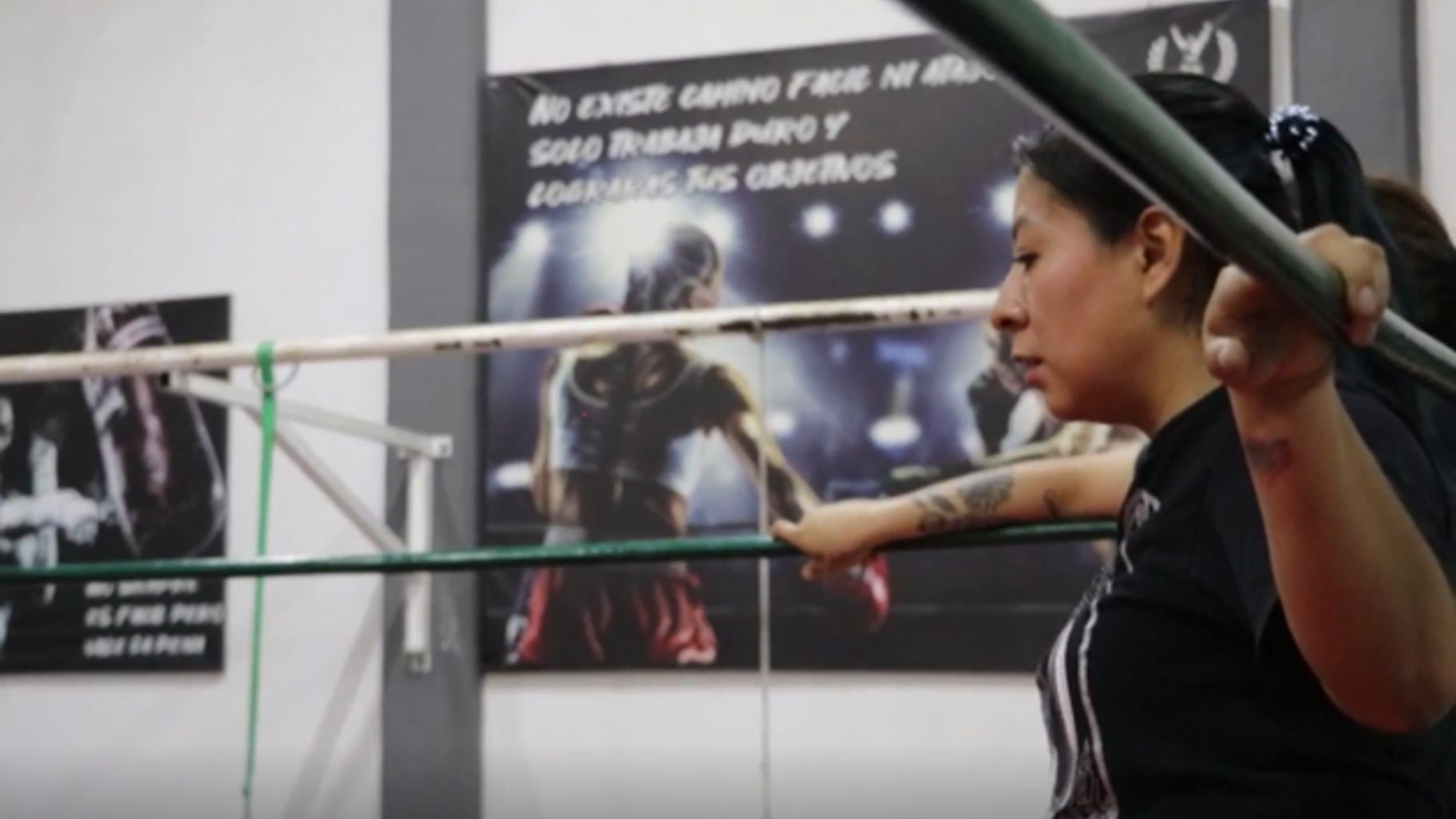 Dulce Luna rests after a training exercise. (Jamie Gareh / Medill School of Journalism)
“When I step into the ring, Dulce Luna transforms,” said Dulce Luna, a luchadora who trains in Naucalpan, just outside of Mexico City. “… Inside the character I am an extroverted person. I’m not afraid of people. I do things that, as a person, I wouldn’t do.”
Dulce Luna began training at 19 after observing a training session.
“There was a woman at the first training session, and that gave me the idea to start training,” Dulce Luna said. “I said to myself, ‘There’s a girl here, I can do it too.”
Lucha libre wasn’t always so easy to access. Women were banned from wrestling in Mexico City from 1954 to 1986. Outside the capital, promoters were penalized for booking female professionals.
Decades after the ban, Arena México is now painted with murals promoting female empowerment, but the ban’s legacy still affects women’s participation in the sport.
“Lucha libre is a man’s sport,” said Gabriela Castrejon, a former luchadora. “If you see female wrestlers, they have to show that they’re not just sexy. They have to fight well.”
The barriers to entry go beyond performance standards.
“If you want to try lucha libre, you are not going to find a group for just female wrestlers,” Castrejon said. “You have to go and train with other guys.”
Lucha libre has spread across the world, and Chicago has become a hub in the United States.
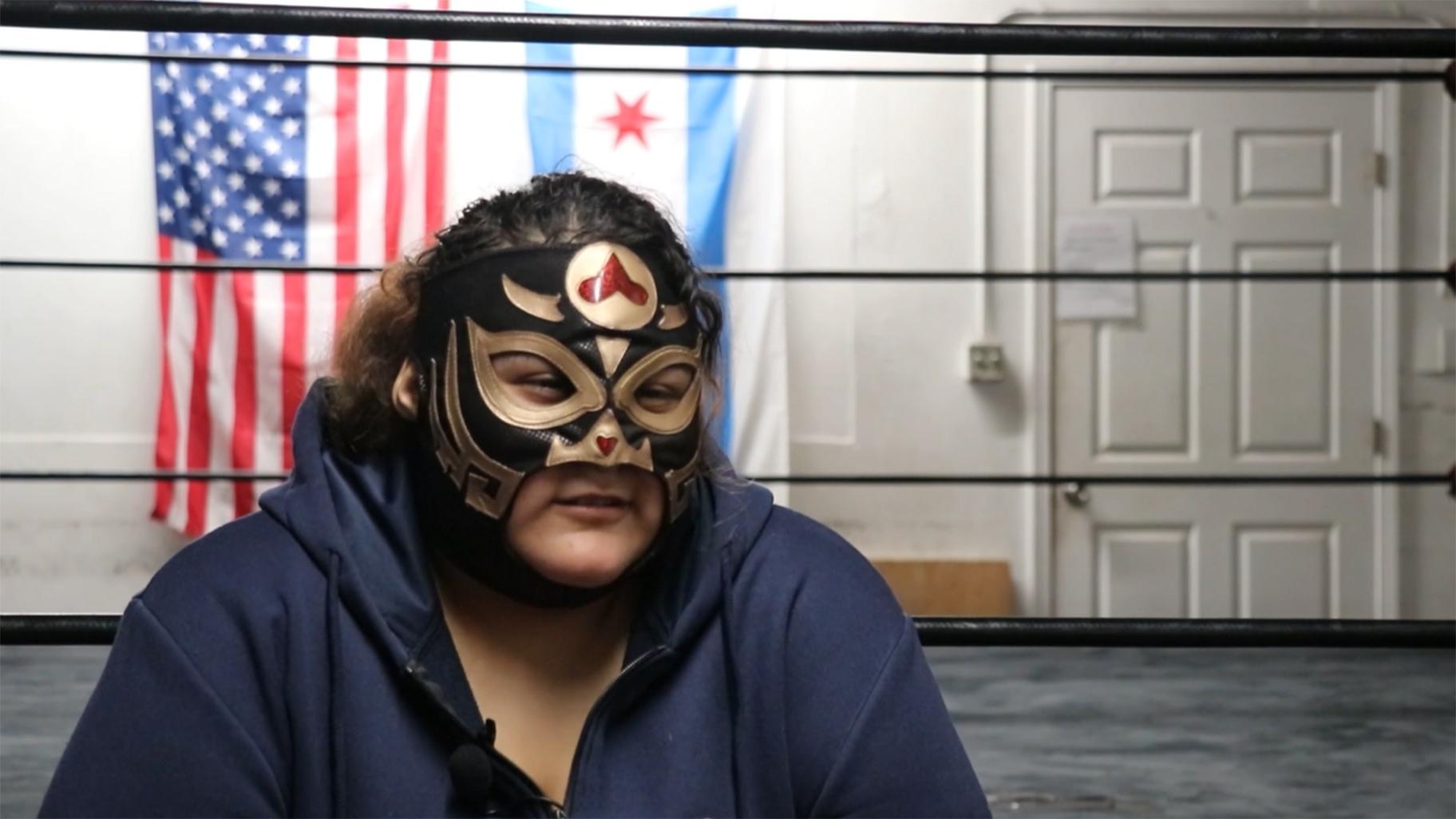 Lady Tigress is a Mexican American luchadora based in Chicago. (Medill School of Journalism)
Lady Tigress, a Mexican American in the city, trains and competes with men.
“When you wear a mask, it changes who you are,” Lady Tigress said. “I feel like I’m this ferocious feline from the jungle who was willing to pounce and attack or chew up anyone in the heartbeat. The person behind this mask is, like, aching to be her in real life.”
Lady Tigress grew up watching lucha libre with her dad, who immigrated to the United States from Mexico. Watching other plus-sized luchadoras thrive, despite pressure to be small and sexy, inspired her to start training herself.
“I’m a big girl wrestling other little, petite girls,” Lady Tigress said. “I do a lot of power moves — like a lot of body slams, power bombs, clotheslines. My signature move is the spear.”
Lady Tigress credits her size advantage in wrestling with building her confidence, both in and outside the ring. She hopes to one day realize her greatest dream: wrestling in Mexico.
“Mexico is mi pais (my country) whether I’m born there or not,” Lady Tigress said.
She recognizes the relevance of lucha libre as a national symbol, same as the luchadoras who came before her.
“(Lucha libre) represents every part of the story of Mexico,” Castrejon said. “It’s part of the evolution of the country.”
Now, women wrestlers in Mexico, and even in Chicago, contribute to the story.
Fernando Poiré contributed reporting in Mexico City.