Science & Nature
Organization Fights to Pass Ancient Sustainable Farming Skills to Future Generations
This story is part of a series of reports on life in Mexico City from Medill School of Journalism students in partnership with WTTW News. Read more about the project.
by Morgan Norris and Emilio Reyes
The smell of organic spices and vegetables fills the air before members of SECUAM, an organization that teaches younger people how to farm, begin making tamales from local ingredients.
For Laura Jimenez, founder of SECUAM and a descendant of the land, tamales have deeper meaning.
“They’re a reason to gather, to connect and spend time with each other,” Jimenez said
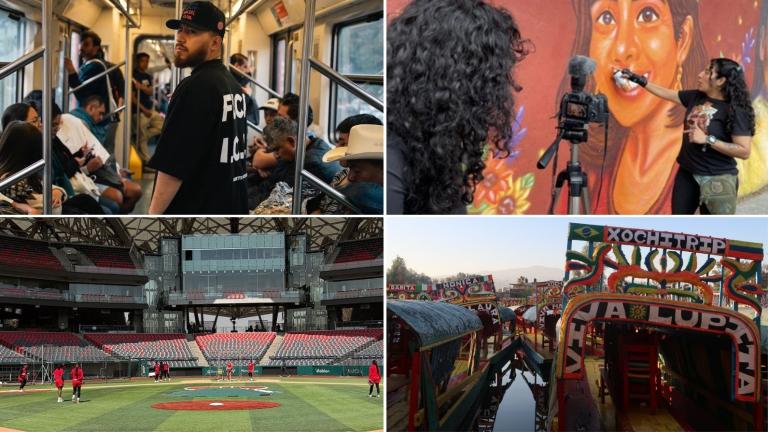
On the waterways of Xochimilco, just south of Mexico City’s center, communities are working to preserve a farming system that has sustained life for centuries. The chinampas, engineered islands of soil built into shallow lake beds, were designed by the Aztecs to grow food while working with the water around them, not against it.
“They built it with the goal of growing their own food, taking advantage of the water that surrounds them,” said Jocelyn Gomez-Prado, a biologist at SECUAM.
But that knowledge is expiring.
As globalization accelerates and urban economies pull younger generations away from agricultural work, fewer people are learning the histories embedded in the land beneath their feet.
Reporters asked young people at the Nino Pa festival in Xochimilco if they had ever heard of chinampas.
“No, I don’t know what that is,” said a 13-year-old boy.
“Chinampas? No,” said a 12-year-old girl.
"Current generations no longer know much about the histories of where they are standing,” said a young woman at the festival.
The stigma surrounding agricultural labor has compounded the problem. Working the land, many here say, has long been associated with poverty and low education levels. They say this perception drives even close-knit farming families to step away.
“If you work in the fields, you are seen as poor, or uneducated, or whatever,” Maya Lopez, a student at Secuam, said. “So my family also stopped doing it at some point. At a certain moment, the line of people dedicated to the land was broken.”
Jimenez sees education as the antidote. Her mission is rooted in her father, who was the original owner of the chinampa land. He taught her how to farm.
“My father’s legacy is the most immediate,” Jimenez said. “He always said that in a sustainable, organic way, we could produce whatever we wanted without damaging the environment.”
Among those she hopes to reach is Jonathan, a 15-year-old boy who’s been working on the chinampa for some time. Others see his presence as a sign of awakening curiosity.
“I think it is important that a young person like Jonathan is inside the chinampa,” Lopez said. “Maybe he won’t dedicate his whole life to this and become a gardener, but he will already know that he is going to have a garden, and he will know how to take care of it.”
Jonathan said he was headed for a life of trouble hanging with his previous crew and that the chinampa gives him peace.
“I would rather be in a place with good people than bad people,” he said. “They’re right. Maybe I could set up my own chinampa one day. At least now, I know how to do it.”
The stakes of this work extend far beyond any individual farm or family. The chinampas of Xochimilco were designated a UNESCO World Heritage site precisely because of what they represent.
“There would be nothing that could replace this ecosystem, which is so important, even for humanity itself,” Jimenez said. “That is why it is declared a heritage of humanity. Not only for Mexicans, but for all the people who live in this world, on this planet, we need it.”
And so the work continues. One chinampa, one meal, and one generation at a time.
Aldo Hernández contributed reporting in Mexico City.