Politics
People Deported to Mexico From the US Work to Find Community, Build Connections
This story is part of a series of reports on life in Mexico City from Medill School of Journalism students in partnership with WTTW News. Read more about the project.
by Thomas Hodgkins and Caroline Geib
Danny Iniestra still has dreams about Virginia.
In his sleep, he is back in his childhood bedroom, waking up to the familiar routines of the life he knew for 20 years. But when he opens his eyes, he is in Mexico City, a place that, despite being his birthplace, feels entirely foreign.
For two decades, Iniestra was a typical suburban kid in Lynchburg, Virginia. As a recipient of the Deferred Action for Childhood Arrivals (DACA) program, he spent his time playing lacrosse and listening to Kanye West. While his birth certificate said Mexico, his roots were firmly American.
In 2025, following a DUI, that distinction became a life-altering reality. Iniestra was deported and dropped into a country that, despite his heritage, feels like a different world. Now at age 28, he is navigating a landscape he barely remembers while mourning the milestones he is missing back home.
“I didn’t get to see my sisters’ birthday party,” Iniestra said. “I didn’t get to celebrate my dad’s birthday with them. Christmas or anything. I think the hardest part is knowing that I’m probably never going to see my parents face-to-face, knowing that I’m not going to be able to hug them again.”
Iniestra is currently barred from re-entering the United States for the next 10 years. While his father holds a green card, legal restrictions prevent his mother from traveling to visit him. He is caught in a geographical limbo, but he is far from alone.
Since the start of the second Trump administration in January 2025, the U.S. has accelerated deportations. According to the Migration Policy Institute, a growing number of these “returnees” are landing in Mexico City.
At Casa de los Amigos, a sanctuary providing housing for displaced people, director Miguel Ángel Lomelí sees the results of this surge daily.
“It was really with the recent start of U.S. President Donald Trump’s term that more deportees began arriving,” Lomelí said. “Not only Mexicans but people of other nationalities as well.”
Just steps from the city’s Monument to the Revolution, a unique community is taking shape. The neighborhood, known as “Little L.A.,” is populated by people who spent decades in the U.S. and are now struggling to adapt to a country they barely remember. They often find themselves “too American for Mexico, yet no longer belonging to the United States.”
To bridge this gap, organizations like New Comienzos, or New Beginnings, provide a lifeline. Jorge Gonzalez, a coordinator for the group, helps people like Iniestra secure Mexican documentation and find work.
For many, their greatest professional asset is their fluent English. This has made the call center industry the primary employer for returnees.
“About 70% of the work that’s being done in call centers is by people that are coming back from the United States,” Gonzalez said. “You’re working in an office and you’re doing customer care, IT service, helping people with their bills.”
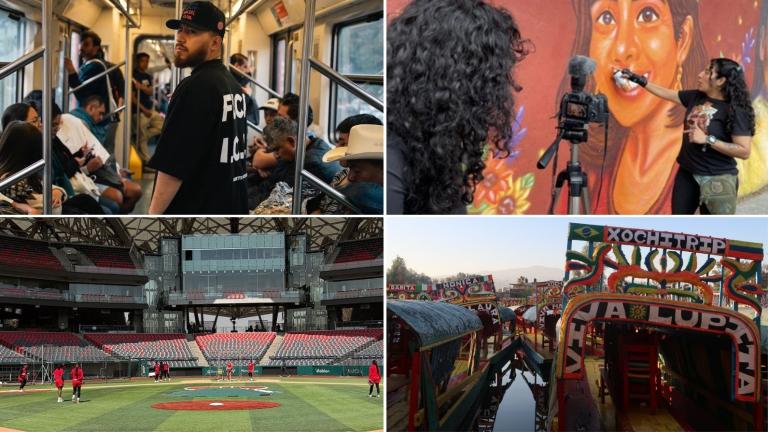
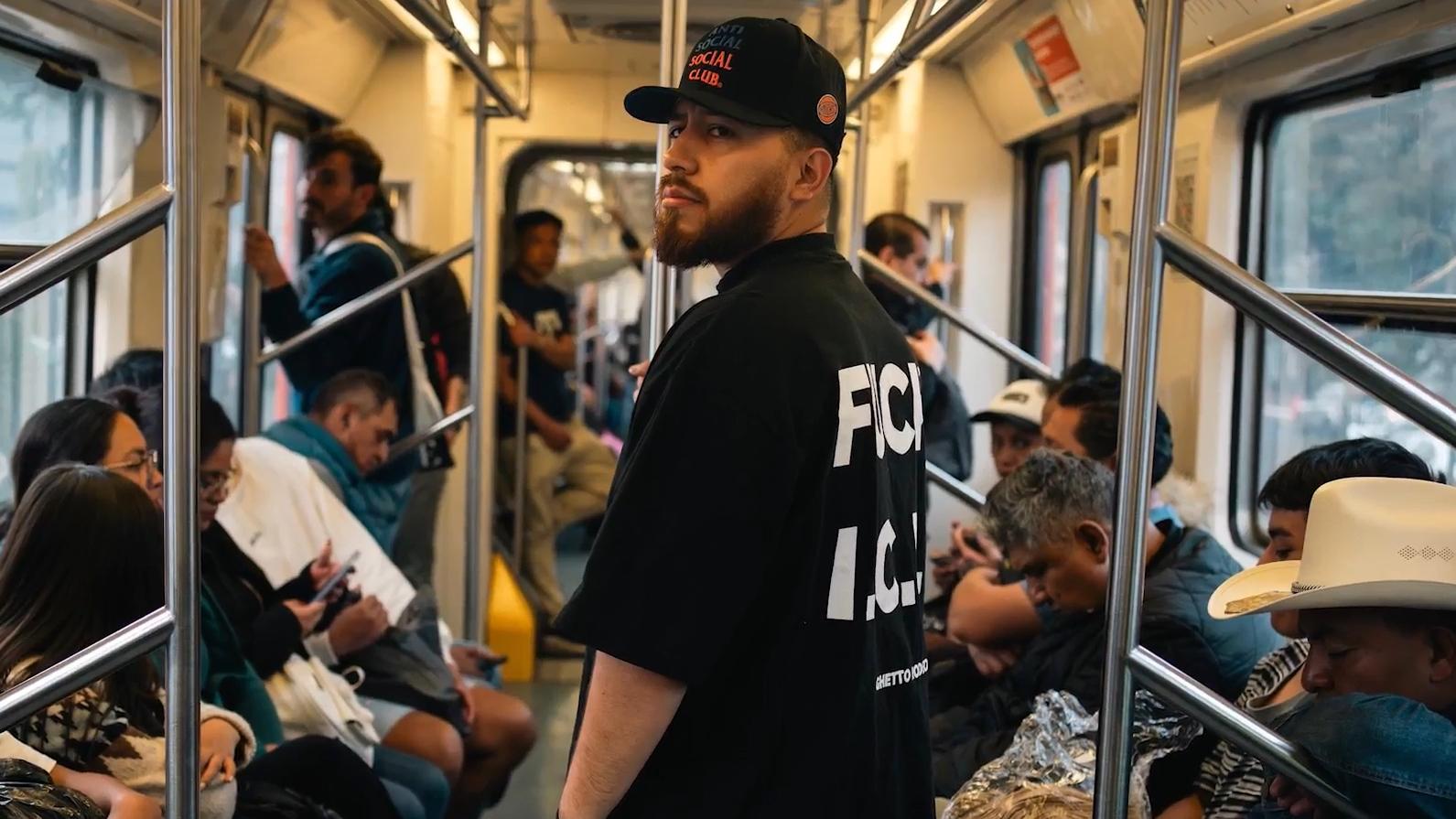 Danny Iniestra rides a train in Mexico City. (Courtesy of Danny Iniestra)
For Iniestra, the “American Dream” has been replaced by what Lomelí calls the “Mexican Dream” — the process of starting from zero. Despite graduating from a U.S. high school a decade ago, Iniestra’s credentials are not recognized here. He is currently retaking high school exams to learn the Mexican history he never studied.
“I don’t know anything about my culture,” Iniestra said. “I can tell you everything that happened in United States history.”
Despite the upheaval, Iniestra refuses to succumb to bitterness. He views his life through a lens of gratitude, focusing on his goal of eventually attending college.
“I think in life, you either see the glass being half full or half empty, and I see it as half full,” Iniestra said. “I don’t have hatred towards anyone. I don’t hate Donald Trump. You can’t fight hate with hate. People just have to get to know each other.”
While Iniestra still hopes to return to the U.S. one day, his current mission is building a new community in the space between two countries.
Edén Bernal contributed reporting in Mexico City.