Politics
Supreme Court Weighs Whether to Limit Mail Ballot Counts After Election Day. How Will It Impact Illinois?
 (WTTW News)
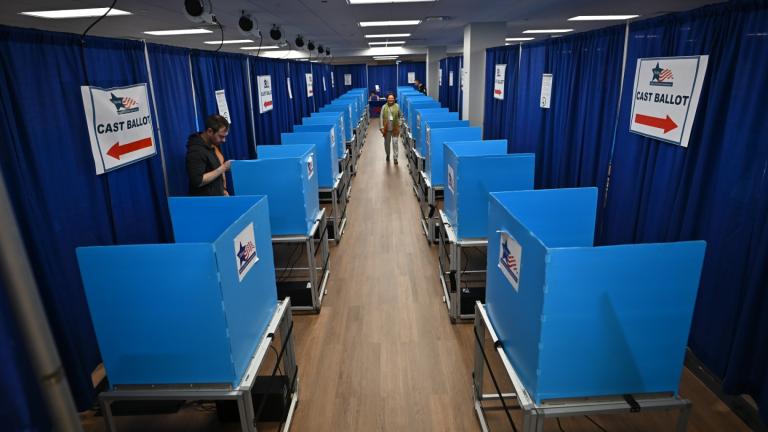
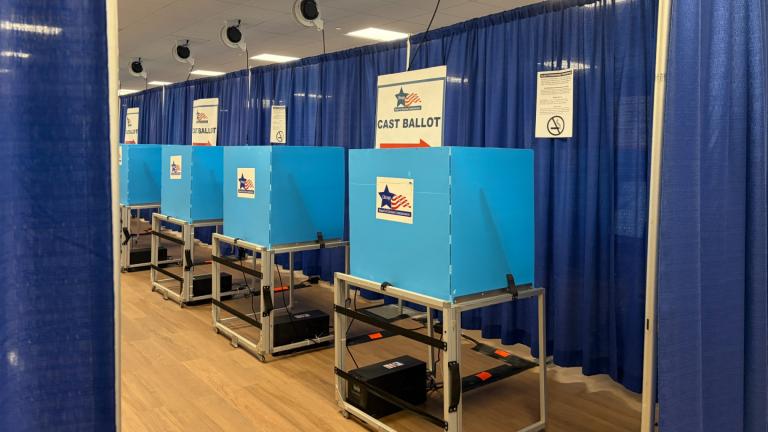
A U.S. Supreme Court case that could restrict counting mail ballots after Election Day is raising alarms among voter access advocates in Illinois while being viewed as a step in the right direction among those who distrust how elections are run in the state.
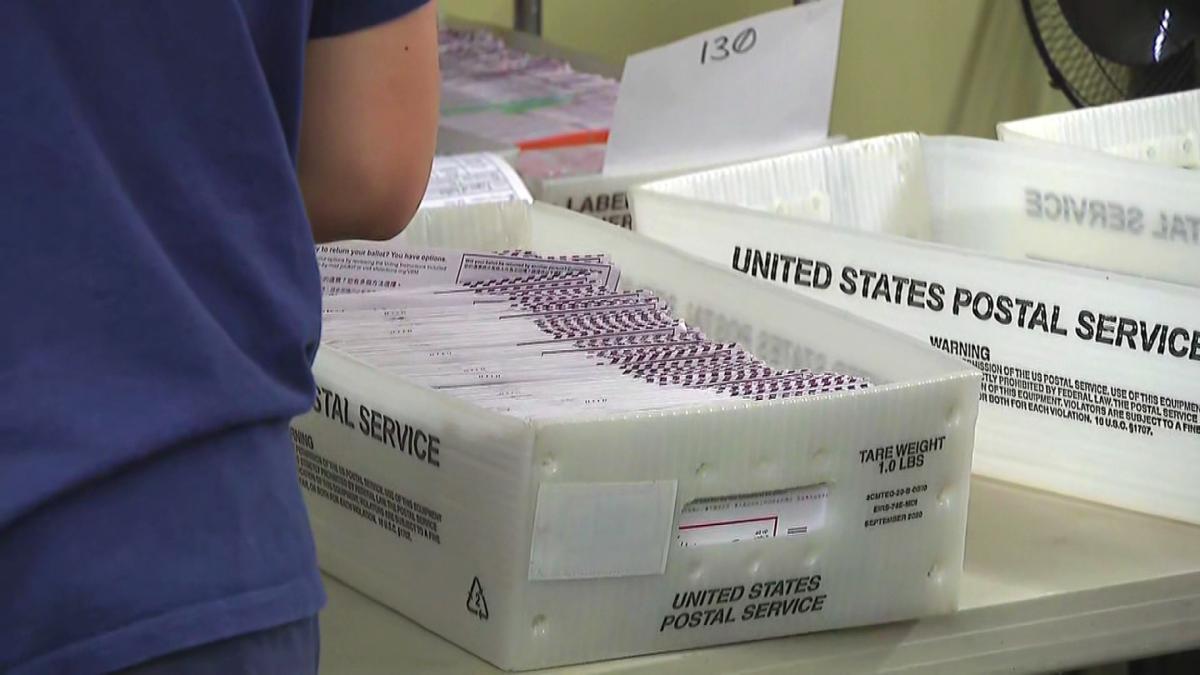
Currently, in Illinois, ballots must be postmarked by Election Day and must arrive up to two weeks after Election Day to be counted.
In the 2024 general election, 106,520 ballots arrived after Election Day and were counted, according to an Illinois State Board of Elections spokesperson. Those ballots amounted to less than 2% of the total 5,705,246 ballots cast in the election in Illinois.
The Supreme Court‘s conservative majority on Monday appeared skeptical of state laws that allow the counting of mail ballots after Election Day. The court heard arguments in a case from Mississippi, which pitted the state against Republican and Libertarian parties. A ruling in the case is likely to come by late June. A ruling that bars counting ballots arriving after Election Day could send election officials scrambling in more than a dozen states, including Illinois, to update rules before the midterm elections in November.
Spokespeople for ISBE and the Chicago Board of Elections declined to comment on the pending case.
The legal challenge is part of President Donald Trump’s broader attack on mail ballots, which he has said is a significant source of election fraud despite research that consistently finds voting by mail is a secure way to vote.
DuPage County GOP chairman Kevin Coyne said many voters he comes across feel that mail ballots are not secure. Coyne said a decision to stop the counting of mail ballots after Election Day would be a “very positive step and long overdue.”
“It’s Election Day, not election month,” Coyne said. “The votes should come in on Election Day, and results should not be getting changed after everybody’s seen the results.”
League of Women Voters of Illinois President Becky Simon views limiting the count of mail ballots as voter suppression. Simon said allowing vote-by-mail ballots to be counted based on their postmark is consistent with other civic processes, such as filing taxes.
“Claims are being made to limit vote-by-mail to Election Day — that’s fixing a problem that does not exist,” Simon said. “Voters do not need more barriers to the ballot.”
Seniors, rural voters, military members, people with disabilities and those living overseas would be most impacted by the decision, according to Simon.
Northwestern University law professor Michael Kang said a Supreme Court decision to restrict the counting of mail ballots after Election Day would have “little impact” on the voting landscape in that it would only affect some states and some voters who don’t return their mail ballots early enough. Still, he said, “there’ll be some voters whose votes don’t get counted.”
A decision to limit mail ballot counts could also introduce more dependence on the post office to ensure ballots are received in time, according to Kang.
For the state’s March 17 primary election, mail ballots are being counted until March 31 as long as they’re postmarked by Election Day. Illinois State Board of Elections spokesperson Matt Dietrich said in an email that an estimated 55,000 mail ballots could arrive after March 17 based on unofficial pre-election ballot reports.
This year, recent changes to U.S. Postal Service policy led local election authorities to encourage voters to return vote-by-mail ballots early. Previously, mail was typically postmarked on the day it mailed out, but now, mail is postmarked on the day it is processed at a USPS facility.
The case seen this week by the Supreme Court is similar to another filed by U.S. Rep. Mike Bost (R-Illinois), who is challenging Illinois election laws allowing ballots to be counted after Election Day. The U.S. Supreme Court ruled earlier this year Bost’s case has legal standing, sending it back to the lower courts.
Bost said the Mississippi case the Supreme Court saw this week could be decided sooner, which would also affect his case.
“It’s an option to give the voter more power, and the voter gets the opportunity to know that their vote counted and that their vote wasn’t offset by possibly a voter fraud,” Bost said. “There have always been absentee ballots, but one thing you want to be sure of is: the person is actually a real person voting, they’re a United States citizen, that they are actually voting in the community that they’re supposed to be voting in that is tied with their address.”
Bost voted in favor of the Safeguard American Voter Eligibility, or SAVE America Act, which passed in the U.S. House last month. The bill requires proof of citizenship when registering to vote, requires photo ID to cast a ballot and limits no-excuse mail voting. The bill has slim odds of passing the U.S. Senate, according to news reports.
As it relates to the November election, a PBS News/NPR/Marist poll from earlier this month found Americans tend to be more concerned with voter access than making sure ineligible voters don’t vote. But there is a divide along partisan lines: Democrats (86%) are more concerned that everyone who wants to vote can cast a ballot, while Republicans (70%) are more concerned about making sure ineligible voters cannot vote, according to the poll.
Because Democrat voters tend to vote more by mail, the results as they stand on Election Day might favor Republicans, but as mail ballots come in after Election Day, it can then shift toward Democrats, which Republicans have a tendency to attribute to fraud, according to Kang.
While forms of mail voting have been around in the U.S. since the Civil War for soldiers, it wasn’t until the last 20 years that mail voting began to expand as more states loosened rules surrounding needing an excuse to vote by mail, according to Kang. But the big shift was during the COVID-19 pandemic, when more people switched to mail ballots over in-person voting, with some continuing to stick to vote-by-mail, he said.
“On mail voting, there wasn’t much of a partisan divide until Trump, and then Trump was searching for things to blame his election loss in 2020 on, and mail voting was one of those things,” Kang said. “That, I think, fed these omnipresent Republican anxieties about voter fraud. … What’s odd about that is it’s not clear that that’s actually what they ought to be doing in terms of partisan self-interest.”
The DuPage County GOP encourages voters to at least register to vote by mail, which can impact voter turnout because it serves as a reminder to vote, according to Coyne.
“We’re encouraging people to at least register to vote by mail so they get their ballot with all the names of the candidates, so they get the reminders and the texts from the election board,” Coyne said. “We’re not necessarily encouraging people to mail in their ballot, though. We’re seeing a lot of hesitancy from our voters in trusting the mail, they don’t feel it’s secure, so they still prefer to do it in person.”
A Supreme Court decision to limit mail ballot counts by Election Day could cause confusion for voters ahead of the November election, according to Simon. She said the League of Women Voters of Illinois is preparing to inform voters about any changes to rules.
Coyne said making sure people feel that the election process has integrity is most critical to address.
“It would be very unfortunate if some votes were not counted because they were mailed too late, but people, if they’re going to vote that way, have to mail them in earlier or just vote in person,” Coyne said.
The Associated Press contributed to this report.
Contact Eunice Alpasan: [email protected]