Arts & Entertainment
Jesse Jackson’s Daughter on His Leadership and Handling Adversity: ‘He Was Not Going to Back Away’
“Let us continue with the work.”
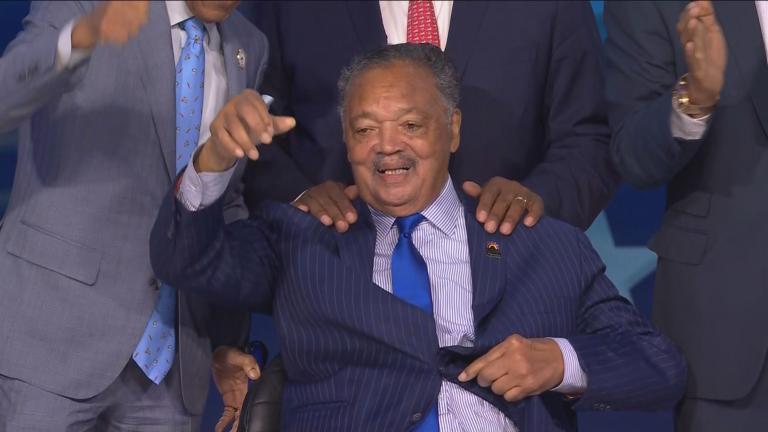
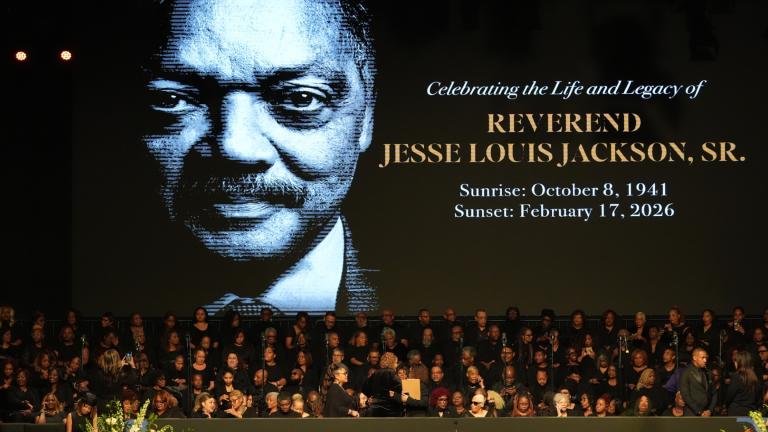
That was the call to action from the family of the Rev. Jesse Jackson, a civil rights activist and religious leader who died last week at the age of 84.
Born in South Carolina, Jackson has deep roots in Chicago, having been appointed by the Rev. Martin Luther King Jr. to run Chicago’s Operation Breadbasket.
Jackson went on to run for president twice, finishing second in the 1988 Democratic presidential primary.
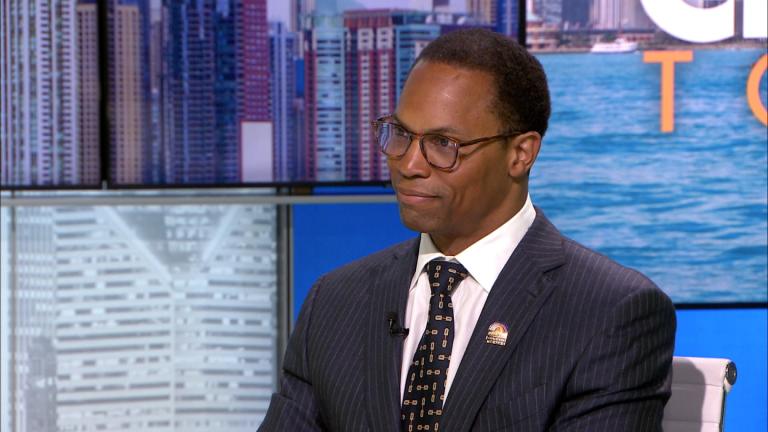
Santita Jackson, host of the Santita Jackson Show and Jesse Jackson’s daughter, joined “Chicago Tonight” to remember her father.
On what she called her father:
“I called him daddy. I took my father out for Father’s Day, and I tried to pay the bill, and he said, ‘No no, don’t take my daddyness from me.’ I was a good and grown woman, and he said, ‘I’m your father. I’m your daddy, don’t take that from me. I take care of you. I don’t need you to take care of me.’”
On worrying about her father’s safety:
“(I worried about him) not being hurt, but being killed. The Chicago police were stationed in front of our home all of my life. He had a police detail assigned to him, and we had a Black security service who also trailed him. I never knew a day that I thought he would live to see the end of. The week of my senior prom, they had in the Parade magazine supplement the 10 most likely targets of an assassination, a global assassination plot. And they had the pope, they had the president, and my father was third on the list. The president had been shot two months before, the pope was shot three days after I read that. And so I couldn’t tell anyone. I didn’t want to talk to my father about that, and I certainly didn’t want to tell my mother and add to her own fears, which she did not express to us. But I knew they were there. We never took anything for granted.”
On her father as a leader:
“One of the things that I learned from him was that he never had enemies. He had opponents. You would be surprised at the people with whom he was able to interact. He could speak with President Trump, and he did. He could speak to people on the far right. He could speak to people on the far left, and they all liked him very much. You knew exactly what he stood for. He was not going to back away from that. But what he was also going to do was, while he was in disagreement with you, he was not going to be disagreeable. He always left the door open for us to have a point of negotiation.”
On how her father handled adversity:
“He understood the criticisms, but he was never addled by criticism. He just said, ‘OK, you have an opinion, but I have a vision. And I’m going to stick to that vision. I’m going to break the tape. I’m going to follow it through. I’m going to keep on running.’ I never really saw my father get down. … One of the things that I do appreciate about him is that he was man enough, grown enough, humane enough, to apologize. He would say, ‘In my finitude, if I hurt you, if my joy bell has lost its resonance, please forgive, for God is not finished with me yet.’”