Politics
Trump’s Claims About Election Fraud ‘Undermine Public Trust,’ UIC Law Professor Says
President Donald Trump is renewing his unfounded claims of widespread voter fraud, maintaining the 2020 presidential election was rigged by Democrats and he is the rightful winner. In a recent escalation, the president called for Republicans to “take over” voting in 15 states — although he did not specify which states — in a bid to nationalize American elections.
States and municipalities conduct their own elections, which is explicitly stated in the Constitution, with some involvement from the legislative branch.
State-run elections are not only constitutional canon, but also a matter of national security.
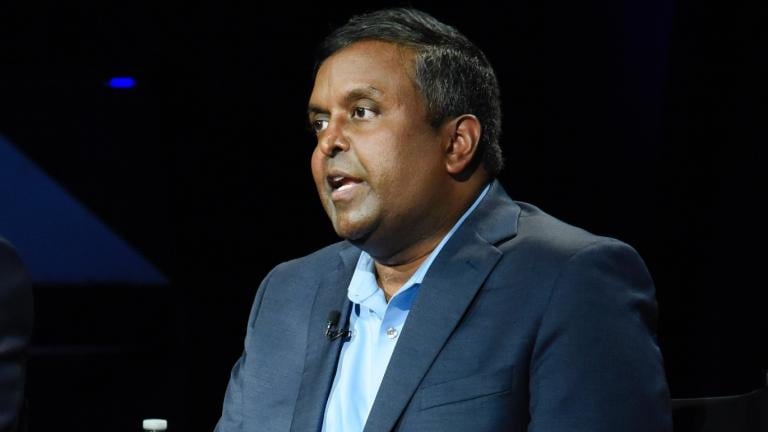
“There are about 8,000 (voting) jurisdictions in the country,” said Jacob Braun, executive director of the Cyber Policy Initiative at the University of Chicago. “It’s really hard to claim that one party stole an election if both parties are administering elections in 8,000 jurisdictions across the country. Separately, it’s really hard for one entity to come in and wholly hack the entire election infrastructure for one candidate when you’ve got 8,000 little jurisdictions around the country that are administering these elections.”
The Trump administration is pushing states to hand over their full voter rolls, or list of actively registered voters. The administration has sued more than 20 states and Washington, D.C., in an attempt to secure the sensitive information, according to the Brennan Center for Justice at New York University School of Law.
These latest comments related to election integrity come after an FBI raid on an election center in the Atlanta metro area, as well as the seizure of voting machines in Puerto Rico, with officials citing concerns over Venezuelan interference.
A probe found no evidence of such interference.
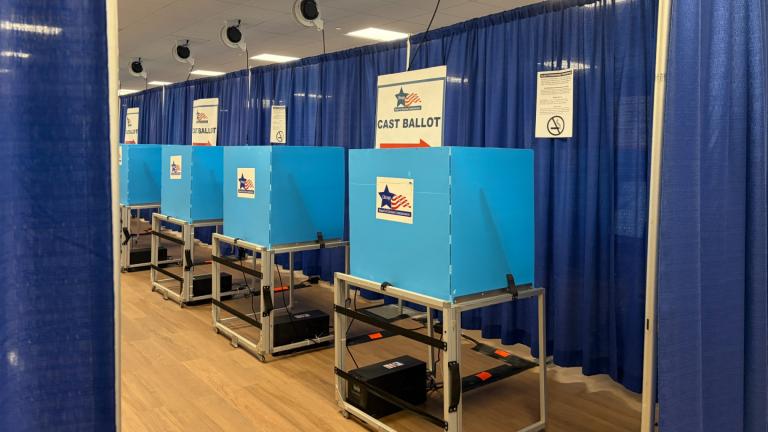
Vulnerabilities in voting machines are not a new phenomenon as any mechanical device has the capability of being hacked. Braun advocates for handmarked paper ballots as an alternative, reliable solution.
“When election officials asked the vendors to make voting machines, they asked them to do two things — make them cheap and make them able to count votes — not make them able to withstand hacks from the Chinese government or ransomware attackers,” Braun said. “So they are what we paid for. We paid for cheap devices that can count votes, but they’re not very secure.”
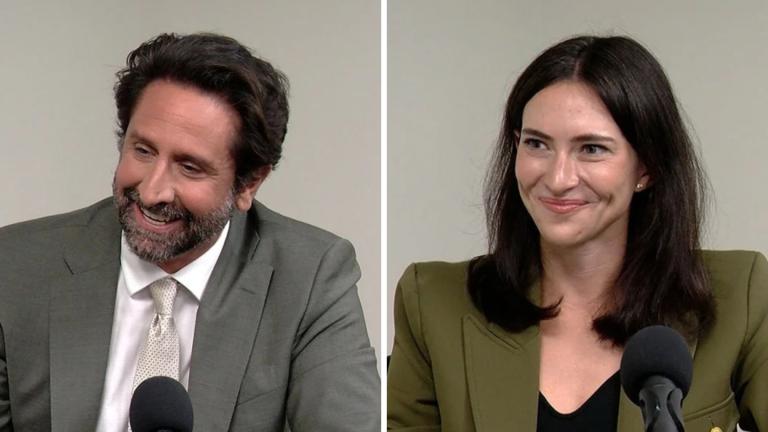
Since the raid in Georgia, Fulton County has legally challenged the administration’s move, motioning for the return of its 2020 election ballots. University of Illinois Chicago School of Law professor Hugh Mundy suspects the administration’s recent actions are less about safeguarding voting and more so an effort to “undermine public trust in the integrity of elections.”
Trump has been a mouthpiece for the conspiracy theory that noncitizens are voting in droves in federal elections. To deter this alleged activity, a new voter ID bill, the SAVE Act, will be voted on this week in the U.S. House of Representatives. If enacted, it would require voters to present a birth certificate, passport or other proof of citizenship to register to vote.
Those opposed to the legislation believe it would deter legal voters from registering as many don’t have ready access to those documents. Also, it is already illegal for noncitizens to vote in any state or federal elections. Some legally present noncitizens can vote in some local elections if the municipality permits it.
“I think this is an attempt by the president to justify things like the SAVE Act, which are less about integrity of elections than disenfranchising voters,” Mundy said. “By making these outrageous proposals about federalizing elections, I think he’s making palatable the idea of something like the SAVE Act, which is problematic.”