Crime & Law
From Businesses to Churches, How ‘Operation Midway Blitz’ Has Impacted Daily Life for Chicagoans
Since the announcement of so-called “Operation Midway Blitz” in September, thousands of people living in Chicago have been arrested by federal immigration agents.
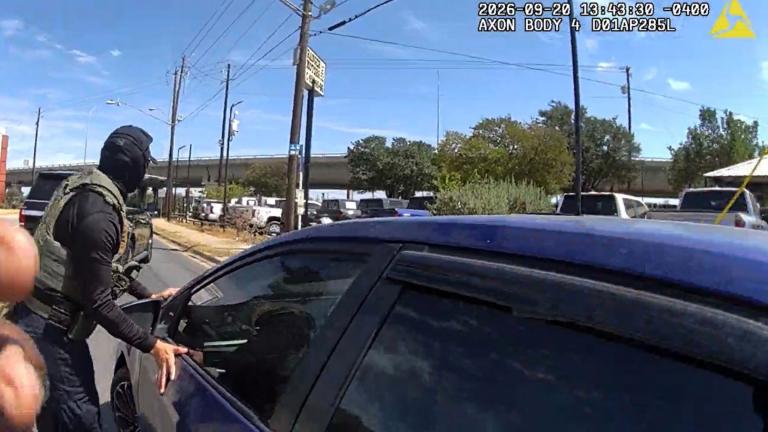
For many Latino families and business owners, everyday routines became suddenly complicated with the added fear of masked federal agents patrolling neighborhood streets, often in unmarked vehicles.
In a news release detailing “The Economic and Human Costs to Illinois Communities,” Illinois Gov. JB Pritzker criticized the U.S. Department of Homeland Security for disrupting the daily lives of Chicagoans.
“Operation Midway Blitz turned ordinary life into a risk for thousands of Illinois residents,” Pritzker said. “This campaign of intimidation tore communities apart, hurt our economy, and violated the basic rights of people who call Illinois home.”
Community leaders from around the city joined “Chicago Tonight” to discuss the operation’s impact on local life.
Small Businesses
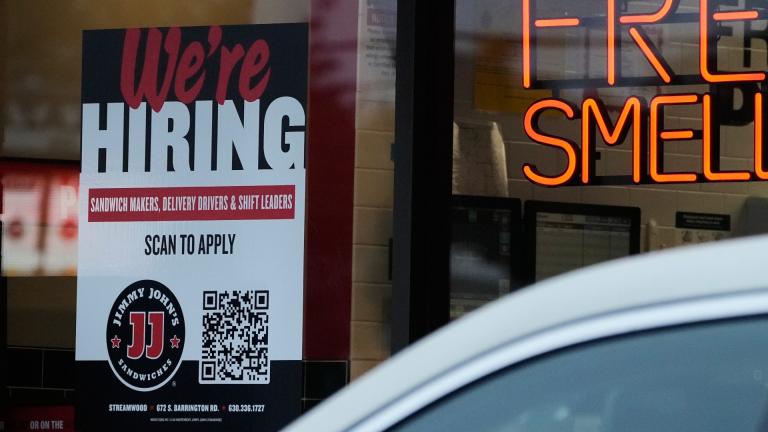
Crain’s Chicago Business reported in early September, before the commencement of “Operation Midway Blitz,” that small businesses in Little Village were experiencing 20% to 50% year over year revenue drops because of immigration arrests.
That reality worsened with the launch of “Operation Midway Blitz,” according to Edgar Estrada, marketing and communications manager for the Illinois Hispanic Chamber of Commerce.
“It’s been terrible honestly,” Estrada said. “We hear so many horror stories of just not seeing the same liveliness that you see typically in that neighborhood. … It’s definitely lowered the foot traffic.”
Estrada, who lives in the Berwyn-Cicero area, recalled visiting Little Village as a child and feeling a strong sense of community — one he said has been lost since the start of ramped-up immigration enforcement.
“I always liked getting an elote preparado,” Estrada said. “We’re hearing people talk about how they’re not seeing the same liveliness anymore, they’re not feeling like they can be themselves.“
The Hispanic Chamber of Commerce creates resources and hosts events to support Latino-owned businesses. Estrada said that, though “Operation Midway Blitz” was a setback, he is confident that businesses can bounce back.
Parishioners
Chicago’s faith leaders have been among the most salient groups voicing opposition to federal immigration enforcement efforts.
The Coalition for Spiritual Leadership, a Chicago-based Catholic and Christian community organization, led several gatherings at the Broadview ICE Detention Center, where clergy sought to provide religious services to people detained inside.
Notably, the Rev. David Black, senior pastor of the First Presbyterian Church, was struck multiple times with pepper balls by ICE agents while protesting outside Broadview.
Away from Broadview, ICE’s presence led some Latino parishioners to stop attending mass, according to the Rev. Juan Vargas, priest at Our Lady of the Rosary Parish.
“The (attendance) numbers have been lower but still strong,” Vargas said. “We would see 50 or 70 depending on any ICE activity in the area, which would cause a little bit of extra fear.”
Vargas added that some parishioners who typically attend the Spanish mass have opted to join the English mass.
“To them they feel a little bit more comfortable thinking there’s less of a risk,” Vargas said.
During mass, the parish’s ushers scope out the surrounding neighborhood for any signs of ICE, Vargas said.
For parishioners who opt to stay home altogether, Vargas has adopted a “reach-out” policy.
“The big push has been — reach out,” Vargas said. “If you have not heard from someone or miss someone, reach out to your neighbor, give them a knock to make sure they’re doing well.”
Teachers and Students
In late October, Chalkbeat reported that CPS schools serving large Latino populations were experiencing greater drops in student attendance than the district as a whole. Chalkbeat reported that students were afraid of being “picked up by ICE.”
Immigrant parents have also expressed fear they could be stopped by ICE while driving their children to school, prompting community organizations to create “magic school buses,” in which volunteers drive groups of children to and from school.
Sylvelia Pittman, a teacher at Henry H. Nash Elementary School of Fine & Performing Arts, said Latino students have been showing up less, if their families have not already left the area entirely.
“We have seen some of our students not come to school because of this; 30% of our population is our Latino population,” Pittman said. “Some of them have talked about being afraid to come to school. … We’ve lost some students because families have started to move, because of the fear of coming in contact with ICE as well.”
Pittman said the hardest thing she’s had to adjust to as a teacher is staying with kids whose parents are late picking them up from school.
“The worst part is when you have those students whose parents are late,” Pittman said. “You see the despair in the child’s face and you’re trying to tell them, ‘It’s OK, they’re on their way.’ You’re trying to reassure them, while the whole time you pray to yourself, like, ‘Lord, please don’t let that parent have been picked up (by ICE).’”
Chicago Public Schools has maintained that this year’s attendance data mirrors that of last year’s.
“Attendance data from the current school year remains largely consistent with last year,” CPS wrote in a statement. “The District is aware that there are some student groups that have seen dips in attendance at discrete points this fall.”
Community Organizations
ONE Northside is a neighborhood organization representing communities like Rogers Park, Uptown and Ravenswood. The group works with local officials to advocate for progressive policies.
But when “Operation Midway Blitz” was announced, Lindsey Joyce, co-president of ONE Northside’s Board of Directors, knew her organization needed to create a Rapid Response Network.
“These are our people,” Joyce said. “… If you come for one Chicagoan, you come for us all — that’s who Chicago is. Chicago’s an immigrant town, it always has been.”
Joyce and ONE Northside set out to create new infrastructure from the ground up, eventually culminating in the Northside Lakefront Rapid Response Network — a group of volunteers that patrol neighborhoods for ICE activity and verify sightings.
ONE Northside also created a “neighbor to neighbor” network.
“It’s a network of trusted allies who are doing everything they can to reduce the risk to the most vulnerable people,” Joyce said. “This can look like picking up groceries for folks, it can look like taking kids to and from school, it can look like helping to fill out paperwork …. We had over 500 neighbors sign up.”
Although “Operation Midway Blitz” remains officially active, ICE and Border Patrol’s presence in Chicago has dwindled with the onset of colder weather, though officials say it could increase again in the spring.