Politics
Noem Links the Seizure of an Oil Tanker Off Venezuela to US Antidrug Efforts
Video: Joining “Chicago Tonight” are Juan González, a senior fellow with the Great Cities Institute at the University of Illinois Chicago; Alberto Coll, director of global engagement and a law professor at DePaul University; and Lina Britto, an associate professor of Latin American and Caribbean studies at Northwestern University. (Produced by Joel Ortiz)
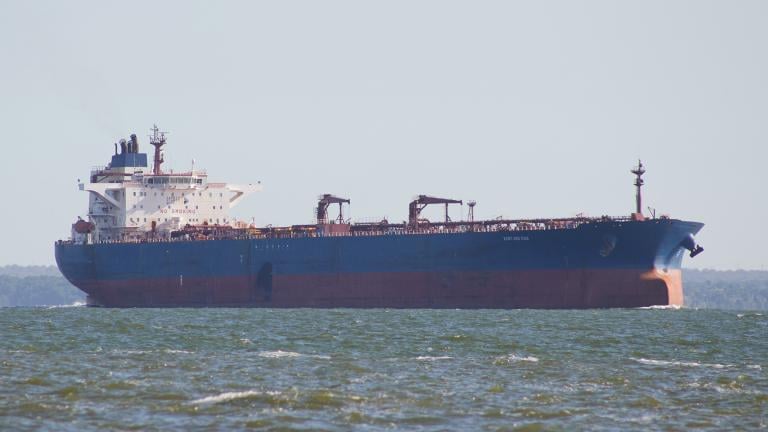
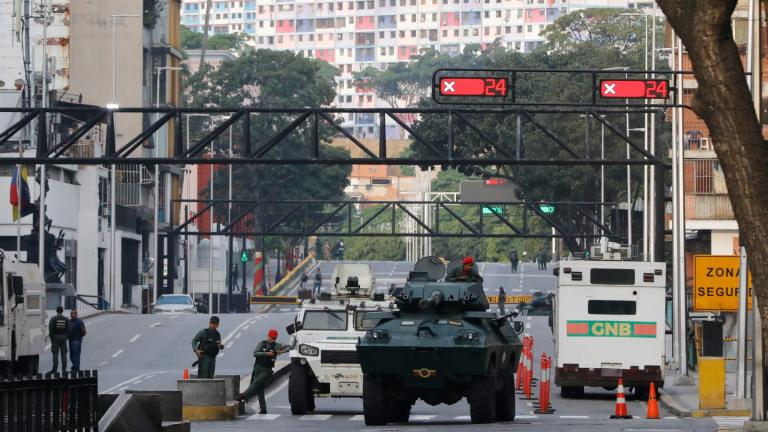
Homeland Security Secretary Kristi Noem on Thursday linked the seizure of an oil tanker off the coast of Venezuela to the Trump administration’s counterdrug efforts in Latin America as tensions escalate with the government of President Nicolás Maduro.
Noem’s assertion, which came during her testimony to the House Homeland Security Committee, provided the Republican administration’s most thorough assessment so far of why it took control of the vessel on Wednesday. Incredibly unusual, the use of U.S. forces to seize a merchant ship was a sharp escalation in the administration’s pressure campaign on Maduro, who has been charged with narcoterrorism in the United States.
Trump officials added to it Thursday by imposing sanctions on three of Maduro’s nephews. The Venezuelan leader discussed the rising tensions with Russian President Vladimir Putin on Thursday. The Kremlin said in a statement that Putin reaffirmed his support for Maduro’s policy of “protecting national interests and sovereignty in the face of growing external pressure.”
Asked to delineate the U.S. Coast Guard’s role in the tanker seizure, Noem called it “a successful operation directed by the president to ensure that we’re pushing back on a regime that is systematically covering and flooding our country with deadly drugs and killing our next generation of Americans.”
Noem went on to lay out the ”lethal doses of cocaine" she said had been kept from entering the U.S. as a result.
Asked Thursday whether U.S. operations in the region were about drugs or oil, White House press secretary Karoline Leavitt also gave a bifurcated answer, saying the administration was “focused on doing many things in the Western Hemisphere.“ She noted that such seizures could continue, arguing that the commodities being transported were used to fund the illegal drug trade.
“We’re not going to stand by and watch sanctioned vessels sail the seas with black market oil, the proceeds of which will fuel narcoterrorism of rogue and illegitimate regimes around the world,” she said.
The Justice Department had obtained a warrant for the vessel because it had been known for “carrying black market, sanctioned oil,” Leavitt said, adding that “the United States does intend to get the oil” that was onboard the tanker.
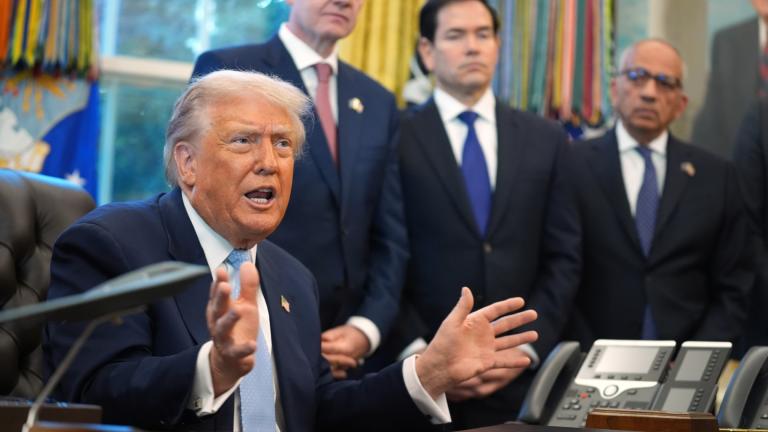
Trump told reporters a day earlier at the White House that the tanker ”was seized for a very good reason.” Asked what would happen to the oil aboard the tanker, Trump said, “Well, we keep it, I guess.”
The U.S. has built up the largest military presence in the region in decades and launched a series of deadly strikes on alleged drug-smuggling boats in the Caribbean Sea and the eastern Pacific Ocean, a campaign that is facing growing scrutiny from Congress.
Trump, who has said land attacks are coming soon but has not offered more details, has broadly justified the moves as necessary to stem the flow of fentanyl and other illegal drugs into the U.S.
Venezuela’s government said in a statement that the tanker seizure “constitutes a blatant theft and an act of international piracy.” Maduro has insisted the real purpose of the U.S. military operations is to force him from office.
Local Reaction to Escalating Tensions
Juan González, a senior fellow with the Great Cities Institute at the University of Illinois Chicago and co-host of “Democracy Now!,” believes the seizure of the oil tanker is an escalation of war on behalf of the United States.
“There’s no doubt,” González said. “There are 15,000 troops on the largest aircraft carrier in the world on the Caribbean Sea and they’re not just there for vacation.”
He pointed to Trump’s declaration that the airspace over Venezuela is closed — something González said can only legally be done when warring countries are in an armed conflict or with the approval of the United Nations.
González said the seizure of the oil tanker is “further proof the administration is inching toward a military conflict with Venezuela.”
Trump has made open threats to Maduro, calling both him and Colombian President Gustavo Petro narcoterrorists.
It’s a term that Lina Britto, associate professor of history at Northwestern University in the school’s department of Latin American and Caribbean studies, said is being used to manufacture consent for further armed conflict with Venezuela.
“He’s not only manufacturing consent (in the United States), what he’s also doing with the deployment of this kind of discourse is closing ranks with the right-wing forces within each country,” Britto said.
Britto said several members of Colombia’s right-wing party have visited Trump in the White House over the past year. Those visits, she said, are a show of support for the White House’s plans for Venezuela.
Alberto Coll, professor of law and director of global engagement at DePaul University, said he believes intervention with Venezuela is not only legal but also necessary. Coll argued the U.S. has the authority under international law to intervene when another country is participating in illegal activity.
Calling Venezuela a dictatorship, Coll said the country “is responsible for facilitating, as a state actor, the export of huge amounts of cocaine to the United States and now to Europe.”
Because of the alleged involvement in the drug trade, Coll said he believes there is a legal foundation for the United States’ controversial boat strikes.
Some 87 people were killed in the strikes across the Caribbean, which also targeted nationals of Colombia and Trinidad and Tobago. Most notable among the strikes was the so-called “double tap” on an alleged drug boat near Venezuela — something Trump defended.
The order was made under U.S. Admiral Frank Bradley, who claimed those killed were responsible for killing millions of Americans with illicit drugs. Critics argue the order violates international law and could potentially be considered a war crime.
Coll said he agrees with critics of the double-tap strike, calling for an investigation; if proven true, he added, it would be a war crime. González, on the other hand, said every strike was unlawful — “not only the double-tap strike, all of the strikes are unjustifiable under international law.”
González said there was no proof these boats were carrying drugs, and even if they were, that it would be cause for investigation, arrest and trial — not extrajudicial killings.
Britto and González shared concerns about the legitimacy of Trump’s war on drugs. Britto believes the escalation is less about drugs and more an attempt to seize control over Venezuelan resources and potentially bring about a regime change to ensure dominance in the region.