Politics
Mayor Johnson Rejects Rival Budget Proposal, Vowing to Veto Garbage Fee Hike
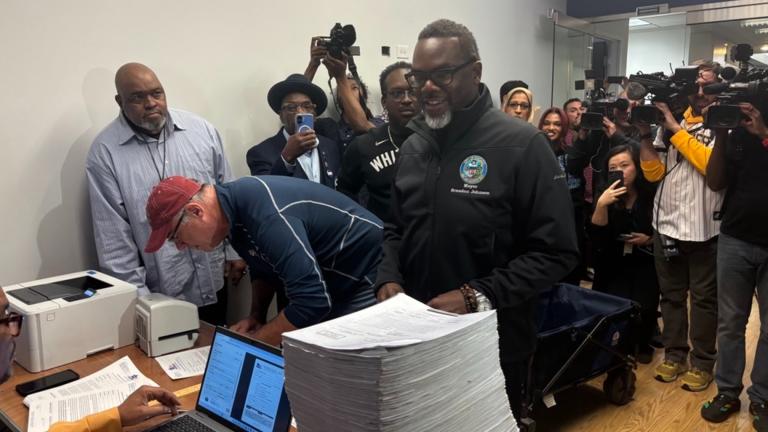
Mayor Brandon Johnson flatly rejected on Tuesday a plan to bridge a portion of the city’s $1.19 billion budget gap without hiking taxes on large firms by nearly doubling garbage fees and hiking liquor taxes.
Johnson dared members of the Chicago City Council to override his veto of a budget that would charge homeowners $18 per month to have their trash and recycling picked up to generate an additional $55 million annually. While Chicago homeowners now pay $9.50 per month, it costs the city $37.50 per month to haul away each home’s garbage, according to a task force report.
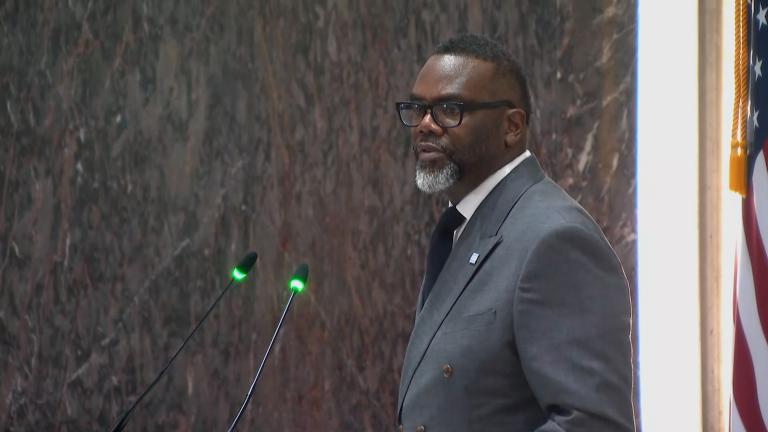
“Look, they’re going to have to find 34 alders who can compel working people that they’re gonna balance the budget off of their backs,” Johnson said, vowing to “protect the working people of Chicago.”
Senior Chicagoans would be charged $9, but the proposal does not identify how the city would allow older Chicagoans to apply for the discount or ensure it was not abused.
It would take 34 alderpeople to override a mayoral veto.
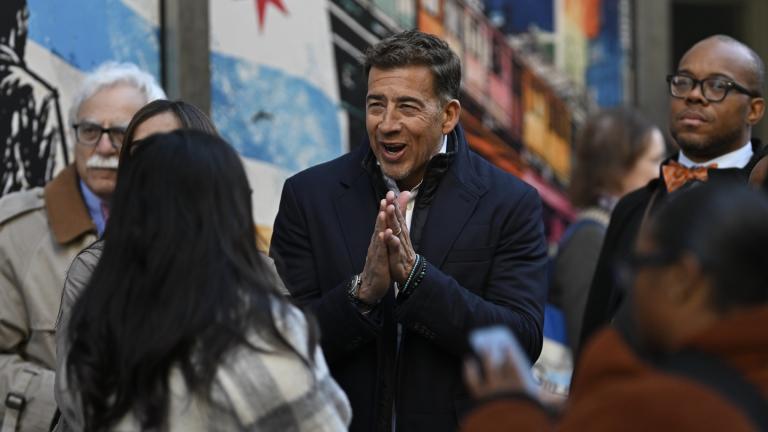
Hours after the mayor’s City Hall news conference, where he was combative at first and then emotional, 26 alderpeople signed on to a budget proposal that would scrap Johnson’s plan to impose a $21 per month per employee tax on companies with more than 100 employees but hike the garbage fee for the first time since it was imposed a decade ago, hike the congestion surcharge for all rides to and from an expanded area downtown and increase liquor taxes.
Read the full alternative plan.
That leaves no clear path to a deal with just 28 days left before the deadline to avoid an unprecedented shutdown of city government.
Much of the debate over Johnson’s 2026 spending plan, which imposes $623 million in new taxes on the wealthiest Chicagoans and largest firms, has centered on his call to reimpose the head tax.
Johnson continued Tuesday to campaign for the tax, which would generate $100 million to fund violence prevention and youth employment programs, even after his spending plan failed to advance to the full City Council more than two weeks ago.
“These people are playing games with working people in this city,” Johnson said, struggling to maintain his composure. “We’re talking about $100 million in a $6 billion budget for families who do not have food, people who don’t have scarves and gloves and coats and toiletries.”
Johnson, who has often spoken about growing up in poverty, again said corporations that have seen their federal taxes slashed by President Donald Trump to “put more skin in the game” and take the burden of closing the city’s budget gap off of working people.
“People can’t pay their rent, corporations are making a killing right now, and we have alders that are more interested in defending these big corporations than families like mine who went without food and electricity and could not afford rent and mortgage,” Johnson said. “The vast majority of the people in this city are struggling every single day just to make the ends meet, and we have alders that are playing games with those families.”
In addition to generating $24 million from new liquor taxes, the alternative budget plan would also hike the congestion surcharge for all rides to and from an expanded area downtown to generate $65.4 million, as Johnson originally proposed. In the face of intense opposition, Johnson reduced the size of the area where rides would cost more, only to have his critics ask him to put it back in the budget.
Johnson proposed hiking liquor taxes in last year’s budget, only to drop that plan in the face of implacable opposition.
The alternative plan also makes $90 million in cuts identified by consulting firm Ernst & Young in a report designed to help Chicago officials root out inefficiencies. However, the authors of the report acknowledge that at least $26.5 million of those cuts would either take time to materialize or would require the unions representing 90% of city employees to agree to benefit reductions for their members.
The alternative plan calls for the city to collect $150 million more in debt from residents than the mayor’s plan projects, and urges the city to increase its estimates on tax revenue collection by $31.6 million, saying the mayor’s plan is too conservative.
The plan also relies on $26 million from an “augmented reality” advertising licensing program that would allow companies to impose videos and other content on city properties like Millennium Park or the Riverwalk that can be seen through a smartphone, virtual reality glasses or tablet.
“It’s really irresponsible to attempt to balance its budget on speculation,” Johnson said, acknowledging that his budget does not count on immediately getting $31 million by taxing social media companies with a tax of 50 cents per month for every active user after the first 100,000 users.
That first-of-its-kind tax is all but certain to draw a legal challenge, Johnson said.
While Johnson’s spending plan calls for the city to make an additional payment of $120.8 million to the city’s four underfunded pension funds, the alternative proposal would boost that to $260 million in an effort to prevent the city’s credit rating from being downgraded.
While Johnson told reporters the alternative budget proposal would also add a $1.25 fee on every package delivered to Chicago homes and businesses and count on $30 million in revenue from yet-to-be installed slot machines at O’Hare and Midway airports, those proposals were not included in the plan released Tuesday afternoon.
“Give me something I can work with,” Johnson said. “Give me something I can work with, but challenging the ultra-rich in this country to put more skin in the game — that should not be considered a radical idea.”
Contact Heather Cherone: @HeatherCherone | (773) 569-1863 | [email protected]