Politics
Wall Street Ratings Agency Sounds Alarm About Chicago’s Finances
 (WTTW News)
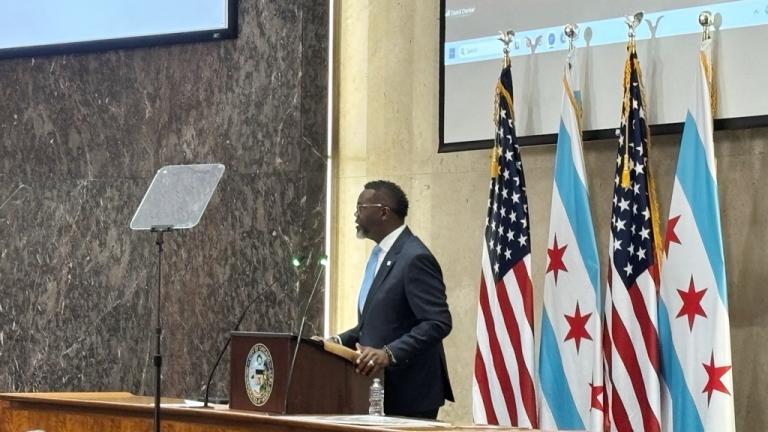
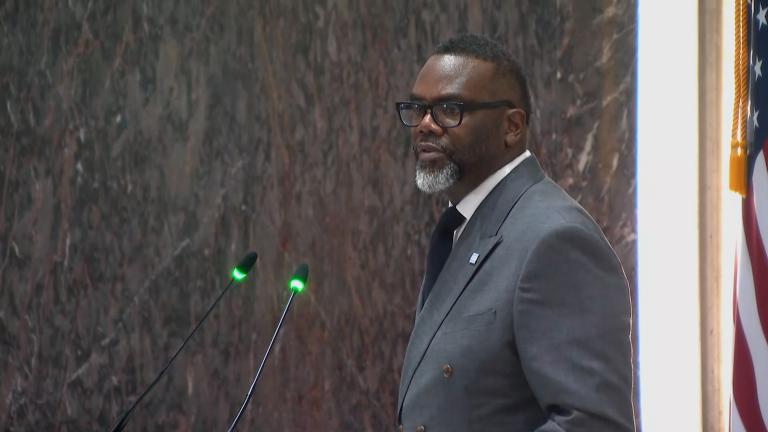
A Wall Street ratings agency sounded the alarm over Chicago’s finances on Thursday as alderpeople continued weighing Mayor Brandon Johnson’s $16.6 billion spending plan for 2026.
S&P, one of a handful of major ratings agencies, revised its rating outlook for Chicago from stable to negative, according to an analysis released Thursday.
“Internal political conflicts around taxing, spending, and other issues have produced gridlock resulting in suboptimal fiscal outcomes, most recently precipitating a downgrade in the city’s rating in January 2025,” the ratings agency wrote.
There is at least a one-in-three chance of a lower rating within the next two years, “based on the final fiscal 2026 budget and actual performance during the year relative to the budget; city leadership’s efficacy in delivering structural solutions to address the gap as the city draws on recent consultant and task force reports identifying wide-ranging gap-closing options; and the fate of the city’s advance pension payment, as the payment is set to grow considerably next year and may prove an ongoing challenge absent additional budget adjustments.”
Chicago’s credit rating is BBB with a negative outlook, according to S&P. A credit rating of BBB indicates a government agency has “adequate capacity to meet financial commitments,” but is susceptible to “adverse economic conditions.” It is two notches above a junk rating.
“The revision was prompted by the city’s ongoing, heavy reliance on one-time measures in the fiscal 2026 budget proposal, its significantly diminished balance sheet following consecutive years of large budget deficits and the proposed reduction in the city’s advance pension contribution to about half of what is required by the policy,” S&P analysts Scott Nees, Blake Yocom and Jane Ridley wrote.
The ratings issued by the four major ratings agencies help determine how much the city must pay in interest to borrow money, much like an individual’s credit score.
Johnson’s proposed spending plan calls for more than $617 million in new taxes on the wealthiest Chicagoans and largest firms in order to blunt cuts imposed by the Trump administration while avoiding drastic cuts in city services and thousands of layoffs.
Johnson defended his spending plan proposal as a “structurally sound budget.”
“The structural tension is so pronounced because . . . for a very long time we have embraced this mediocre approach towards how we solve these challenges,” Johnson said.
Chicago’s finances remain structurally unbalanced, pinched by soaring pension costs, spiraling personnel costs and a massive amount of debt. Officials are staring into a financial abyss after hitting the so-called “fiscal cliff,” with Chicago’s federal COVID-19 relief funds exhausted and tax revenues lagging after a period of high inflation.
Chicago’s financial condition is also threatened by a looming economic slowdown, rising inflation and efforts by the Trump administration to scale back funding for Chicago as the president continues to target his political opponents, officials said.
Johnson’s spending plan calls for the city to make an additional payment of $120.8 million to the city’s four underfunded pension funds. That additional payment is more than 55% smaller than the additional payment made in 2025, records show.
In August, the city had planned to make an additional payment to the city’s four pension funds of $219.4 million, records show.
The city faces a nearly $2.85 billion pension bill in 2026 in order to comply with a state law that requires two of Chicago’s pension funds be funded at a 90% level by 2055 and the other two by 2058, ensuring they can pay benefits to employees as they retire, according to the forecast released Friday.
The city faces a deadline of Dec. 31 to approve a spending plan for 2026.
Contact Heather Cherone: @HeatherCherone | (773) 569-1863 | [email protected]