Politics
What Redistricting Efforts Could Mean for Illinois Voters
Republicans and Democrats are in an escalating national fight over congressional seats — and Illinois could get involved.
Some members of Congress are pushing for Illinois to redraw its districts to get another Democratic seat. U.S. House Minority Leader Hakeem Jeffries traveled to Illinois last month to make the case to local lawmakers, who have the final say.
As Illinois lawmakers mull the idea, California is voting on a redistricting plan that could give Democrats five more seats in the Golden State. The effort is in response to states like Texas redrawing its maps to give Republicans an advantage.
It was speculated that Illinois lawmakers would discuss redistricting in last month’s veto session, but they left the topic on the table.
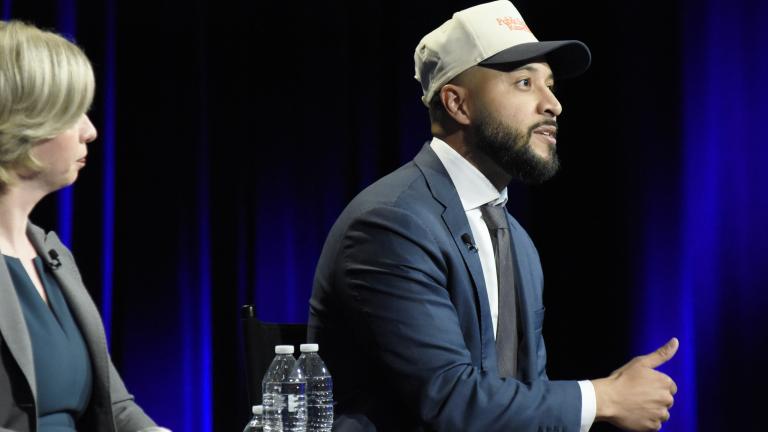
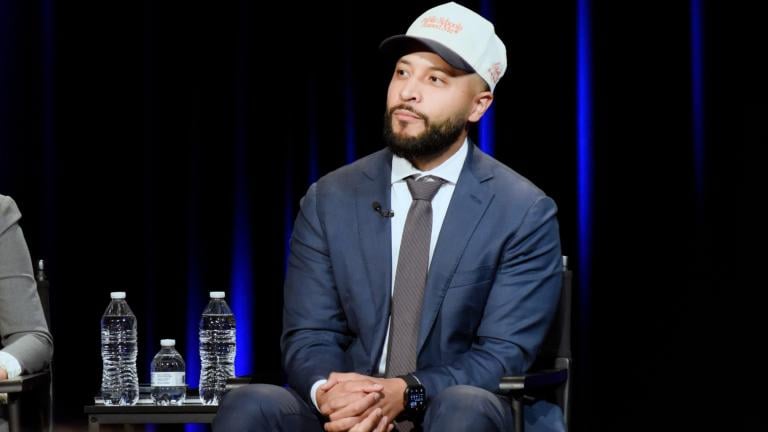
Ryan Tolley, executive director of advocacy group CHANGE Illinois, said he’s skeptical that a remap in Illinois has enough political backing.
“Illinois was so gerrymandered in 2021 with our congressional districts,” Tolley said. “From an advantage standpoint, there’s not more Democrats in the state could do to pick up more seats.”
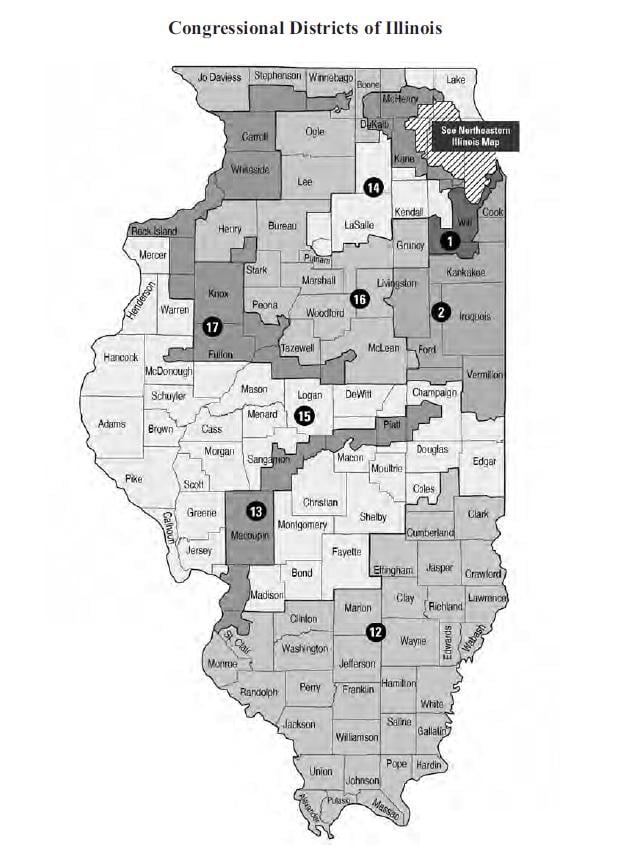 A map of Illinois congressional districts. (Illinois Secretary of State’s Office)
Democrats control 14 of the 17 congressional districts in Illinois — a ratio Tolley said took aggressive gerrymandering to achieve.
In Indiana, Gov. Mike Braun called for a special session to redo the state’s congressional maps and get two more Republican seats. However, Indiana lawmakers aren’t set to meet over redistricting efforts until December.
The U.S. Constitution doesn’t say anything about how congressional redistricting should be done, but the Illinois Constitution requires state legislative districts to be “compact, contiguous and substantially equal in population.”
Common Cause has listed criteria for redistricting, calling for more racial equity for voters of color and public participation through ballot initiatives, among other things.
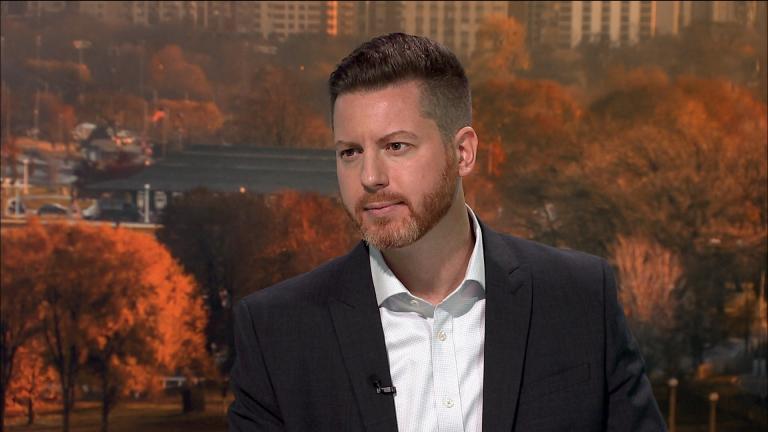
“You really do need that community input when you’re deciding what groups are going together for particular representative districts,” said Elizabeth Grossman, executive director of Common Cause Illinois.
Some advocates have raised concerns about a remap potentially diluting the voting power of Black and Latino voters. Meanwhile, the U.S. Supreme Court is considering whether there should be an expiration date for race as a factor in drawing voting districts. The high court is taking up a case that could overturn a provision in the Voting Rights Act that bans racial discrimination in voting.
Texas is facing legal challenges after its remap in August. Other states such as Virginia, Missouri and North Carolina are considering redistricting as well.
Tolley said he’s concerned about the impact of an ongoing partisan arms race for political power.
“The scope of it is unprecedented,” Tolley said. “We’ve never seen this many states decide to game the system in this way and at an extreme. This does become an every two year election issue where each state looks at how they can maximize their partisan advantage in Congress.”
Groups like CHANGE Illinois and Common Cause Illinois have pushed for redistricting to be done independently — an effort that has little support among politicians. U.S. Sen. Dick Durbin has said he doesn’t think Illinois should do it unless all states do it.
Grossman said efforts to squeeze out another Democratic seat could dilute voters’ power to select their own leaders, and politicians should be concerned about voter suppression.
“You’re sitting here telling me that it’s going to be a Democratic seat and you’re not trying to earn my vote,” Grossman said. “You’re just trying to draw me inside or outside of a line. That’s a horrible way to govern.”