Politics
Measure Designed to Protect Chicago’s South, West Sides From Pollution Stalls
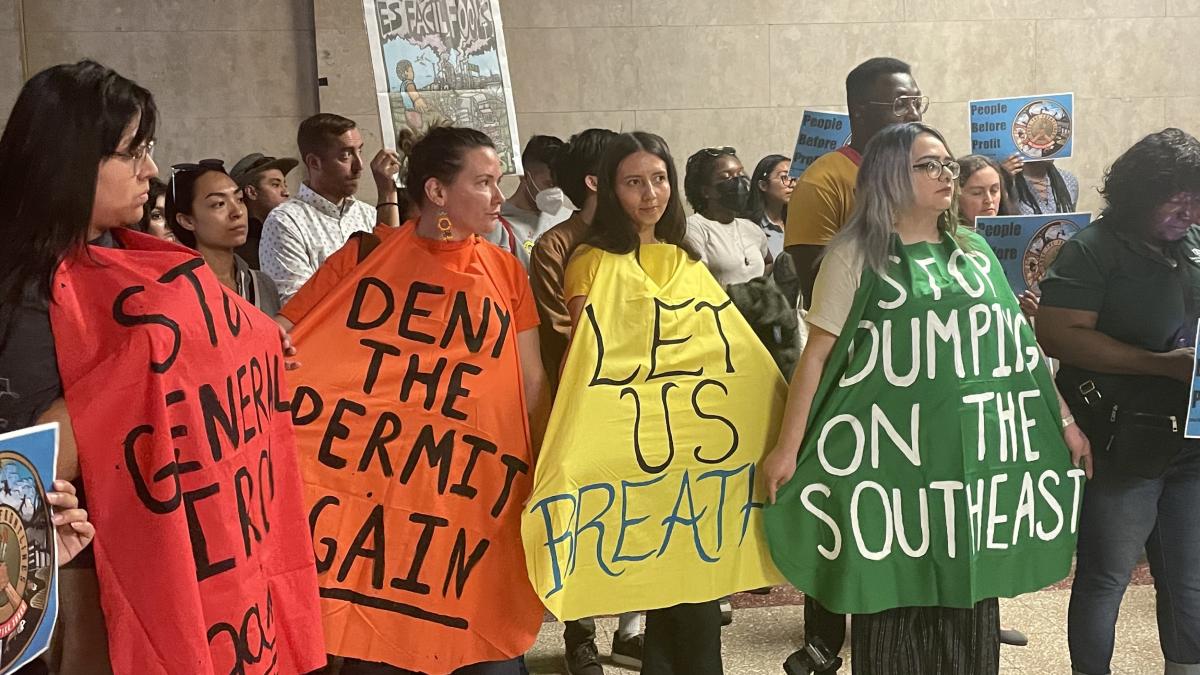 Activists protest plans for a metal scrapper on Chicago's Southeast Side at City Hall on Tuesday, June 6, 2023. (Heather Cherone/WTTW News)
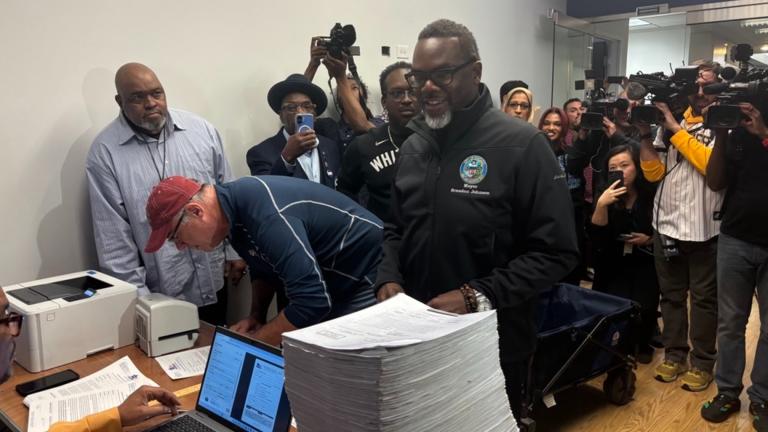
A measure designed to reduce the burden air, water and soil pollution imposes on South and West side neighborhoods remains stalled, six months after Mayor Brandon Johnson introduced the proposed ordinance and more than two years after the mayor promised to act.
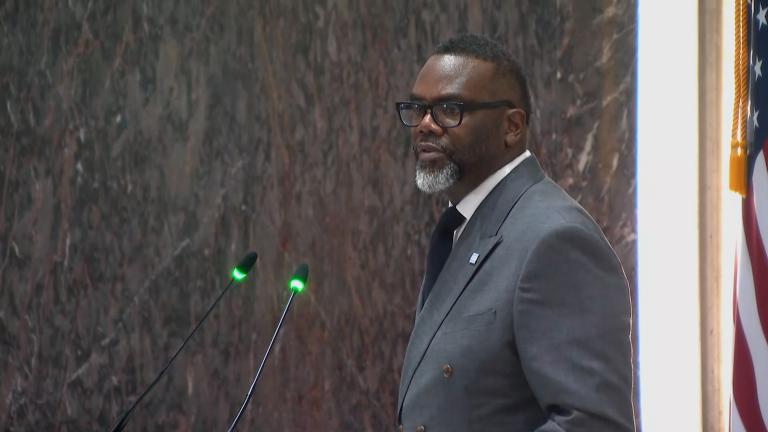
Even though the city’s annual departmental budget hearings were put on hold Monday to allow the Chicago City Council’s Zoning Committee to consider the measure named for Hazel Johnson, known as the mother of the environmental justice movement for her work in Altgeld Gardens, Ald. Bennett Lawson (44th Ward) announced he would not call a vote on the measure, long mired in legislative limbo.
That is typically an indication that a proposed ordinance does not have enough votes to advance to the full City Council.
Instead, alderpeople peppered city officials with questions about the measure, which faces opposition from not only business groups, including the Chicagoland Chamber of Commerce, but also labor organizations, including the Chicago Federation of Labor, because of concerns that the measure would snarl new and expanding businesses in red tape, preventing them from creating new jobs.
Olga Bautista, the executive director of the Southeast Environmental Task Force, told alderpeople that was a “false choice that does a disservice to families like mine.”
“We don’t have to choose between good jobs and clean air,” Bautista said.
The proposed ordinance would require industries that want to set up shop or expand in Chicago to submit a study that examines the amount of existing air, water and soil pollution in a community — not just what the proposed project is expected to add if it is approved.
Department of Environment Commissioner Angela Tovar said the ordinance is designed to streamline the application process, setting clear rules and timelines for officials to act on proposals while giving residents a meaningful chance to weigh in before city officials approve the proposal.
But Tovar and other officials could not tell alderpeople how long that new study would take, on average, as compared with the current process.
Ald. Julia Ramirez (12th Ward) said the ordinance was designed to prevent what happened in McKinley Park from happening to another Chicago neighborhood. Without any notice to the community, an asphalt plant opened next to McKinley Park’s namesake park.
In 2020, city officials declined to help fund an affordable housing complex, saying pollution from the plant made the location unsuitable for new homes.
The original version of the proposal would have created an Environmental Justice Advisory Board that would have the authority to approve, or reject, proposed industrial developments. Instead, the current version of the measure gives that board no authority over individual projects but only the ability to weigh in on city policies and issues.
That change was not enough to resolve concerns that the measure would make it impossible for new industrial businesses to win city approval.
In 2023, Johnson campaigned on a platform that promised to put an end to what he called “literal sacrifice zones” — neighborhoods home to Black and Latino Chicagoans where industrial firms are allowed to pollute the air, water and soil with impunity, making residents sick and degrading their quality of life.
The ordinance is an attempt to implement the findings of an assessment, which began in 2021, that was required under the terms of an agreement reached by former Mayor Lori Lightfoot with the U.S. Department of Housing and Urban Development that required the city to stop allowing industrial businesses to continue to pollute the already dirty air, water and soil on Chicago’s South and West sides.
That agreement resolved allegations levied against the city by federal officials who concluded Lightfoot’s administration violated the civil rights of Black and Latino Chicagoans by allowing a metal shredding and recycling operation to move from the North Side to the Southeast Side that “continued a broader policy of shifting polluting activities from White neighborhoods to Black and Hispanic neighborhoods, despite the latter already experiencing a disproportionate burden of environmental harms.”
That agreement not only required the city to document the disproportionate burden of pollution of the South and the West sides but to identify what officials will do to protect residents of neighborhoods suffering from “burdens associated with intensive industrial and transportation uses.”
Federal officials announced in August that they would not enforce that agreement, citing President Donald Trump’s “different priorities.”
Contact Heather Cherone: @HeatherCherone | (773) 569-1863 | [email protected]