Politics
Carol Moseley Braun Reflects on Life, Historic Political Career in New Memoir
Carol Moseley Braun is making waves in the push for more diverse leaders in politics.
In 1993, she became the country’s first Black woman senator — shuttling her into the national and cultural spotlight.
From her stint in the Illinois General Assembly to serving as the ambassador to New Zealand and Samoa, Moseley Braun has made a journey through the ranks — but not without some obstacles along the way.
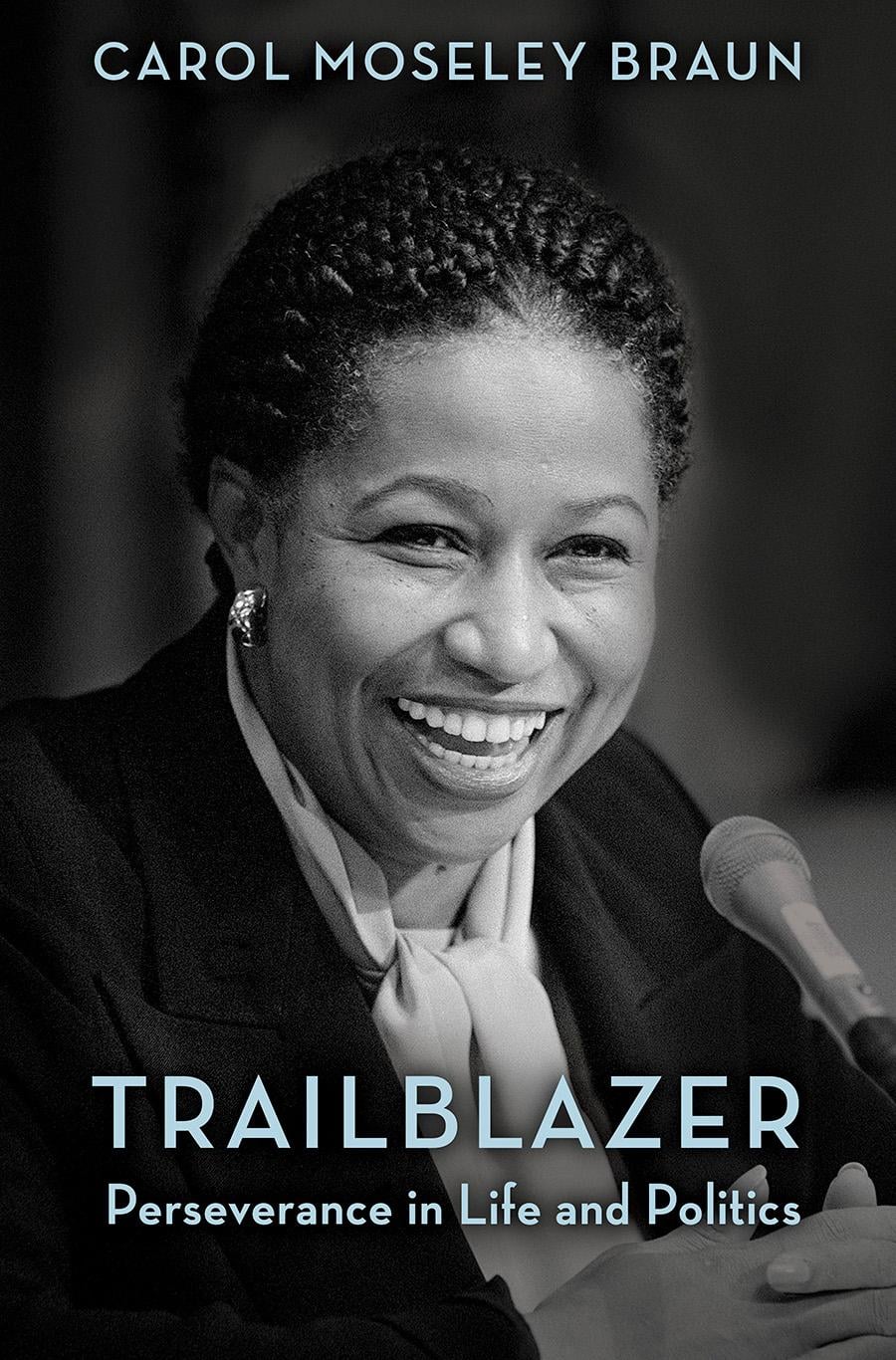
She reveals how she broke through barriers in her new memoir, “Trailblazer: Perseverance in Life and Politics.”
Despite her storied career spanning three decades, Moseley Braun wrote in her book that her entry into politics was accidental. She said her upbringing and her experiences growing up during the civil rights movement exposed her to social justice at a young age. While she would get involved in local protests and political organizations in her youth, she never thought she would run for public office.
“I had actually run for office before, unwillingly; I didn’t know that was going to be my future path,” Moseley Braun said. “When I was in college, I was secretary of the Action Party, running for the student government leadership. I did that and I had no idea at the time that was a clue to where I was going to go with my career.”
Moseley Braun also credits her father, who introduced her to the civil rights and labor movements at an early age. She said she kept the principles he taught her when she later became active in protests in college and law school. In the book, she reflects on her memories marching in Marquette Park with the Rev. Martin Luther King Jr. in 1966 when she was 19 years old.
She also gets personal in the memoir, opening up about some hard moments — such as losing her reelection bid to keep her U.S. Senate seat, her childhood domestic violence experiences and her divorce. While navigating those challenges as a public figure was tough, Moseley Braun said her perseverance helped her overcome them.
“You just take one foot in front of the other and you just keep doing what you think is right, and it’ll come out fine,” Moseley Braun said. “My mother was a great influence. She’d say, ‘Do the best job you can where you’re planted.’ That became a signal for me just to work hard at whatever it was that I was doing and try to do the best. That was the best expression of who I was, and it made a difference.”
Read an excerpt from the book below:
My life and those of my forebears intersects with the rich, diverse, and complex history of these United States.
In the 1950s, I was among the first “Brown babies”—Negro children who integrated schoolhouses around the country after a landmark Supreme Court case. In my neighborhood school, bullied and even placed in the “dummy row” by my teacher, I defied expectations and would do so for the rest of my life.
In my teens, I marched with Dr. King as part of the Civil Rights Movement. In high school, I benefited from federal programs and scholarships that helped me become the first in my family to graduate from college.
In my twenties, I had a front row seat to the women’s and Black Power movements.
Along the way, I was one of the few women and Black students in my law school class, where I met my future husband. Our interracial marriage was a sign of the changing times, and our love child is my greatest treasure.
As a young, idealistic community advocate in the ’70s, I won a longshot election for the Illinois General Assembly, beating a candidate backed by Chicago’s notorious political “Machine.”
I rose through the leadership ranks to become the legislature’s first Black woman to serve as assistant majority leader.
A decade or so later, running on a “unity” ticket of multiracial candidates, I was elected the recorder of deeds for Cook County, Illinois, the first Black woman in this executive position.
Being elected to the Senate was one of the greatest triumphs of my life. Yet my arrival on Capitol Hill was rife with obstacles, controversies, and lessons learned. After one term, I lost my seat in Congress, but the universe still had more “firsts” awaiting me.
President Bill Clinton appointed me as the US ambassador to New Zealand and Samoa. As the first Black woman in the post, it was an opportunity to showcase our country’s diversity on a global stage.
Afterward, I returned to a life unbound by politics and polls: teaching, consulting, and launching an organic food company. During that time, I vowed never to seek office again.
Yet in 2004, I leapt into the fray of politics yet again. This time I was running for president of the United States of America.
I was not the first woman, nor the first woman of color to seek the highest office in the land. However, I was the lone woman in a crowded field of Democrats during that political cycle. I followed in the footsteps of the legendary congresswoman, Shirley Chisholm, and became only the second African American woman in America’s history to seek a major party nomination for president.
Truly, I have had experiences beyond my wildest dreams. From conferring with US presidents and First Ladies, to attending state dinners and meeting global leaders and royalty, to being named an honorary member of an Indigenous tribe in New Zealand, to visiting the South Pole as an ambassador representing our country.
Yet my outsized life, one in which I have frequently felt like an outsider, has always been an uphill climb.
I have had to overcome a learning disability. I’m a survivor of domestic abuse. I have lost a beloved sibling to the mean streets. When my parents split up, the family was torn asunder and we experienced days when there was no water or electricity in our home. I’ve been a divorced, single mother who parented long-distance. I’ve known loneliness and heartache and abandonment. I have suffered the sting of political defeat and crushing loss in my personal life.
What has saved me to see another day is a divine force, the Source that soothes every sorrow. I often say that my life has been filled with adversity, adventure, and serendipity, anchored by God’s amazing grace.
Carol Moseley Braun is still here.
Excerpted from the book Trailblazer: Perseverance in Life and Politics by Carol Moseley Braun. Copyright © 2025 by Carol Moseley Braun. Reprinted with permission of Hanover Square Press. All rights reserved.