Crime & Law
Brandon Johnson Condemns Cuts Imposed by Trump’s Tax, Spending Bill as ‘Unholy’
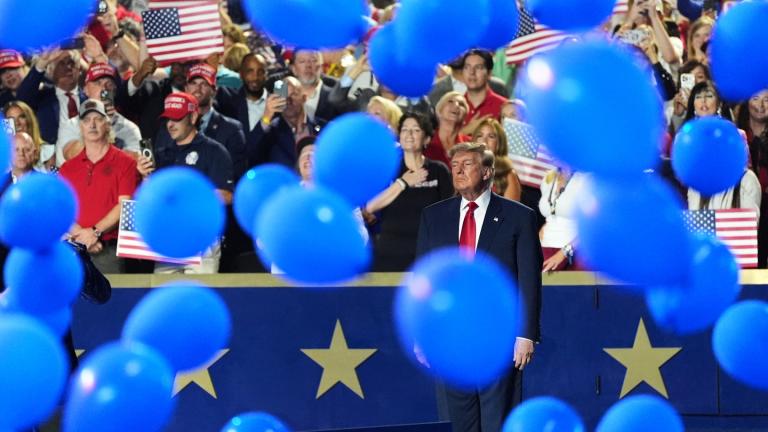
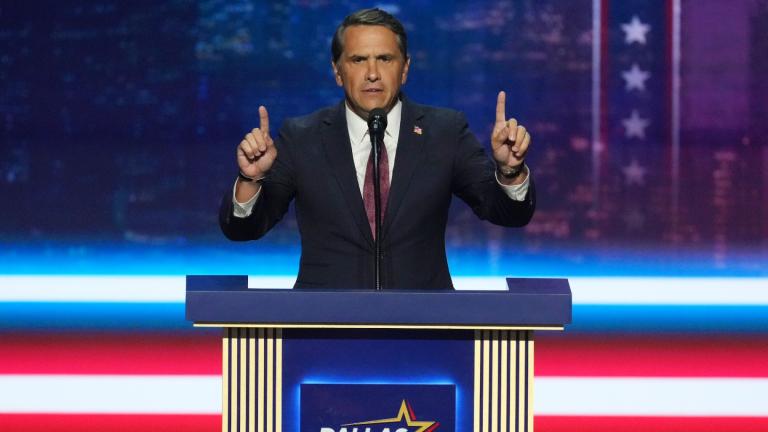
Mayor Brandon Johnson added his voice Tuesday to the chorus of Democratic leaders condemning the large tax breaks for the wealthiest Americans and deep spending cuts to the nation’s social safety net signed into law by President Donald Trump.
“This is an abomination. This is sinful. It’s unholy,” Johnson said Tuesday at a City Hall news conference, his first since the bill passed both the U.S. House and Senate. “This bill is a fundamental attack on our democracy and our way of life.”
Johnson vowed four times during an hour-long news conference to “fight” the law’s provisions, which is likely to make Chicago’s already bleak financial outlook significantly worse as the federal government makes deep cuts to food assistance, health care coverage for the poor and education funding. At the same time, the new law offers the most significant tax cuts to the wealthiest Americans.
“Economists and analysts all agree that this bill essentially represents the largest upward transfer of wealth in our nation’s history,” Johnson said. “This bill literally takes from the poor to give to the rich.”
While city officials are still conducting a “full analysis” of the bill’s impact on Chicago, Johnson said the cuts will “cause even more hardship for those most in need.”
Nearly 11% of current Medicaid enrollees in Illinois will lose coverage over the next decade, and nearly half are children, according to Gov. JB Pritzker’s office.
One in five households in Chicago do not always have enough to eat, and 600,000 Chicagoans rely on the Supplemental Nutrition Assistance Program, known as SNAP, Johnson said.
“This bill is a direct assault on their ability to survive,” Johnson said.
The bill’s provisions could also reverse the drop in homicides and violent crime in Chicago, Johnson said. Since the start of the year, homicides are down nearly 32%, as compared with the same period in 2024, and all shootings are down more than 40%, according to city data.
That steep drop in violence comes even after a violent Fourth of July holiday weekend and several recent mass shootings, the deadliest of which killed four people and injured 14 others outside a River North bar.
“When we talk about community safety, it’s no secret that poverty is a major driving factor in crime and violence,” Johnson said. “So these cuts only continue to exacerbate neighborhoods that are riddled in poverty.”
Johnson credited the drop in violence in Chicago to the expansion of programs designed to prevent violence before it erupts, rather than asking law enforcement to respond after someone is traumatized.
However, Trump has already moved to slash federal funding for those programs, and state or city officials will be unable to make up the difference.
Police and violence prevention groups, which Johnson referred to as CVI, or shorthand for Community Violence Interruption, are now working well together — something “well past due,” Johnson said.
“There is an impact when CVI is cut, right?” Johnson said, adding that it will increase the “burden” on law enforcement to respond to violent incidents and prevent retaliatory acts of violence.
The bill also includes an additional $165 billion for the Department of Homeland Security, which the Immigration and Custom Enforcement Agency has said it will use to expand efforts to deport as many undocumented immigrants as possible to fulfill Trump’s promise to implement the largest mass deportation effort in U.S. history.
The includes $45 billion for the construction of new immigration detention centers, including family detention facilities, according to the bill.
That will enable ICE to operate as a “militarized force” across the country, Johnson said.
City officials will have to be “far more thoughtful and even innovative” as deportation efforts ramp up in Chicago, Johnson said.
Contact Heather Cherone: @HeatherCherone | (773) 569-1863 | [email protected]