Arts & Entertainment
Inside Chicago’s Queer Ballroom Scene: ‘This Little Slice of Fantasy’
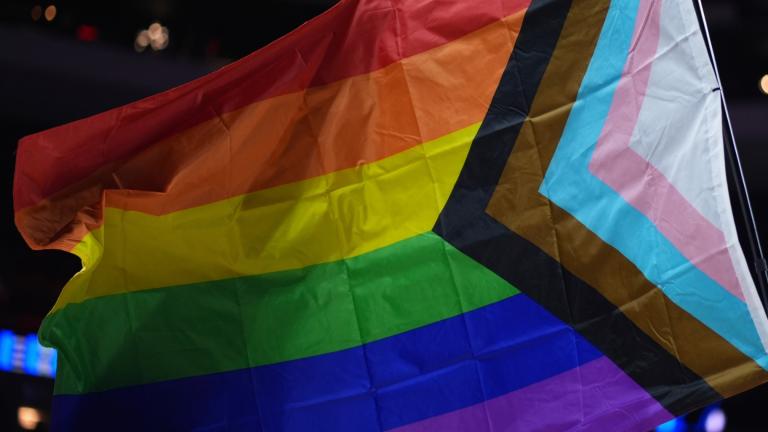
“Pride is a protest” has been a repeated refrain this June. It harkens back to the roots of resistance that evolved into Pride month, a time of celebration for the history and culture the LGBTQ+ community has created, and recognition of the continued struggles the community faces.
This year, some Chicagoans are leaning into the joyful aspect of Pride via the local ballroom scene — the subculture that was pioneered by Black and Latino queer and transgender people in the 1960s that bore the popular house dance style voguing.
“Voguing is a freestyle dance that was born in this underground, pageant-adjacent, Black and Brown queer nightlife space,” said Ian Damont Martin, a Cincinnati native and Chicago resident who’s been taking vogue classes at TEXTURED Dance Studio in Uptown for the last two years.
Martin’s first introduction to the ballroom scene and voguing was from watching Season 4 of the reality TV series “America’s Best Dance Crew” where Vogue Evolution, a dance troupe, first appeared in the mainstream.
While Martin wasn’t formally in the ballroom scene until recent years, he was part of youth step teams, which he affectionately calls ballroom’s “queer counterpart,” as both subcultures sprouted out of African American cultural corners and use familial language like “sisters” and “brothers” to describe peers in the same group, fraternity/sorority or house, in ballroom’s case.
A house is like a chosen family, with many deriving their names from fashion houses.
Ian is in the Kiki House of Juicy Couture along with his partner, William.
“It [voguing] really emulates some of the poses from the big magazine in the ‘80s and ‘90s,” Martin said. “There’s traces of it as far back as the early 1900s, thinking about William Dorsey Swann and some of the early drag pageants. It still exists to this day — this little slice of fantasy.”
While Chicago’s scene is much smaller than New York’s, where the culture originated, it’s still a vibrant and ever-growing space.
Ballroom’s pageantry comes to life in the form of balls. Participants and houses compete in various categories for prizes, money and trophies. Some of the categories are: Runway, Vogue Femme, and Realness.
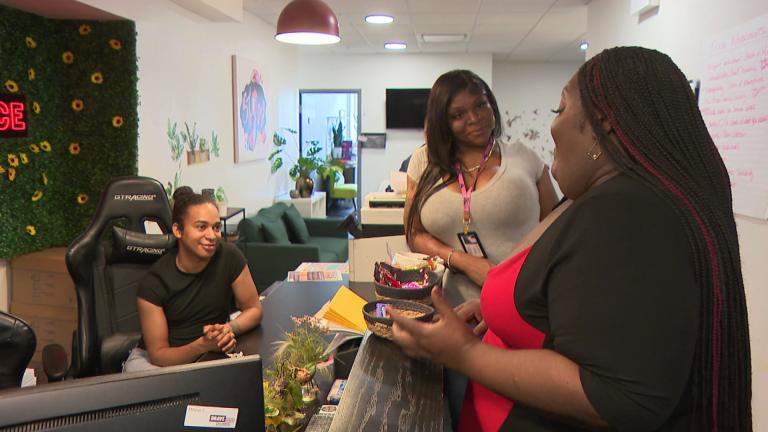
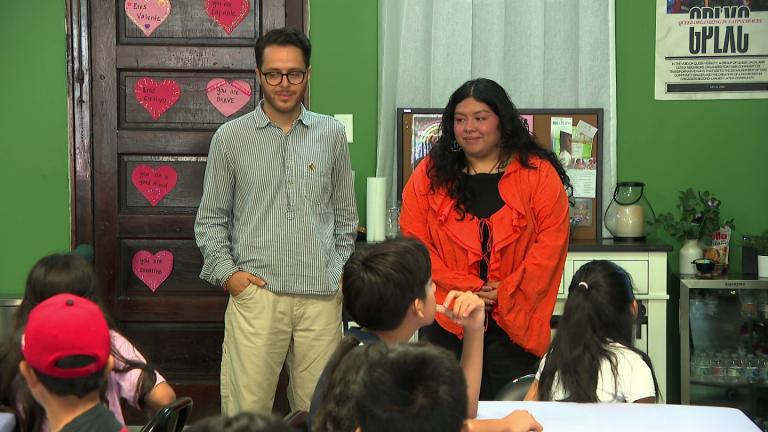
Grassroots organization TaskForce, which supports the health and wellness of LGBTQ+ youth, recently hosted a mini ball at its space in the Austin neighborhood.
“The house and ball scene historically, as well as today, serves as a safe space for Black and Brown LGBTQ+ individuals,” said Chris Balthazar, executive director of TaskForce.
Dozens of young people, ranging from young teens to people in their 30s, gathered in the event space, many with folding fans in hand, ready to dance, walk, serve face and generally have a good time.
“These spaces are not just safe for our young people, they are affirming spaces, right?” Balthazar said. “It’s an affirming space: We affirm their identity and we celebrate their culture and the things that are important to them.”
TaskForce is celebrating 35 years on the West Side. Youth engagement specialist Skai Underwood is ringing in nearly 10 years with the group — first as a young person utilizing the services and now as a leader and vogue coach to the next generation.
“I used to battle with my identity,” said Underwood, who identifies as a transgender woman. “Then I came here and saw there’s so many people who look like me and act like me. I wanted to be as free as them and not have a care in the world and go with my head held high and say, ‘This is me, this is who I am.’”
According to the ACLU, there are 598 anti-LGBTQ bills in U.S. state legislatures right now. Illinois has 15 of the bills, mostly targeting people with transgender and gender-nonconforming identities.
Pride this year coincides with an anti-diversity, equity and inclusion push from the federal government, which has migrated into public and private sectors with companies like Target, Walmart and McDonald’s choosing to abandon DEI efforts — diminishing or deleting Pride efforts altogether.
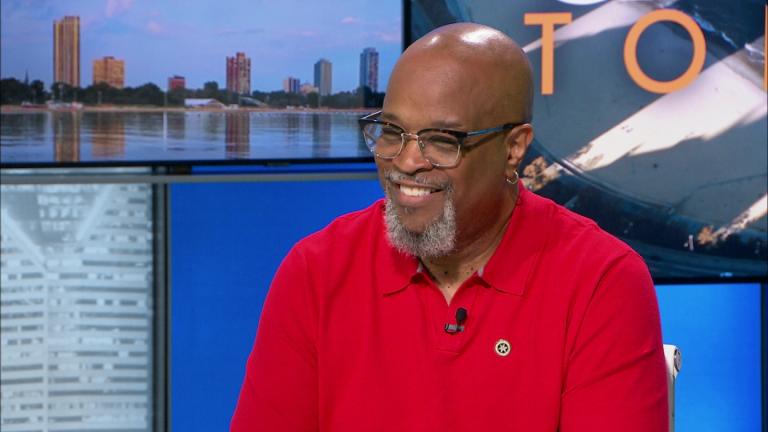
“I’m 59 and I’ve been going to Prides for a long time,” said Jim Pickett, board co-chair of TaskForce. “I’ve gotten weary of them. I’ve been weary of the corporatization, weary of the commercial aspect. We’ve survived and thrived without corporate interest, without support from the government and we can survive and thrive now.”