Politics
Chicago’s Director of LGBTQ+ Affairs on Marriage Equality, Pride and Protecting Trans Communities
June is a time for many celebrations and milestones in the city of Chicago.
While the city continues to celebrate Pride, June also marks a milestone in Chicago history — it’s been six months since Mayor Brandon Johnson named the first-ever director of LGBTQ+ affairs: Antonio King.
“This is important now more than ever, as the community faces increasing attacks from the Trump administration,” Johnson said in a statement.
King is a longtime advocate and a former liaison for the Chicago Department of Public Health. His priorities include supporting LGBTQ+ youth and elders and keeping trans and nonbinary Chicagoans safe.
King joined “Chicago Tonight” to reflect on his first six months in the position and his hopes for the future.
On why Chicago needs a director of LGBTQ+ affairs:
“We’re so many different aspects of life — so many careers and so many things throughout the city where we’re contributing to — we want to make sure that we’re noticed and that we got (a) voice. That’s why we have so many letters in the LGBTQIA+ through Z. Once someone comes into their knowledge of themselves, they want their voice heard and they want to be seen and feel like they’re visible.”
King said his key focuses are increasing cultural sensitivity training across city departments, addressing the needs of the aging LGBTQ+ community and connecting youth to services for mental health and housing support.
On his concerns around federal intervention:
“I am concerned around federal funding across the board for many of the programs and agencies that depend on those programs and those fundings to help the quality of life for so many of our citizens that are LGBTQ+. So, yes, I am very concerned. But what we do in Chicago, we help to lead the rest of the country, the way I see it — so the things that we do that are innovative that Mayor Johnson is doing, I think that those will be replicated and I think the federal government will ultimately … have to come across to what we need to do to help us and support.”
King added that delegate agencies with the city of Chicago have already seen federal funding cuts that resulted in program cuts.
On plans to protect transgender and nonbinary Chicagoans:
“Last year he (the mayor) came up with the transfemicide ordinance, which helps to protect and secure trans people in the city of Chicago. … What we’re doing is making that part of our policy plan. We’ve shored up that by going to community. We’ve had many trans individuals come in to give us feedback on what that plan should look like concerning safety, concerning workforce development, concerning employment and such — they (the Chicago Police Department) have been very instrumental in allowing the trans community in Chicago to feel comfortable when engaging with the police, because of the training that they’ve had.”
A 2024 Chicago Public Media investigation found that most murders of transgender women in Chicago go unsolved. King said that in order to solve those cases, they need to be investigated in the first place. “We’re hoping that the murders can get investigated — they haven’t been investigated, so they haven’t been solved.”
On the need for Pride Month:
U.S. Rep. Mary Miller (R-Illinois) introduced legislation to end federal recognition of Pride Month and replace it with Family Month, which drew scrutiny from her Democratic challengers.
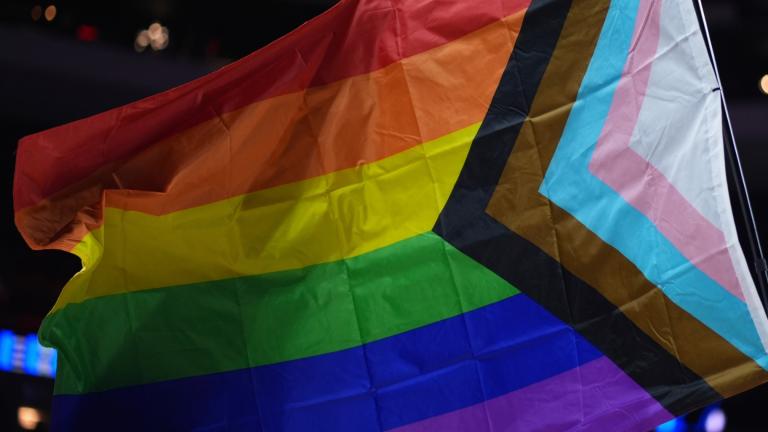
“We need Pride Month,” King said. “There’s some young, young adult LGBTQ person who’s thinking that it’s better to be dead than be alive. And Pride gives them an opportunity to see representation and gives them the opportunity to feel good about themselves. We need Pride. We don’t need another family month, we need to continue Pride.”
On declining support for marriage equality:
“We have to do a better job of getting to know each other. Years ago — and I marched for marriage equality, so I understood that 50% of country didn’t want it — but once we put a face on who these individuals are, put the humanity back into LGBTQ, we’re not just statistics or some monolithic community, we are your brothers, your sisters, your friends, your hairdressers. Of course, we are human. Put the human face on it and I think that we can bring them back around.”