Crime & Law
New Book Explores Ways to Reduce Mass Incarceration: ‘We Understand the Destruction and the Consequences’
Black people in Illinois are incarcerated at a rate seven and a half times higher than their White counterparts, according to the Prison Policy Initiative.
And the national incarceration rate of Black people is six times the rate of White people.
Racial disparities are just one of the many topics discussed in the new book “Dismantling Mass Incarceration: A Handbook for Change.”
Authors Premal Dharia, James Forman Jr. and Maria Hawilo examined alternative approaches to addressing the current state of mass incarceration.
“We understand the causes,” Hawilo said, “and we understand the destruction and the consequences caused by a system that locks up millions of people across the United States, … that keeps them from their families, that essentially destroys communities and health and education and futures. How can we do something about it?”
As former public defenders, Hawilo and her co-authors observed the various contributors to mass incarceration.
Instead of focusing on a single bureaucracy, the book is broken down into six sections: police, prosecutors, public defenders, judges, prisons and aftermath. Each section highlights a specific role in the prison system.
“This system is really broken down all the way from when people first come into contact with the criminal system,” Hawilo said. “That’s usually police all the way through and past prison, because most people continue to feel what professor Michelle Alexander calls ‘civil death.’ The consequences of this vast system — aftermath. The inability to get jobs, the inability to vote, the inability to even apply to get training in certain fields or find housing.”
The book also includes a large selection of essays and papers from other subject matter experts. The handbook is not meant to offer up solutions on the topic, Hawilo said, but rather explore discussions and various debates on the best ways to challenge the incarceration system.
“The system wasn’t built in a year or two or three years,” Hawilo said. “It’s been decades and decades going all the way back. We’re not going to dismantle it in a year or two or three. … We need time.”
Read an excerpt from the book below.
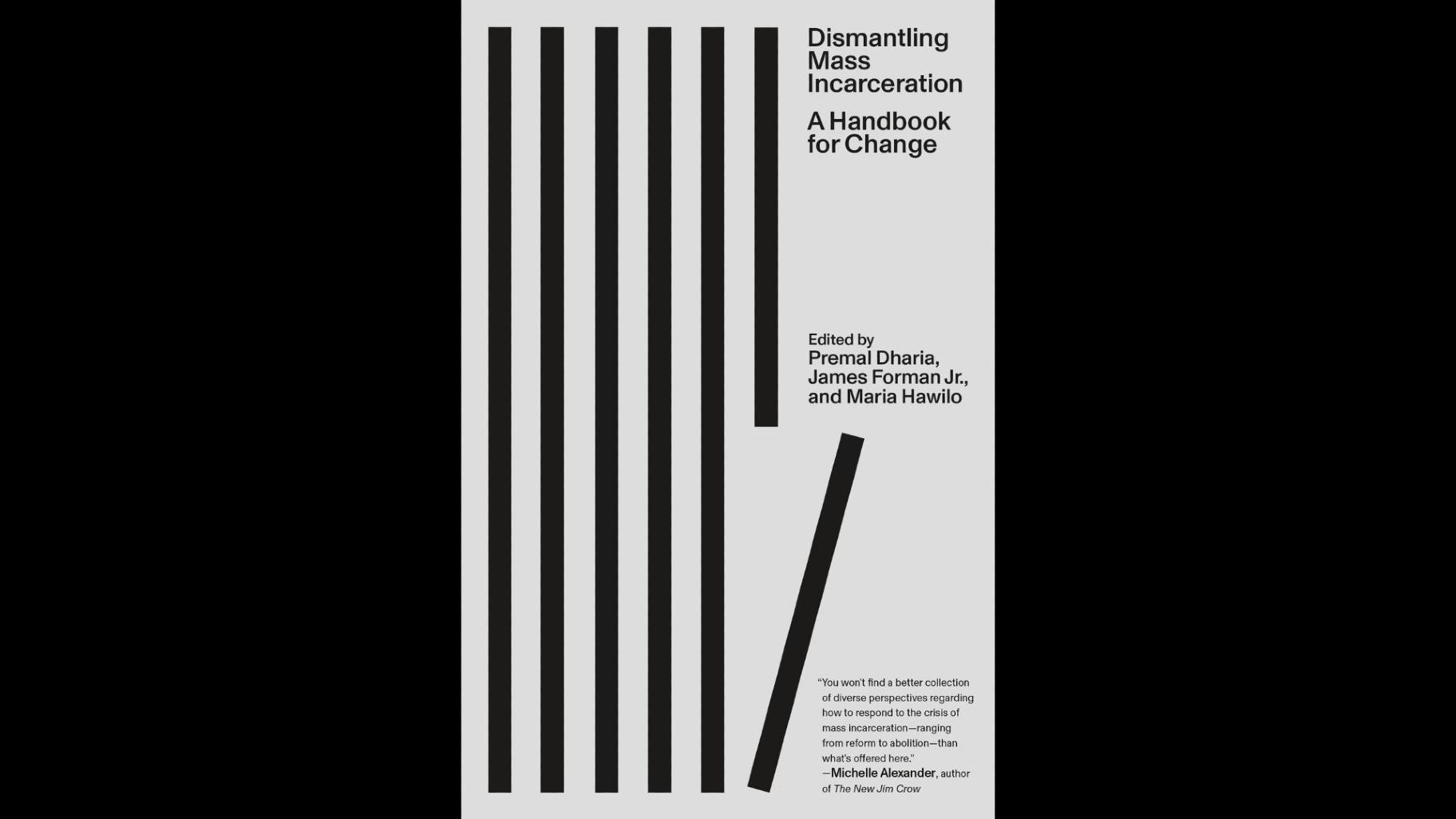 “Dismantling Mass Incarceration: A Handbook for Change”
Dismantling Mass Incarceration – Introduction Excerpt
Back when we started as public defenders, in the 1990s and early 2000s, the thing most people said about prisons was that we needed more of them. Legislators all over the country were passing laws to increase mandatory minimum sentences, jail children for life, and deny incarcerated people access to education and the courts. Prosecutors, judges, and sheriffs won elections by claiming they would lock up more people than their opponents, for longer, in the worst possible conditions. Police forced more people into the criminal system through aggressive surveillance tactics, including stop-and-frisk of pedestrians and pretext stops of drivers. The Department of Justice proudly issued reports with titles like The Case for More Incarceration.[1]
What did the American people think about these punitive policies? While there were some dissenters, mostly they cheered.
Much has changed since then. In the summer of 2020, more Americans than had ever marched before—on any issue—took to the streets to protest racism and police brutality. Our country’s approach to incarceration, once overlooked even in the civil rights community, has become a central human rights and racial justice issue. Books like Michelle Alexander’s The New Jim Crow, Bryan Stevenson’s Just Mercy, Ta-Nehisi Coates’s Between the World and Me, and Mariame Kaba’s We Do This ’Til We Free Us have dominated bestseller lists and are required reading in high schools and colleges. In the law schools where we work, students once declined to become public defenders because they didn’t want to represent “bad” people. Now, our students are more likely to avoid becoming prosecutors because they don’t want to contribute to mass incarceration.
But the daily reality of our criminal system has not changed as much as the conversation surrounding it. America still incarcerates more people than any other country in the world. We still target Black people disproportionately. Though the racial disparity in incarceration rates has declined in recent years, Black adults are imprisoned at five times the rate of white adults.[2]
We jail hundreds of thousands of people only because they are too poor to post money bail. We imprison thousands more in solitary confinement conditions that the United Nations considers torture.[3] Once a person is released from prison, instead of welcoming them home, we stigmatize and exclude them by making it difficult for them to find a job or a place to live. And as some reforms are implemented, the system expands in new ways: cameras and monitors create a web of surveillance that can feel like its own sort of incarceration. All this policing and punishment requires an enormous bureaucracy: The 2.8 million people employed in our criminal justice system make up over 1.5 percent of the American workforce (by contrast, less than 1 percent of Americans are employed manufacturing cars).[4]
What will it take to make our approaches to crime, harm, and safety more humane? What can people who work within the system do to make their agencies more just? And most of all, what can ordinary people do to imagine and build structures that will truly make us all safer?
This book seeks to help answer these questions.
[1] The Case for More Incarceration, United States Department of Justice, Office of Policy and Communications, October 28, 1992.
[2] Keith Humphreys and Ekow Yankah argue that it is a mistake for opponents of mass incarceration to ignore the “unheard-of decline of Black incarceration.” Keith Humphreys and Ekow Yankah, “The Unheard-of Decline in Black Incarceration,” Chicago Tribune, July 25, 2022.
[3] United Nations Office of the High Commissioner of Human Rights, “United Nations Special Rapporteur on torture calls for the prohibition of solitary confinement,” October 18, 2011.
[4] Jacob Whiton, “In Too Many American Communities, Mass Incarceration Has Become a Jobs Program,” Brookings Institution, June 18, 2020.
Excerpted from Dismantling Mass Incarceration: A Handbook for Change, edited by Premal Dharia, James Forman Jr. and Maria Hawilo, and published by FSG Originals, July 2024. Introduction copyright © 2024 by Premal Dharia, James Forman Jr. and Maria Hawilo. All rights reserved.