Arts & Entertainment
Survivors of Chicago Police Torture Hold Groundbreaking Ceremony for South Side Memorial
Video: Joining “Chicago Tonight” on July 9, 2026, are Anthony Holmes, survivor, reparations recipient and vice president of the Chicago Torture Justice Memorials Foundation; Joey Mogul, co-founder and president of the Chicago Torture Justice Memorials Foundation; and Aislinn Pulley, executive director of the Chicago Torture Justice Center. (Produced by Jessica Watts)
Survivors who were tortured by Chicago police officers from the 1970s to the 1990s, and who continue to fight for recognition and justice, gathered Wednesday for a groundbreaking ceremony for a new memorial that aims to ensure their stories are not forgotten.
The memorial honors the more than 125 Black men, women and children who were tortured by disgraced former Chicago Police Commander Jon Burge, and the officers under his command, on Chicago’s South Side at Area 2 and 3 police headquarters from the 1970s to 1990s.
“When we use the word torture, we don’t do so lightly, flippantly, and we are not exaggerating,” said Joey Mogul, board president of the Chicago Torture Justice Memorials Foundation and an attorney who represented torture survivors.
Mogul on Wednesday described how the torture used by police officers aimed to dehumanize and break the will of individuals in order to force confessions.
The memorial, to be located at 5520 S. King Drive in Washington Park, will include a timeline that tells of the story of the racist practice of torture by Chicago police officers, along with the organizing, litigation and journalism that exposed the truth and sought accountability.
Quotes from survivors and family members will be etched into surrounding pathways, and the monument will be surrounded by gardens and seating, organizers said.
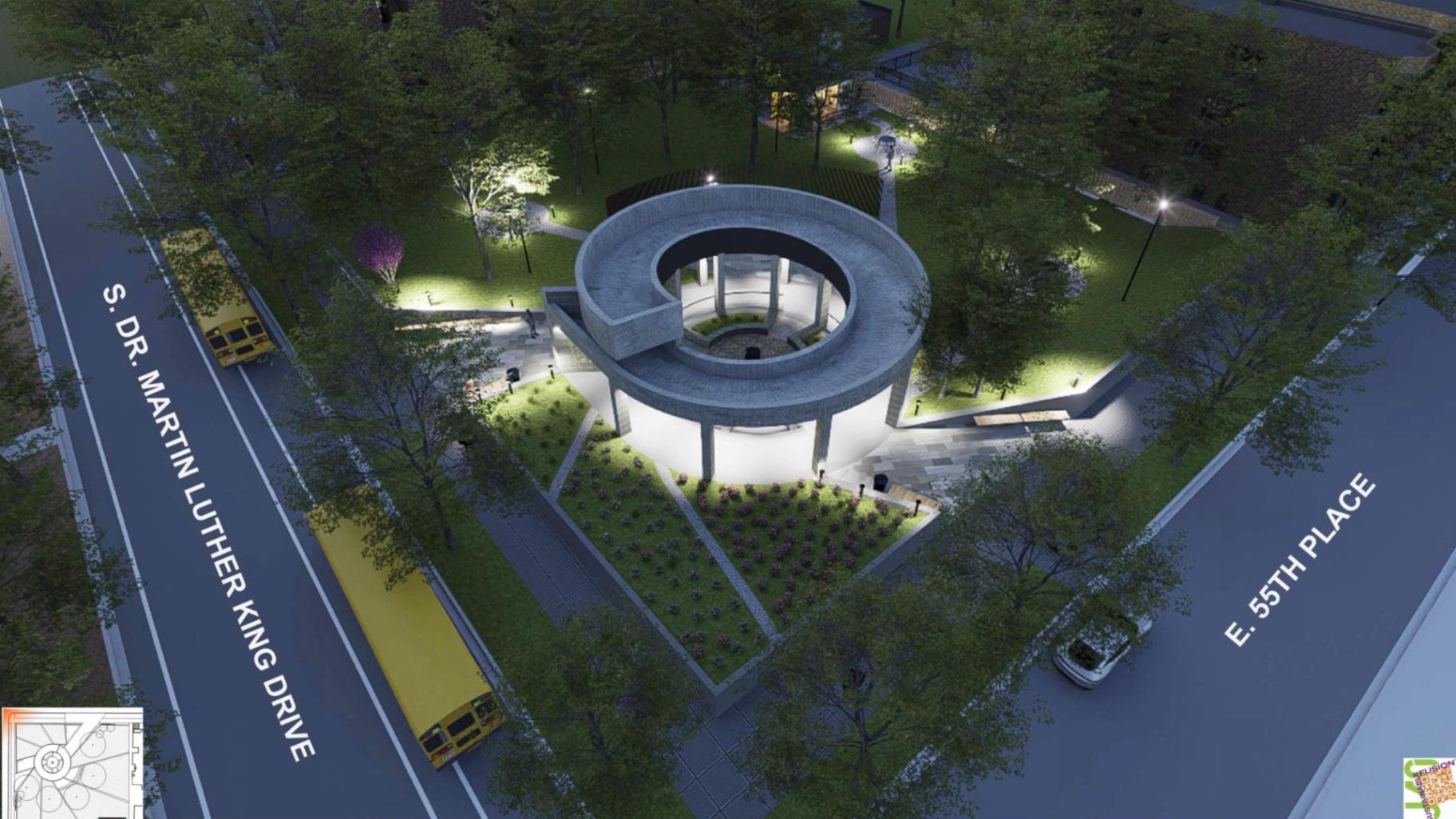 Rendering of the Chicago Torture Justice Memorial located at 5520 S. King Drive. (Courtesy of JAQ Corp Int, P.C.)
The $4.7 million project was designed by Chicago-based architecture firm JAQ Corp Int, P.C. with input from police torture survivors and family members, according to a news release.
“The site as a whole is reflective of survivor Stanley Howard’s description of his experience of torture as being sucked into a vortex and spit back out,” Chicago Torture Justice Memorials Foundation Executive Director Jen Ash said. “The memorial is the visible result. The movement is what built it. Every survivor deserves to know that their story matters enough for future generations to remember.”
Torture survivor Stanley John Howard said he was incarcerated for 39 years and was on death row for 16 years. Howard was among a group of four individuals who had their death sentences commuted by former Illinois Gov. George Ryan in 2003.
“We know the old saying about history, if you don’t learn it or study it, that you will end up repeating it,” Howard said. “People coming here (are) gonna leave inspired by resilience, what it means to fight back. That’s what it took a lot of: (fighting) back and a lot of hope.”
At the groundbreaking ceremony, torture survivors were joined by family members, organizers and city officials for what survivors said was a long time coming.
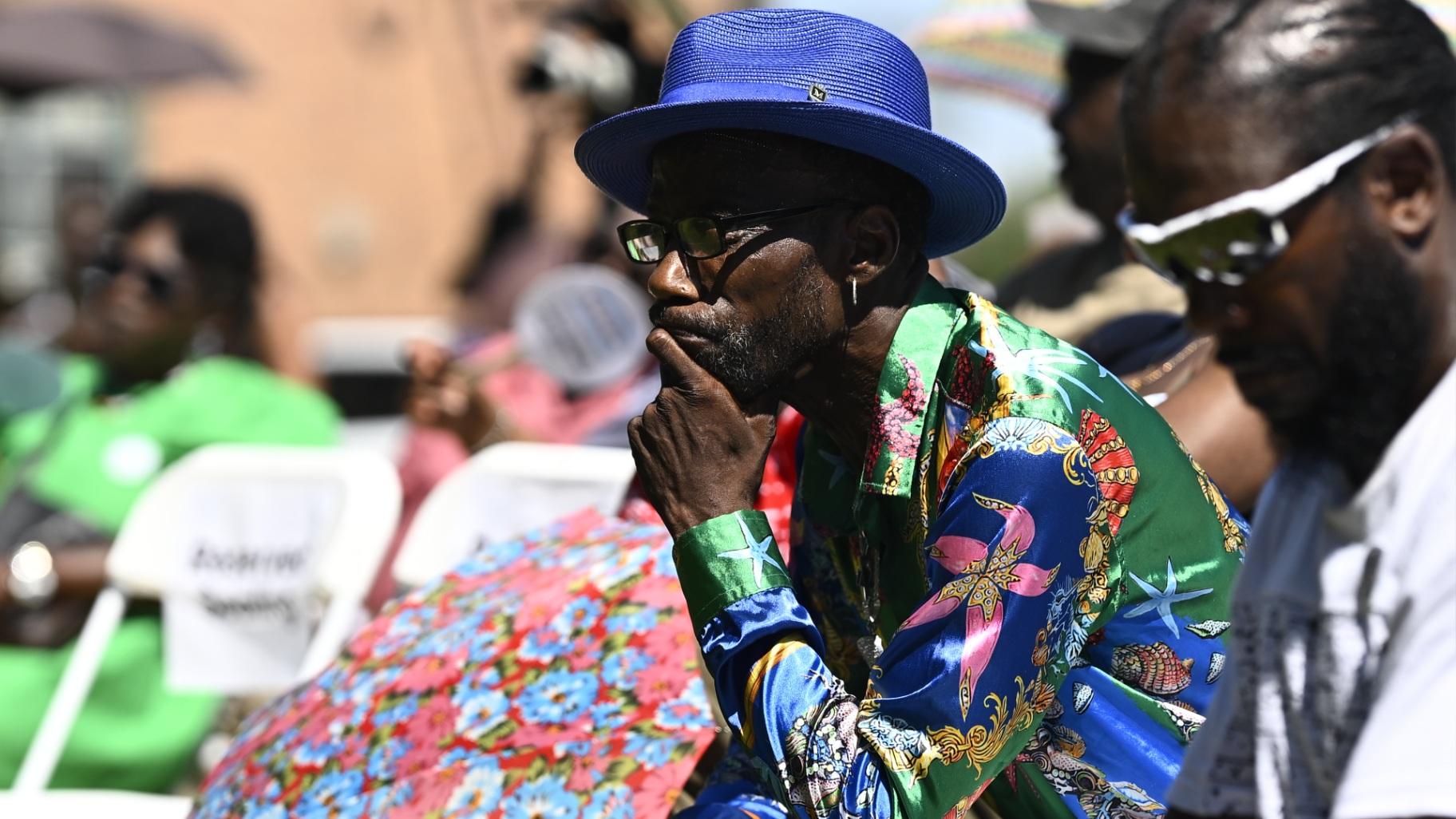 Chicago police torture survivor Mearon Diggins during the groundbreaking ceremony for the Chicago Torture Justice Memorial on July 8, 2026. Diggins said he felt validated by the memorial after many years of his experiences previously not being believed. (Victor Hilitski / WTTW News)
Fired by the Chicago Police Department in 1993, Burge was convicted of perjury in 2010. Released from prison in 2014, Burge died four years later at the age of 70. He never faced any criminal charges related to the torture allegations during his time as an officer, and collected a pension from the city of Chicago until the day he died.
Burge and the detectives under his command used tactics like electrically shocking individuals on their wrists, ankles and genitalia, suffocating them with plastic bags, beating them, subjecting them to mock executions, threatening them with guns and using racist epithets and slurs, Mogul said during the groundbreaking event.
Chicago taxpayers have paid more than $200 million in lawsuit settlements and judgments related to Burge’s conduct, including $5.5 million in reparations for torture survivors, approved in 2015 by the Chicago City Council.
Torture survivor James Marshall said he spent more than 30 years incarcerated and has since been exonerated. He described the difficulties of reentry and trusting police to this day.
“People shouldn’t look at law enforcement as the enemy, but it’s kind of hard not to when you see a police officer,” Marshall said. “Even when you’re not doing a crime, you think, ‘Oh man, I better get away from that,’ and that’s the life we live, you know, it shouldn’t have to be that way.”
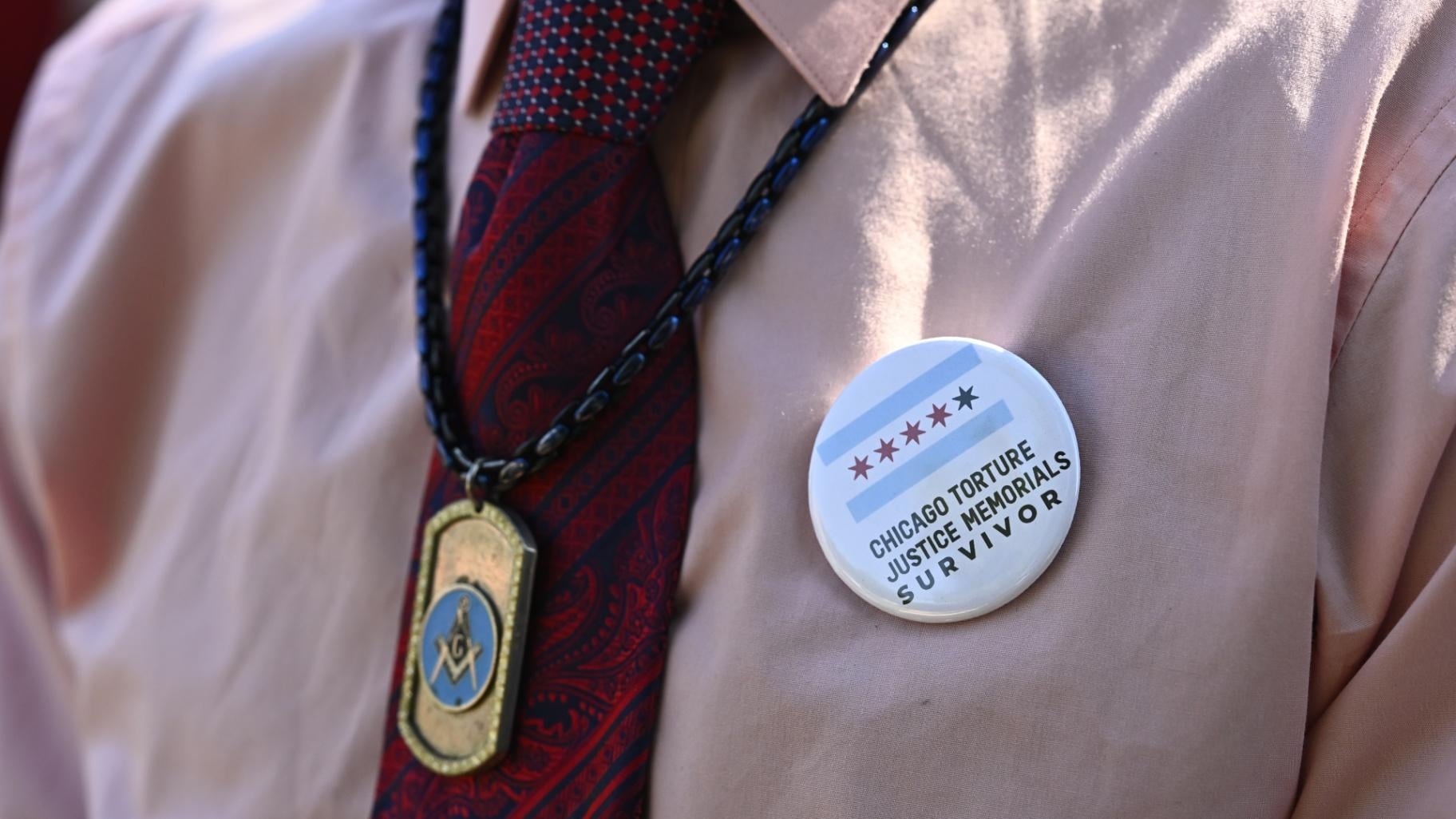 The Chicago Torture Justice Memorial aims to honor the more than 125 Black men, women and children who were tortured by disgraced former Chicago Police Commander Jon Burge, and the officers under his command, on Chicago’s South Side from the 1970s to 1990s. (Victor Hilitski / WTTW News)
The memorial and the $5.5 million reparations fund for Burge torture victims are part of a broader reparations package passed in 2015 by City Council that also includes: a formal apology from the city, free enrollment to City Colleges for survivors and family members, a history curriculum taught to 8th and 10th graders in Chicago Public Schools and the creation of the Chicago Torture Justice Center to provide counseling and case management to police violence survivors.
Mogul, who also drafted the original reparations ordinance for Chicago police torture survivors, said the memorial is the last piece of the reparations legislation that needs to be completed.
Mogul credited Mayor Brandon Johnson for his support in building the memorial at a time when the Trump administration is “doing everything in its power to erase the racist history of the United States and provide immunity to law enforcement and white supremacist violence,” according to Mogul.
The monument is funded in part by a grant to support the Chicago Monuments Project launched in 2020 with the aim of building memorials and monuments that reflect the city’s history and communities, according to the mayor. Johnson said his administration also committed $1 million for the memorial and sponsored the transferring of city-owned lots for $1 each so the memorial could be built at the location.
During his remarks, Johnson apologized to the survivors and their families for the torture they experienced.
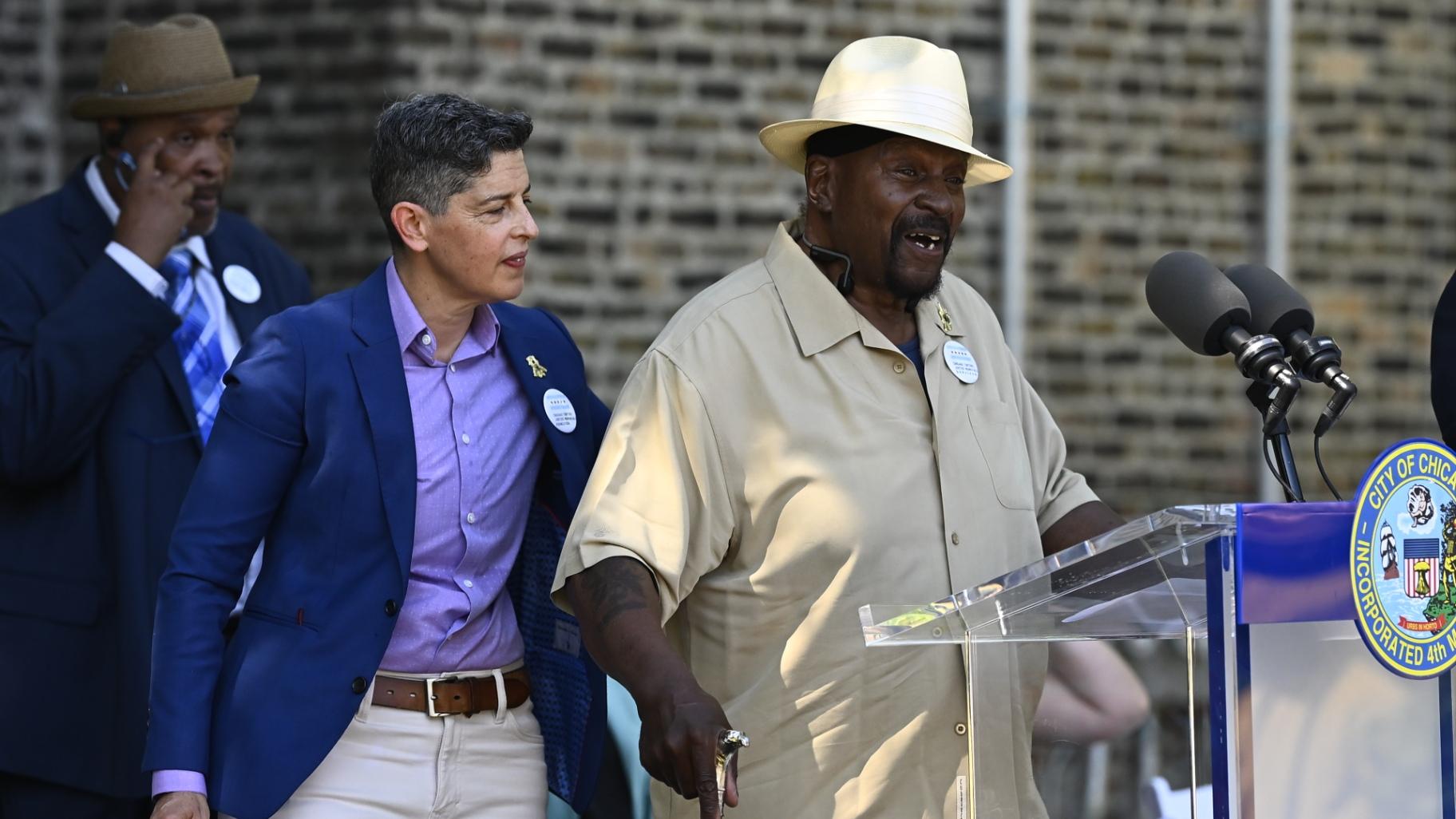 Board president of the Chicago Torture Justice Memorials Foundation and an attorney who represented torture survivors, Joey Mogul, left, and vice president of Chicago Torture Justice Memorials Foundation and police torture survivor Anthony Holmes, right, during a groundbreaking ceremony event on July 8, 2026. (Victor Hilitski / WTTW News)
“Make no mistake about it, the torture that was carried out by Jon Burge is the same torture that was administered against those of us who are descendants of the formerly enslaved,” Johnson said. “That harm has rippled through families, leaving entire generations to carry the weight of trauma and injustice. This wrongdoing also deepened the legacy of distrust between communities and law enforcement that Chicago continues to confront today.”
The memorial serves as a reminder that communities can organize, demand accountability and create lasting change even after decades of injustice, according to Ald. Jeanette Taylor (20th Ward).
Police torture survivor LaTanya Jenifor-Sublett was tortured in 1990 and is one of only a few women to come forward as a torture survivor, she said. Jenifor-Sublett said it was important for her to represent women and to change the narrative that it was only men who were tortured.
“We can never allow something like this to happen again,” Jenifor-Sublett said. “We can never allow police abuse, torture in any city, but especially not one of the greatest cities in the world. We work every day to pay the salaries of police, and they should work for us, not against us."
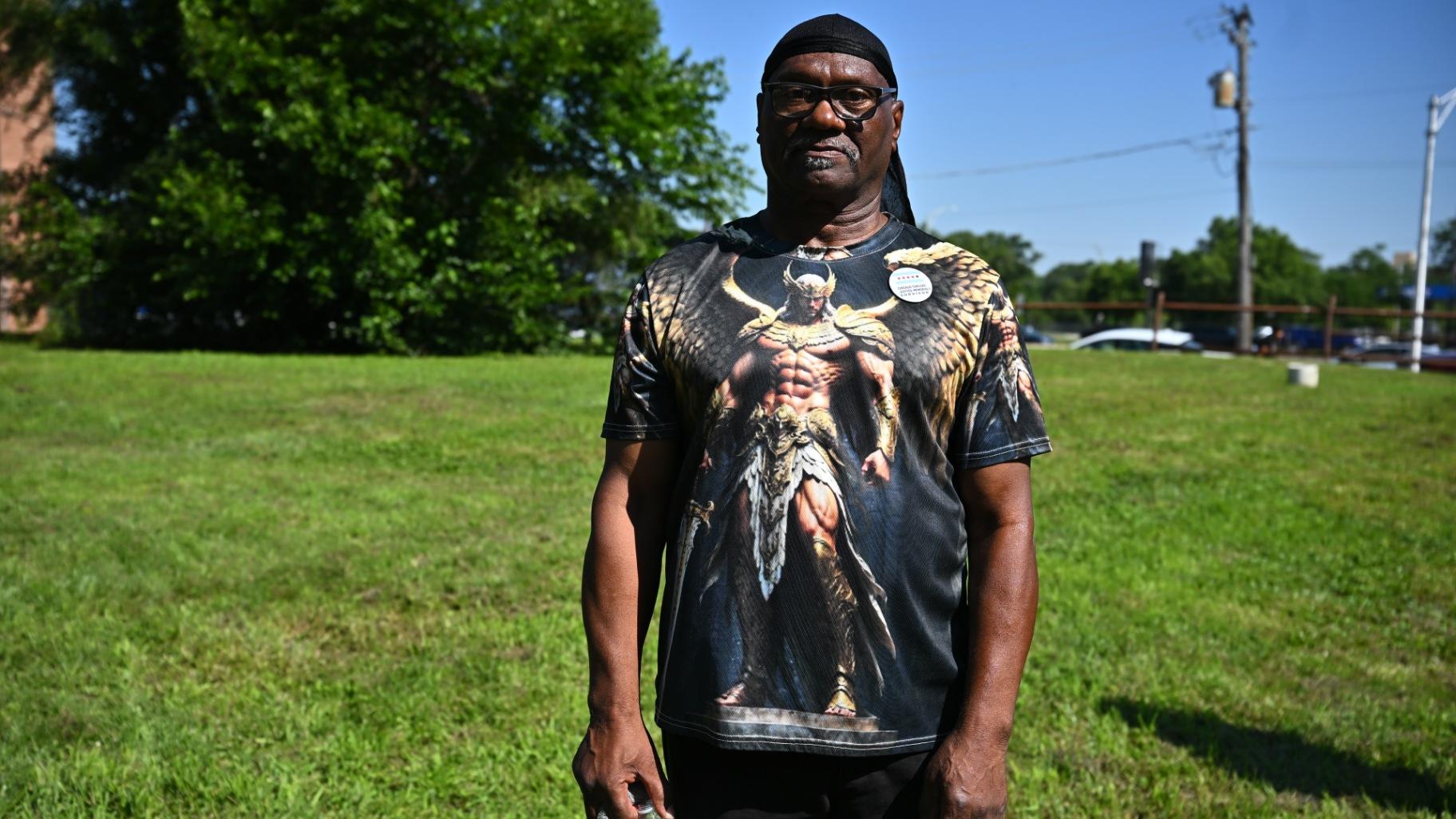 Police torture survivor James Marshall said he spent more than 30 years incarcerated and has since been exonerated. At the groundbreaking ceremony, torture survivors were joined by family members, organizers and city officials for what survivors said was a long time coming. (Victor Hilitski / WTTW News)
At least five torture survivors remain incarcerated and continue fighting for their release, according to Mogul.
The Chicago Police Department did not respond to a request for comment regarding reaction to the memorial and changes CPD has made in response to the torture that was brought to light.
Mearon Diggins, who was tortured by police in 1985 and was incarcerated for 10 years, said he felt validated by the memorial after many years of his experiences previously not being believed. Diggins said he is just now learning how to deal with his trauma.
“One thing that I do hope is that my kids, my grandkids, they have somewhere to come and learn about their papaw, because I’m not going to be here too much longer,” Diggins said. “They’ll be able to come here and learn about me.”
The memorial is expected to open in early 2027.
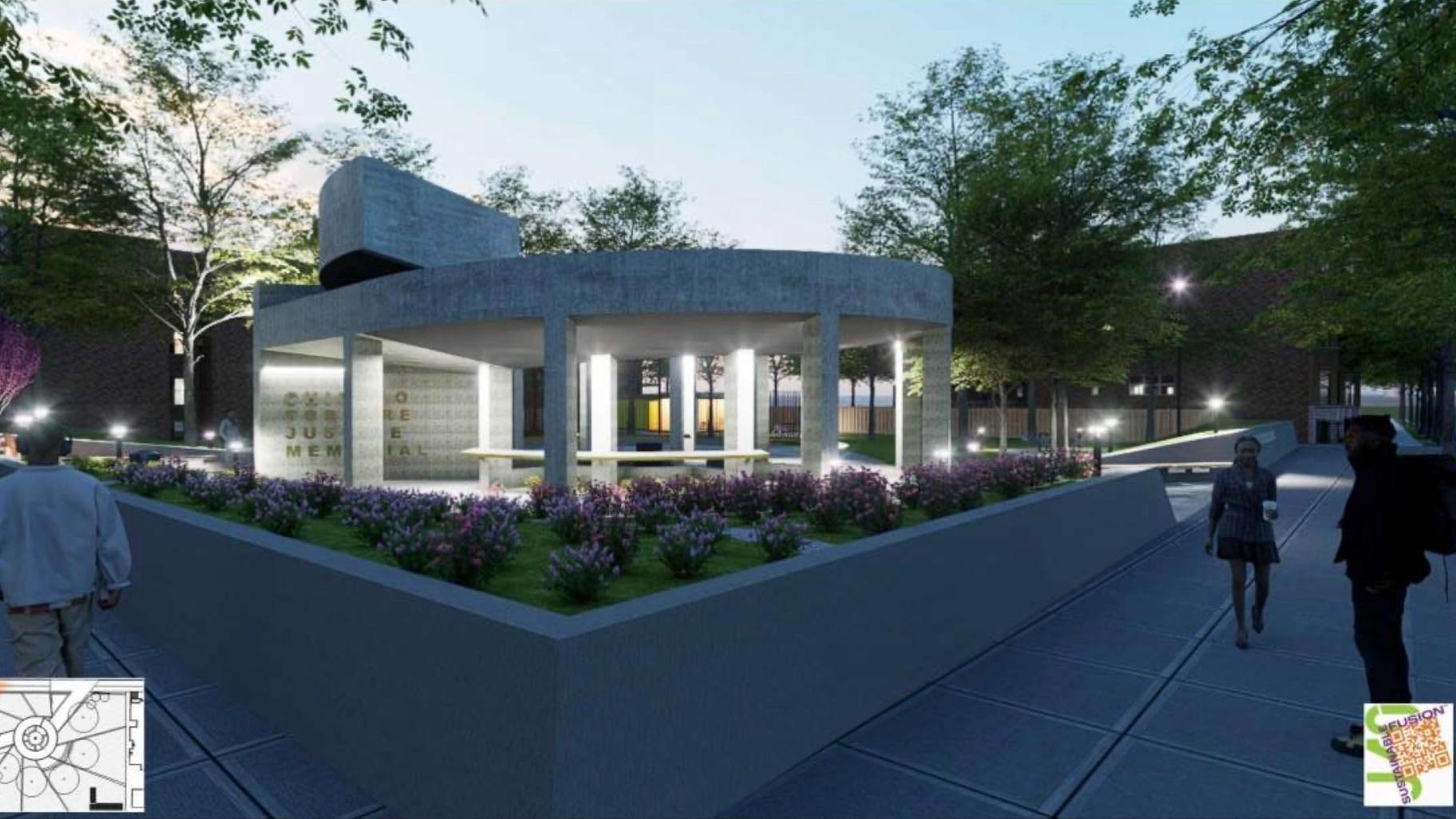 Rendering of the Chicago Torture Justice Memorial located at 5520 S. King Drive. (Courtesy of JAQ Corp Int, P.C.)
Note: This article was published July 8, 2026, and updated with video July 9, 2026.
Heather Cherone and Matt Masterson contributed to this report.
WTTW News coverage of policing and police reform is supported by The Joyce Foundation.
Contact Eunice Alpasan: [email protected]