Education
Chicago Teachers Union President Stacy Davis Gates on Contract Negotiations: ‘We Have to Set a Benchmark’
The current contract for Chicago Public School teachers expires June 30.
The Chicago Teachers Union wants raises in the new contract along with tackling other issues from homelessness to climate change.
But those demands are being made as the district faces a nearly $ 400 million deficit for the coming school year — and apparently little appetite in Springfield for finding more money for Chicago schools.
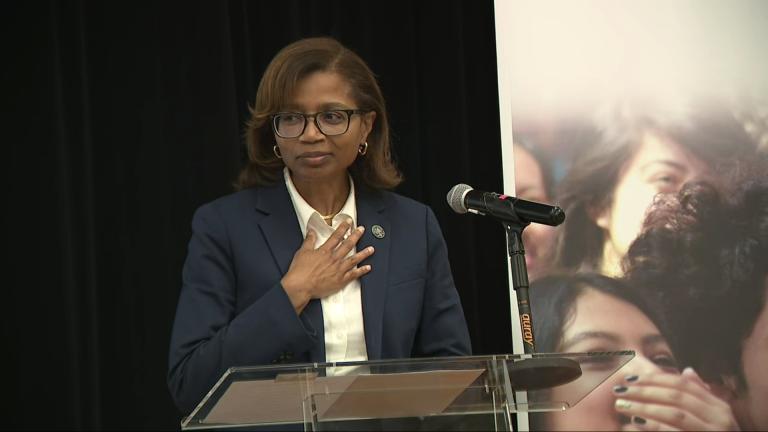
CTU President Stacy Davis Gates spoke with WTTW News on Tuesday about the ongoing contract negotiations.
On negotiations being less contentious than in the past:
“The voice that you don’t hear from the CTU is one that is confrontational because we don’t have a mayor being confrontational with us. In fact, we have the opposite. We have a mayor who’s encouraged both sides to work together to foment this transformation.”
On holding some contract negotiations in public:
“What that means is that Chicagoans get an opportunity to engage with the actual collective bargaining process. And what you see in here in the actual open bargaining is what it feels like in negotiations.”
On setting a baseline in the contract for all schools:
“I believe one in four Chicagoans are school age. What we have to do with this contract is show transformation. We have to set a benchmark that every Chicago public school can have art, music, physical education, a librarian at every school, sports that encompass all seasons in the school year. These are things that we’re working for. These are things that we think families can get behind and these are things that we certainly think our young people can get behind.”
On CPS having a lower teacher shortage than other districts:
“Here’s the thing about feeling good about having a lower teacher shortage – it’s still a teacher shortage. And so doing something about that shortage means that he (CPS CEO Pedro Martinez) is going to have to actively recruit Black teachers with us. We go to HBCUs and make sure that we’re bringing some of the best and the brightest talent back to Chicago. So Black children can see Black teachers.”
On challenging the district in negotiations:
“This district is going to be challenged to do differently than they have in the past. That means that they’re going to actually have to sit at a table with women who are doing the work… and actually shift priorities. They’re going to have to think about new modalities and new methodologies and ways in which to staff the school community. But even more so, ways in which to enrich the school community with librarians, with social workers, with counselors, with clinicians that we don’t have there currently. We need a baseline and (at present) you can go to different communities and different ZIP codes and get something very different. We have to establish a benchmark.
The significance of Mayor Brandon Johnson’s election as mayor to negotiations:
“What the tension (in negotiations) is expressing right now is that our district is very comfortable with what they have done already. What we’re saying is that Chicago chose someone new. They didn’t choose Paul Vallas. They chose a middle school teacher and that middle school teacher believes in smaller class sizes. And because Chicago chose that, then they’re going to choose something that looks more like the proposals that we are putting forward.”