Business
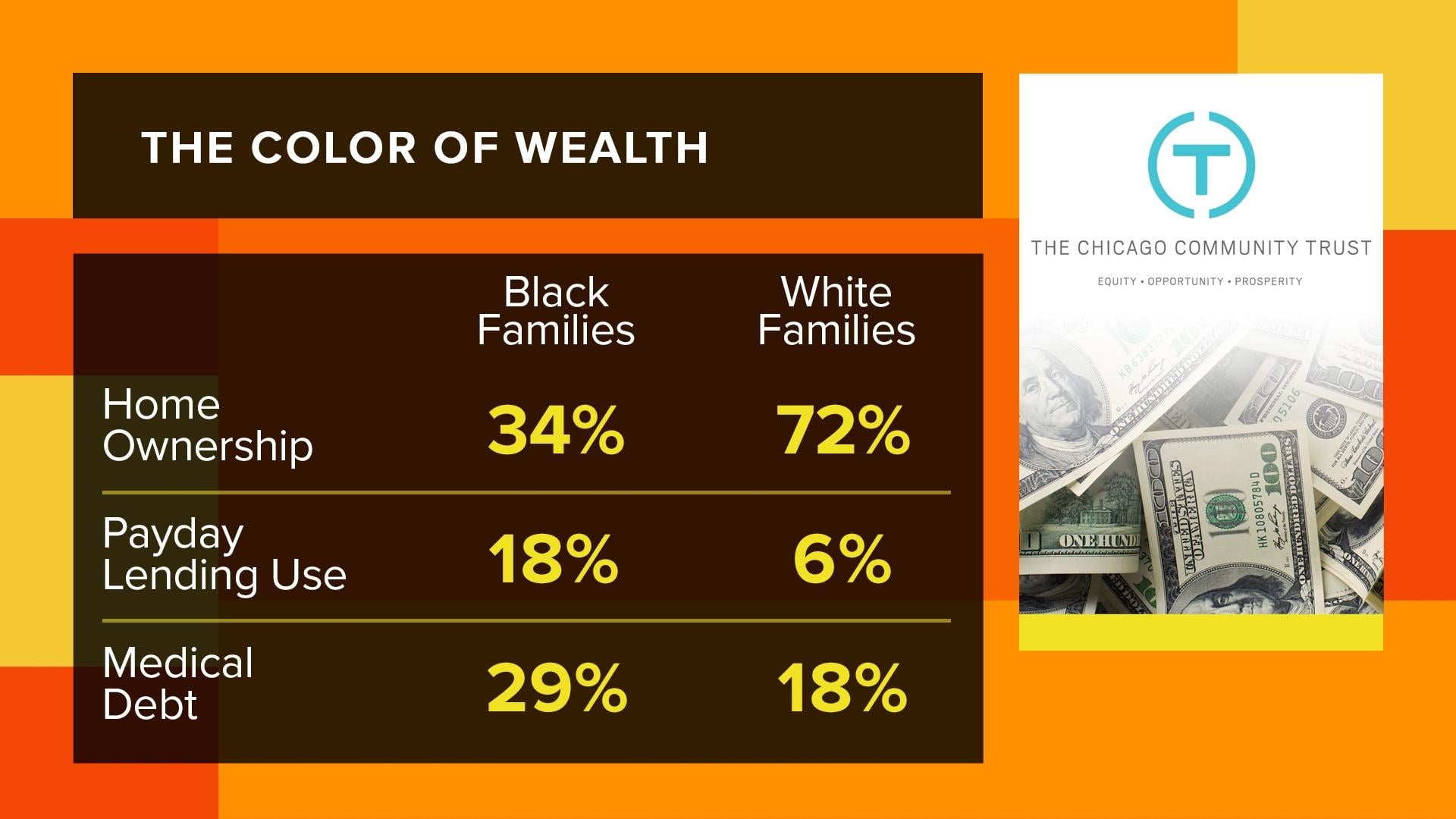
New Study Examining Chicago’s Economic and Racial Disparities Finds 72% of White Families Own Homes Compared to 34% of Black Families
“The Color of Wealth in Chicago,” a new study released Monday, reveals drastic economic inequities between White communities and those of color.
The report examines the assets and debts of Chicago’s Black, White, Puerto Rican and U.S. and foreign-born Mexican residents, and was conducted by the Institute on Race, Power and Political Economy at The New School between 2022 and 2023.
“Wealth is probably the paramount indicator of economic security,” said Darrick Hamilton, the Henry Cohen Professor of Economics and Urban Policy and founding director at The New School’s Institute on Race, Power and Political Economy. “We think about it as an outcome, but its essence is functional. What it can do for you if you want to send your kids to college, if you’re faced with the legal challenge of medical condition. A lot of those big ticket items aren’t financed out of your income … you rely on your savings and your wealth.”
According to the study, Black households have a median net wealth of zero dollars compared to $210,000 for White families, and Black families have the lowest estimated rate of home ownership at 34% compared to 72% for White households. Medical debt is the No. 1 cause of bankruptcy in the U.S., and according to the study, is highest amongst Chicago’s Black communities.
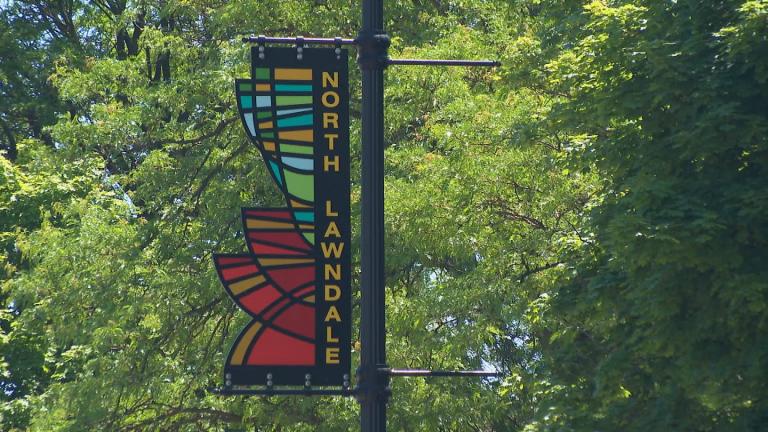
“It’s just expensive to be poor, isn’t it? And I think that that’s what this report helps to elevate is no one chooses to be poor,” said Brenda Palms, president and CEO at the North Lawndale Employment Network. “What that looks like for us in North Lawndale is that we do have a disproportionate number of people that are unemployed at least three times higher than the city of Chicago.”
The study also states that Black households have less ownership of liquid assets and access to financial services, like conventional checking and savings accounts, and that Black families are the most likely to use payday lending at 18% compared to U.S. born Mexican families and Puerto Rican families, which registered at 13% and 17% respectively.
“We think there’s a lot of room here to talk about creative ways to create bank accounts and investment accounts for people at a young age, so when it’s time for them to be adults, they have some resources with which to make life decisions,” said Andrea Sáenz, president and CEO at The Chicago Community Trust, one of the study’s primary funders. “These data help us imagine what can be. We understand that we got here because of policies that were decided by folks in power decades ago. It’s our turn to decide what policies we want to shape our future, so we’re not here again”.
In the Austin neighborhood, By the Hand Club for Kids partnered with other nonprofit organizations to open the North Austin Community Center in 2023. The 10-acre sports and recreational campus provides youth programs.
“North Austin has one million residents within five miles, which is really densely populated, and we have a lot of the challenges that were expressed in this report,” said Andraya Yousfi, By the Hands’ chief of partnership and development. “We built a 150,000 square-foot facility for sports education and wellness, and just in our first year open, we had over 60,000 youth and 12,000 adults come into our center for health and sports activities … That’s so much more than, ‘Yeah, you’re in a soccer program’ … That’s high school students. And you know, ‘I want to make my soccer team at high school, so then I can be a coach. And then if I coach little second graders on Saturday morning, I’m going to get some money in my pocket and I’m going to spend that money in my neighborhood.’”