Politics
Mayor Brandon Johnson Unveils Plan to Test Whether City Crews Should Clear Sidewalks of Snow and Ice
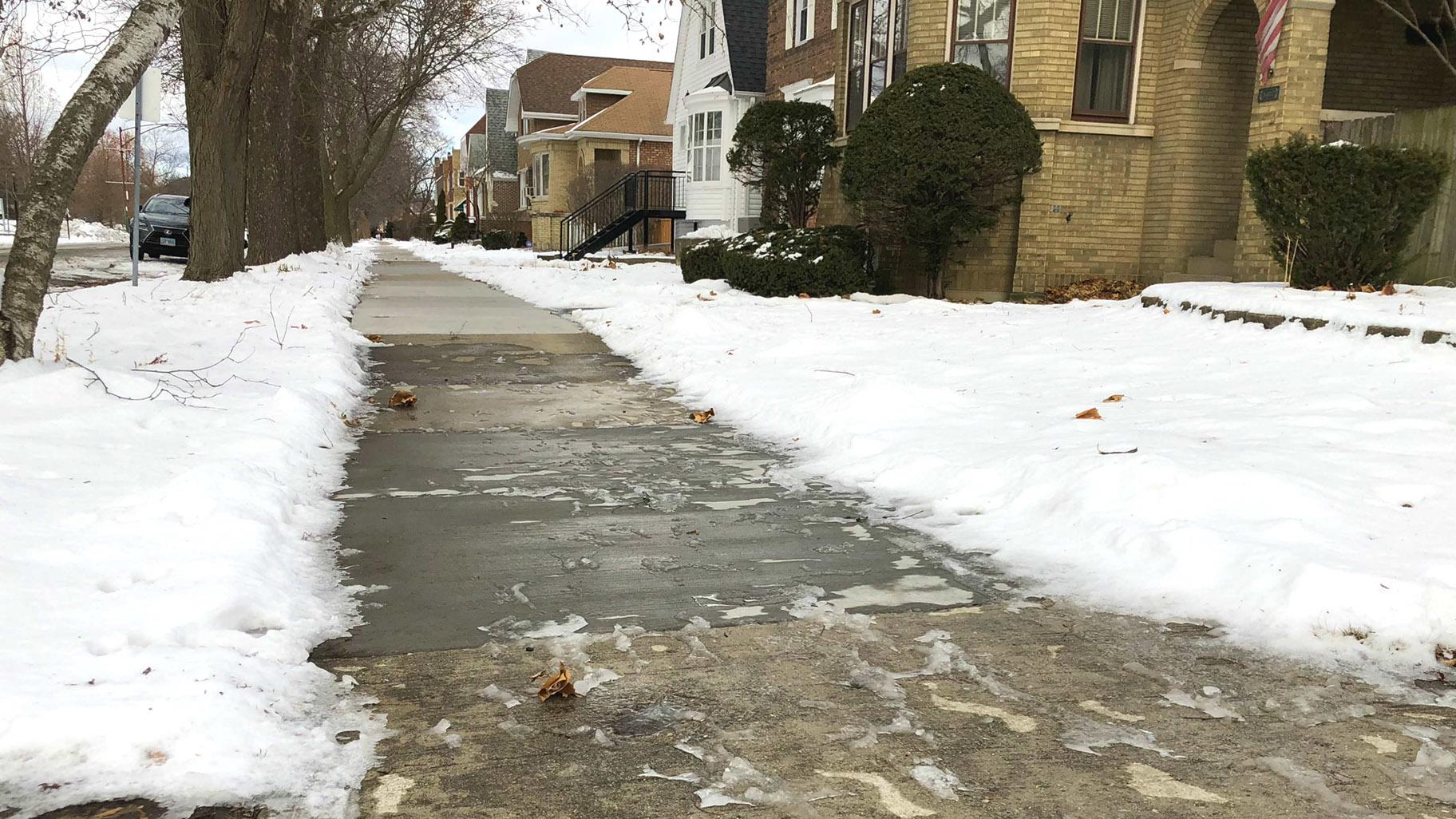 (Patty Wetli / WTTW News)
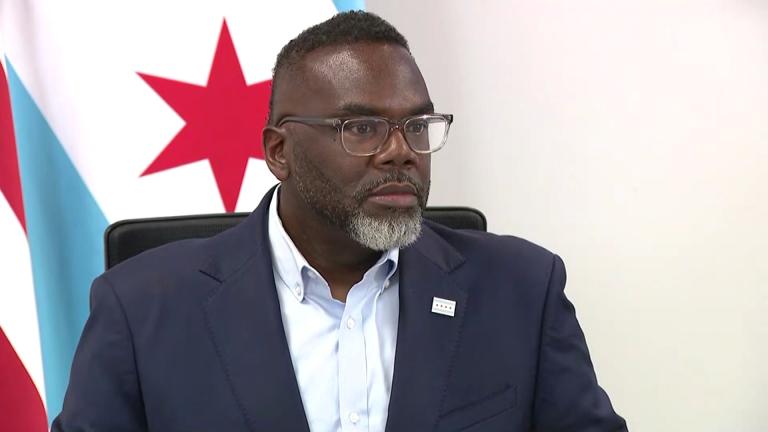
Mayor Brandon Johnson unveiled a plan Friday to test whether city crews should be responsible for clearing not just Chicago’s roads but also its sidewalks of snow and ice during winter storms.
But the plan — which will cost between $1.1 million and $3.5 million per year — isn’t slated to clear its first shovel-full of snow until the winter of 2025-26, and must be approved and funded by the Chicago City Council.
During his 2023 campaign for mayor, Johnson backed the “Plow the Sidewalks” campaign launched by groups advocating for improvements to Chicago’s walking, biking and transit infrastructure. The groups aim to convince officials the city has an obligation to ensure people with disabilities and other vulnerable residents can get around safely even during the worst winter weather.
Former Mayor Lori Lightfoot iced the plan, which was first introduced by Ald. Gilbert Villegas (36th Ward) in 2021 and championed by Ald. Daniel La Spata (1st Ward), who was picked by Johnson to lead the City Council’s Pedestrian and Traffic Safety Committee.
“Chicago is a world-class city, and as a world-class city, it must be accessible for our seniors and individuals living with disabilities in the winter months during periods of heavy snow and ice,” Johnson said in a statement.
If the pilot program is implemented, Chicago would become the largest city to test an effort to shoulder the burden of ice and snow from sidewalks, not just roadways.
The groups behind the yearslong push to make the city responsible for clearing not just roads but sidewalks — who used the hashtag #PlowTheSidewalks — hailed the plan announced by the mayor’s office.
“Better Streets Chicago is laser focused on fighting for universal mobility in Chicago — no matter the weather,” said Micheál Podgers, policy lead for Better Streets Chicago. “Today is a monumental day for our #PlowTheSidewalks campaign.”
The Chicago City Council voted in July to create a working group of city officials and charge them with crafting a pilot program to clear the sidewalks. That plan was due no later than Friday, the day of the mayor’s announcement.
“We appreciate that the pilot proposal actively included the transportation needs of disabled people and an enthusiasm to prioritize working towards universal mobility year-round,” said Laura Saltzman, senior policy analyst at Access Living, a nonprofit that works to help Chicagoans with disabilities.
City law requires building owners to clear the sidewalk near their properties, and they can face fines if they fail to do so. But in practice, property owners rarely face sanctions for failing to shovel, often forcing people into the street if they can’t navigate the snow and ice.
The plan crafted by the working group calls for the program to be tested in four 1.5-square-mile areas of the city. The lead city agency will be the Chicago Department of Transportation, assisted by the Department of Streets and Sanitation, officials said.
On the North Side, the pilot would take place in parts of Uptown and Ravenswood bounded by Foster Avenue on the north, Irving Park Road on the south, Marine Drive on the east and California Avenue on the west.
On the South Side, the pilot would take place in a part of Englewood bounded by 59th Street on the north, Marquette Road on the south, State Street on the east and Racine Avenue on the west.
On the West Side, the pilot would take place in a part of Austin bounded by Armitage Avenue on the north, Congress Parkway on the south, Cicero Avenue on the east and Laramie Avenue on the west.
On the Southwest Side, the pilot would take place in parts of Archer Heights and Brighton Park between Western Avenue and Lawndale Avenue south of Archer Avenue and north of 59th Street.
Nearly 500,000 Chicagoans live in the neighborhoods selected for the pilot, which were picked because they are home to many individuals older than 65 or younger than 5, or those who have decreased mobility, are blind or low vision, or are impacted by other disabilities, officials said.
The crews will clear ice and snow from the sidewalks in those neighborhoods once accumulations reach two inches or more in a 24-hour period, officials said. The pilot program will last for a year or until the city has deployed sidewalk snowplow services seven times per pilot zone, whichever comes first, officials said.
Crews made up of city employees and contractors will use multipurpose tractors to plow sidewalks, as well as snow blowers and shovels, officials said.
Two methods of snow removal will be tested, officials said. The first will target blocks with an apartment building of up to four units, according to the plan.
The second method will remove snow and ice from all blocks, regardless of how the properties are used. The report crafted by the working group recommends the universal approach be used on the South and West sides.
Contact Heather Cherone: @HeatherCherone | (773) 569-1863 | [email protected]