Science & Nature
Chicago’s Air Quality Remains Unhealthy Friday, But No Longer at ‘Hazardous’ Levels
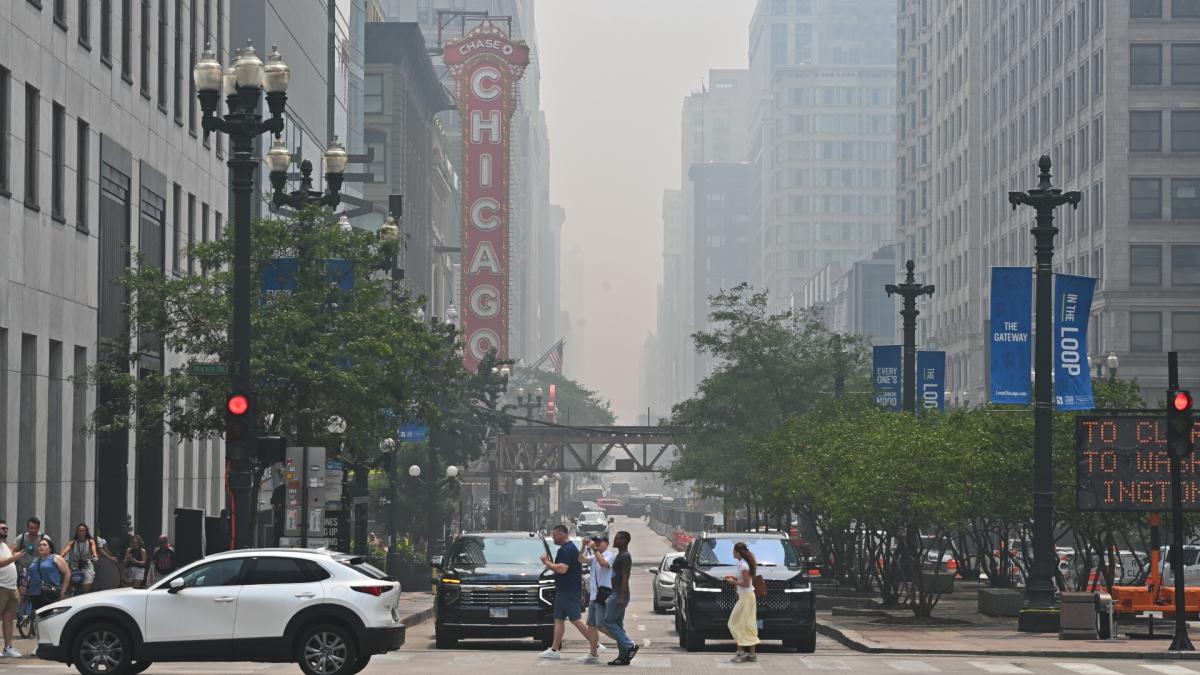 Wildfire smoke casts a haze over downtown Chicago on July 16, 2026. (Victor Hilitski / WTTW News)
Chicago’s air quality has fallen out of the “hazardous” range but remains at unhealthy levels as winds began pushing wildfire smoke from Canada and Minnesota northeast.
The National Weather Service on Friday said improvements in visibility are expected from mid-morning through early afternoon as the wind direction changes and pushes the smoke out of northern Illinois.
While the city started the day in the “hazardous” range, by 2 p.m., air quality levels had improved into the “unhealthy” level.
Smoke continues to plague the area, though improvements in visibility are expected from mid-morning through early afternoon as the wind direction changes and pushes smoke northeastward.
You can access real-time air quality by visiting https://t.co/BM1o3XYkLS. #ILwx #INwx pic.twitter.com/QoYsMePgFs— NWS Chicago (@NWSChicago) July 17, 2026
The Chicago Park District said beaches and outdoor pools remain closed until further notice. Other park district programs will move indoors while all outdoor programs and events scheduled for Friday morning have been canceled.
According to the National Weather Service, scattered thunderstorms should help ease air quality levels, though wildfire smoke may return into the weekend.
The Illinois Environmental Protection Agency on Friday issued another air pollution action day for the northeastern part of the state with a forecast of “very unhealthy: particulates and/or ozone.”
People within sensitive groups including children, the elderly, pregnant women and people with respiratory issues should avoid outdoor activity when air quality reaches “unhealthy” levels. Everyone should stay indoors at “hazardous” levels.
Video: Joining “Chicago Tonight” on July 16, 2026, is Scott Collis, an atmospheric scientist at Argonne National Laboratory. (Produced by Blake Thor)
Lightning strikes touched off the wildfires, with firefighters currently battling more than a dozen active fires. The million-acre Boundary Waters has been closed, with campers and paddlers being evacuated from remote regions.
The U.S. Forest Service said drought, heat and high winds contributed to dangerous conditions. Also fueling the fire: Acres of dead balsam fir trees, killed by the spruce budworm. The balsam are flammable even when healthy, but the dead timber is effectively acting as kindling.
Minnesota media outlets are reporting that it could take months to completely contain the fires.
Patty Wetli contributed to this report.