Politics
Defying Mayor, City Council OKs Plan to Require 30 Votes to Take on New Debt
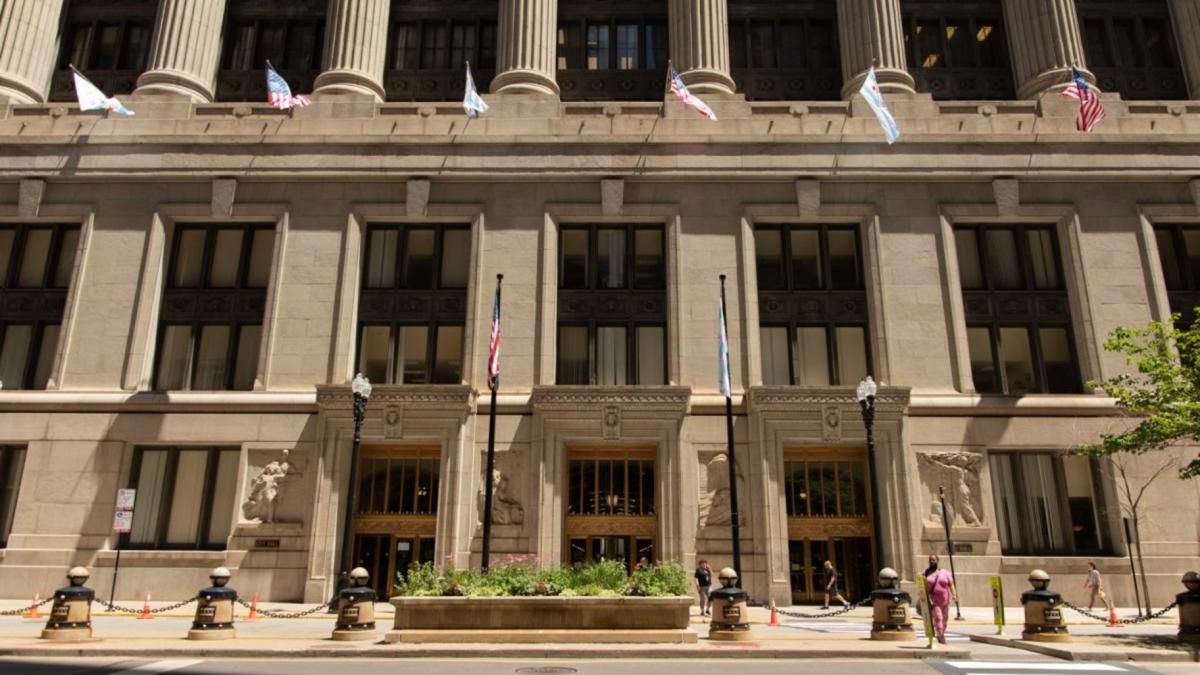 (Michael Izquierdo / WTTW News)
The Chicago City Council voted 32-15 Tuesday to require at least 30 alderpeople to vote to approve any plan to borrow more money in an attempt to make it harder for the city to take on more debt.
Authored by Ald. Marty Quinn (13th Ward), the measure requires new borrowing to be approved by a three-fifths vote of the City Council, rather than a simple majority of 26 votes.
Quinn, who is not seeking reelection in February, has been a frequent critic of the mayor and his handling of the city’s finances, which have long been out of whack, pinched by soaring pension costs, spiraling personnel costs and a massive amount of debt.
Quinn called it a “simple change” designed to protect the city’s long-term financial health.
Ald. Bill Conway (34th Ward), who is seeking reelection, called Chicago’s debt a “silent killer.”
After a vote on the measure was blocked Wednesday, Johnson told reporters the measure would make it harder for the city to “move with expediency” to fill potholes, trim trees and repair or rebuild Chicago bridges that are crumbling because of “negligence over decades.”
After the City Council meeting, Mayor Brandon Johnson declined to tell reporters whether he would veto the measure, but said that if it was allowed to take effect it would stop investment flowing to the West and South sides of Chicago. It would take 34 votes on the City Council to override his veto.
“The impact would be severely detrimental to the most vulnerable, the least of these, and those are the folks who can least afford government to get in the way of itself,” said Johnson, who referred to the measure as a “three-fifths compromise.”
Quinn initially proposed requiring 34 votes before the City Council could borrow funds, but that measure failed to gain traction.
The “three-fifths compromise” is best known as the agreement reached in 1787 to count three out of every five enslaved people toward a state’s total population as part of the U.S. Constitution.
Asked if he was implying that supporters of the measure were racist, Johnson said he could not speculate about their motivations.
Ald. Jason Ervin (28th Ward) said if the measure were to become law it would allow a minority of members “to effectively hold everybody hostage.”
Ervin also warned his colleagues against scaling back the power of Johnson, the second Black man to be elected Chicago mayor. Johnson is seeking a second term in February.
“Why now? We need to look at the optics of how this will be perceived — especially in minority communities, as to what’s being done to whom, by whom,” Ervin said.
In April 2024, 32 members of the City Council voted to borrow $1.25 billion through 2028 to fund a wide-ranging slate of projects designed to expand the supply of affordable homes and good-paying jobs.
However, in February 2025, just 26 alderpeople voted to borrow $830 million to repair Chicago’s crumbling streets, sidewalks and bridges after weeks of controversy. Had that measure been rejected, the city would have no clear way to pay to repave roads, fix cracked sidewalks, renovate police and fire stations and replace police cruisers and fire trucks for the foreseeable future.
Since 2020, the City Council twice agreed to borrow a total of $3.25 billion to repair Chicago’s infrastructure with nowhere near as much controversy.
Ald. Brendan Reilly (42nd Ward), another critic of the mayor, said the measure was designed to assert the City Council’s independence from the mayor’s office after decades of serving as a rubber stamp for Mayors Richard J. Daley, Richard M. Daley and Rahm Emanuel.
Requiring 30 votes to borrow additional money would force the mayor to win the support of more alderpeople, ensuring any proposal enjoys wide support, Reilly said.
Contact Heather Cherone: @HeatherCherone | (773) 569-1863 | [email protected]