Politics
From ‘Mega Master’ Hearings to Investigations, What’s Changed Since ‘Midway Blitz’
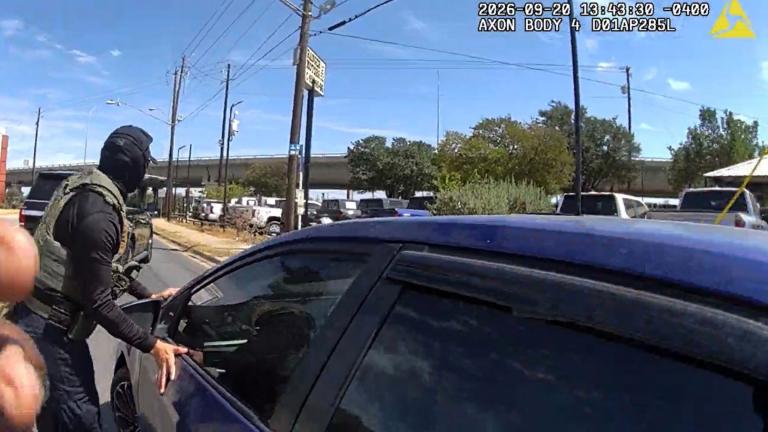
It’s been one year since “Operation Midway Blitz” began, when federal agents from Immigration and Customs Enforcement and Border Patrol ramped up arrests of immigrants throughout the Chicago region.
Now, the chaotic scenes that marked the height of the operation — masked agents on neighborhood streets, protests outside of the crowded Broadview detention facility — have largely faded. But immigration-related arrests have continued.
While officials continue to look for legal accountability for agents accused of wrongdoing, many immigrants face confusing “mega master” court hearings, with their legal status in the balance. Meanwhile, the communities hit hardest by last fall’s deportation campaign are still navigating this new landscape.
“You feel a sense of normalcy that’s come back to the community,” said Marcela Rodriguez, executive director at Enlace Chicago.
“But at any rumor of a sighting of ICE, any car that’s unmarked, has no plates, has tinted windows, it triggers people,” Rodriguez said. “And you begin to start seeing the effects of that fear returning into the community.”
During “Midway Blitz,” word got out about the conditions detainees faced at the Broadview detention facility. Now, the facility has largely emptied out, with detainees quickly transferred out of state.
Samuel Cole, chief immigration legal counsel at ACLU of Illinois, was part of a group that sued over the conditions and eventually gained access to the facility.
“No one should be staying overnight there — there aren’t beds, there aren’t enough toilets,” Cole said.
And while fewer arrests are made on the streets, many immigrants are facing the Trump administration’s increasing use of “mega master” hearings, where hundreds of immigrants are assigned court hearings on the same date.
According to Diana Rashid, state director of legal defense at the Resurrection Project, some are having their court dates moved up by two to three years, and given short notice of these changes by mail. When people arrive — if they get the notice — they encounter a crowded building, with confusing instructions on where to be and when.
At stake is their legal status. If someone called into court is not in the court room at the time of their hearing, they can face a removal order. In some cases called into the Resurrection Project hotline, immigrants have missed their hearing while in the lobby of the court building downtown.
“These are designed to have the judges order people removed,” Cole said. “Designed so that people don’t show up to court, or aren’t at the right place at that right moment, and so they lose their chance to present their case.”
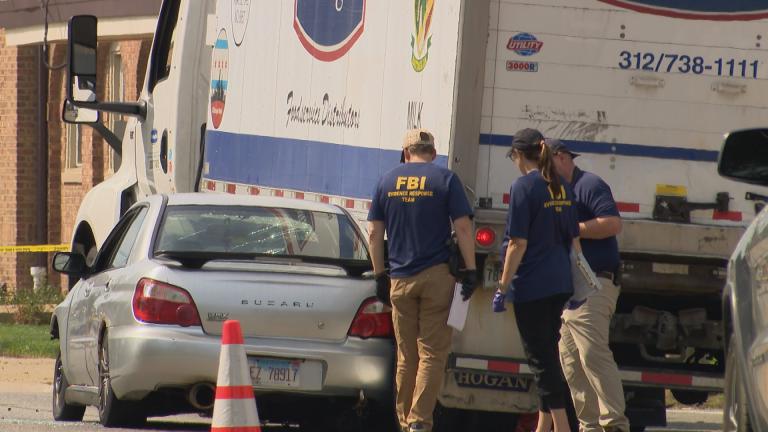
Meanwhile, officials continue to seek legal accountability for agents accused of using excessive force, including those who shot Marimar Martinez and killed Silverio Villegas Gonzalez.
The Illinois Accountability Commission collected evidence of what it deemed “illegal and violent conduct” during “Midway Blitz.” However, Cook County State’s Attorney Eileen O’Neill Burke has not acted on those findings, saying only law enforcement can initiate investigations.
“In this moment it’s not about the policy we’re setting forth, it’s about the political will to continue investigations, to pursue the evidence, to continue to fight for justice for the residents of Illinois,” state Sen. Graciela Guzmán (D-Chicago) said.
Reflecting on the past year, Guzmán highlighted what she called “the tale of two different experiences.”
“It was some of the best, most amazing displays of solidarity,” Guzmán said. “... We also saw the quick decay of public trust. That collective trauma is something we continue to work through, as we think about the gaps in our policy landscape here in the state of Illinois.”