Crime & Law
With ICE Arrests Surging, Chicago Community Groups Build on Past Networks
Reports of immigration-related arrests around the country surged at the end of June, including 10,000 arrests over a five-day period.
Although the shows of force in Chicago might not compare to what residents saw during “Operation Midway Blitz,” immigrant rights advocates are seeing the impact. And while some aspects of enforcement have changed, community groups are building on the same support networks they cultivated over months and years.
“What I love about Chicago is that we continue to show up strong for our neighbors,” said Ellen Zhou, a community organizer with Asian Americans Advancing Justice Chicago, a member organization of the Illinois Coalition for Immigrant and Refugee Rights. “Some of the infrastructure that was built — especially around mutual aid and these rapid response networks — continues.”
“And even though we don’t have the national attention in the same way before,” Zhou said, “the volunteers and neighbors who have stepped up during the fall continue to step up today.”
According to data tracked by the Resurrection Project, requests for legal assistance related to immigration detainments in Illinois doubled in June compared to the previous months.
“It’s affecting our working class, a lot of our vendors are being detained. … They’re starting to not come outside to vend, they’re terrified,” said Maria Orozco, outreach coordinator at Street Vendors Association of Chicago.
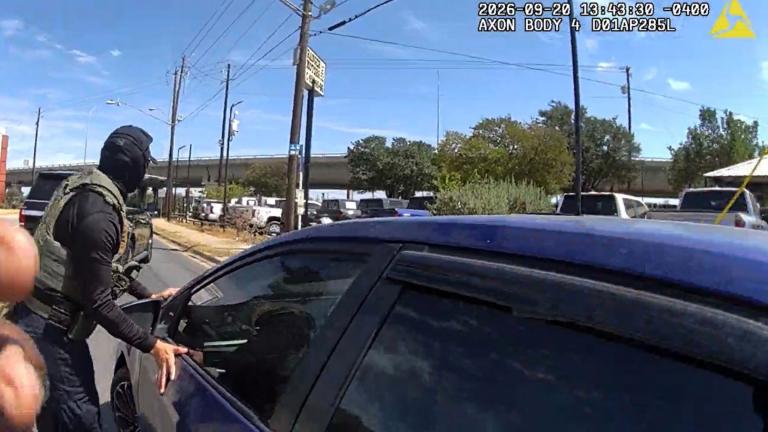
Orozco said some arrests still mimic what residents witnessed during “Midway Blitz,” where groups of masked federal agents make arrests on the street. But some patterns are changing.
After two vendors were detained near a courthouse a few weeks ago while leaving an administrative hearing related to a ticket from the city, the Street Vendors Association of Chicago worked to move court hearings to Zoom. Just last week, the association helped 15 vendors attend court remotely.
“(Enforcement) is different than what we saw in the fall, during ‘Operation Midway Blitz,’ where it was a lot more violent, a lot more flashy,” Zhou said. “But we’ve seen a lot of ICE presence at court, and (making) really targeted arrests.”
And while Zhou acknowledged that the Latino community has been targeted for immigration enforcement, she also said the lack of visibility around the Asian immigrant community contributes to unique challenges.
“One in eight Asian immigrants in Illinois is undocumented,” Zhou said. “What we’re seeing is there’s a lot of fear and panic in our communities, and we stay quiet and don’t access resources.”
Diana Rashid, the state director of legal defense at the Resurrection Project, said that alongside the increase in arrests, the ability to provide detainees with legal resources they are entitled to has been strained.
According to Rashid, tracking down the location of people who have been arrested is the first challenge. Then, because of federal policy challenges disallowing bond in certain cases, legal responders need to file habeas petitions in federal district court to secure somebody’s release.
“Now you add layers of administrative burden, of legal work, of additional expertise that’s required” to respond to immigration detainments, Rashid said.
The increase in arrests has been spread across the nation, indicating that the U.S. Department of Homeland Security is not targeting individual cities, like Chicago during “Operation Midway Blitz” or Minneapolis during “Operation Metro Surge.”
But locally, Rashid said resources provided through the city and state have been critical “to be able to provide a lifeline to people, to be able to provide legal information and advice, and (for immigrants) to know that there is relief that they can access.”