Politics
Federal Judge Denies Trump Administration Access to Unredacted Illinois Voter Data
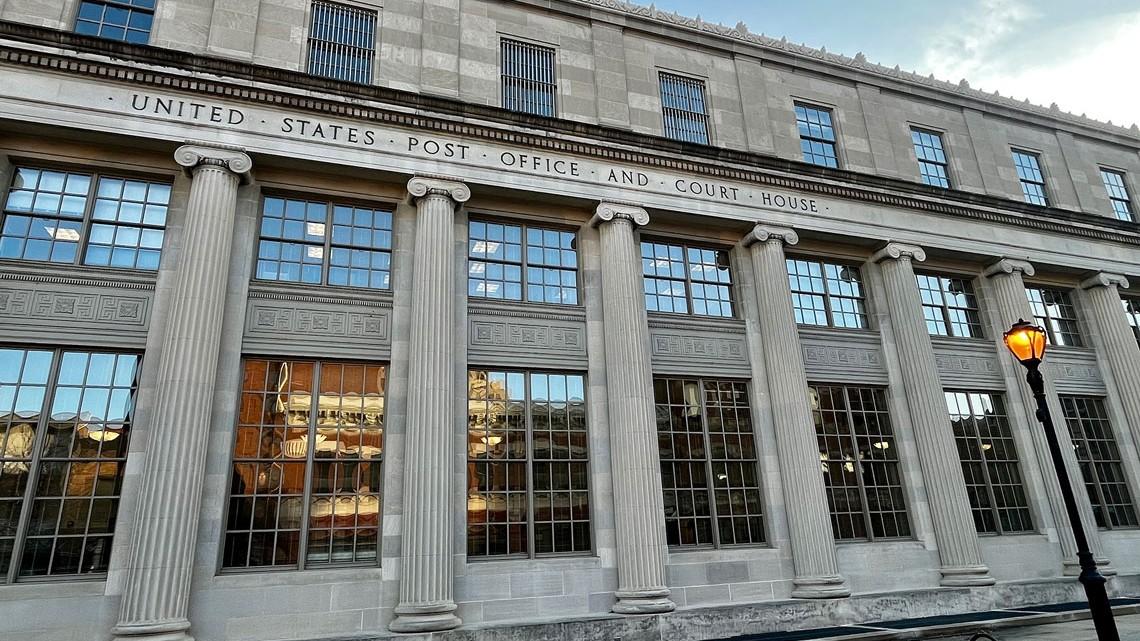 The Paul Findley Federal Building in Springfield. (Capitol News Illinois file photo)
SPRINGFIELD – A federal judge ruled late Friday that Illinois is not required to hand over its complete, unredacted voter registration data, including sensitive personal information, to the Trump administration.
In a 14-page opinion, Judge Colleen Lawless reached the same conclusion as judges in 18 other federal districts and one appellate circuit who have ruled in nearly identical cases. She found that the Civil Rights Act of 1960 does not give the U.S. attorney general “general auditing power” to demand voter data.
No court has yet ruled in favor of the administration’s demand for voter data.
She also said the Department of Justice failed to provide any factual basis for suggesting state officials have done anything wrong in maintaining the state’s voter registration database and that it offered no legitimate purpose for seeking the information.
“The Attorney General’s demand is deficient in both its stated basis and purpose and cannot be enforced against (Illinois State Board of Elections Executive Director Bernadette) Matthews,” Lawless wrote.
Demand for Data
The Justice Department began demanding access to states’ unredacted voter registration rolls shortly after President Donald Trump took office for a second term in 2025.
The lists include sensitive personal information such as dates of birth, driver’s license numbers and partial Social Security numbers — what election law expert David Becker has referred to as “the Holy Trinity of identity theft.”
In August 2025, the state elections board gave DOJ a copy of its statewide voter registration database, with sensitive information redacted. That is the same information it makes available to candidate committees and political parties, but lawyers for DOJ said that was insufficient.
In its petitions, DOJ said it needed the complete database to ascertain whether states were meeting their legal duties under federal laws to maintain accurate and up-to-date voter rolls and to take affirmative steps to purge the rolls of ineligible voters, including noncitizens.
DOJ cited a provision of the Civil Rights Act giving the attorney general authority to “demand in writing” from state election officials any “record or paper” related to an election that has taken place in the previous 22 months.
But attorneys representing outside groups that intervened in the Illinois case argued that was only a pretext and that DOJ’s real purpose was to purge state voter rolls of suspected noncitizens by cross-checking their rolls with a national citizenship database.
Court Ruling
In her opinion, Lawless did not address that alternate theory about DOJ’s motives. Instead, she focused on the agency’s stated reasons.
She said the Civil Rights Act does not give federal investigators blanket authority to demand records from state election officials and that it requires them to show both a “basis and purpose” for the demand.
Lawyers for the Justice Department argued they met that obligation simply by citing the legal authority that the statute gives to demand the information. But Lawless rejected that argument.
“If the Attorney General could simply justify his demand with a statement of any purpose whatsoever, the requirement that he specify his purpose (and his basis) would be pointless and it would provide him with unfettered authority to demand voting records,” Lawless wrote.
She said the Civil Rights Act of 1960 was enacted to combat racial discrimination in voting and that a demand for records under that law “must relate to Congress’s rationale behind granting the Attorney General investigatory authority over certain federal voting records.”
“Congress did not confer a general auditing power to the DOJ over state election officials,” she wrote.
Capitol News Illinois is a nonprofit, nonpartisan news service that distributes state government coverage to hundreds of news outlets statewide. It is funded primarily by the Illinois Press Foundation and the Robert R. McCormick Foundation.