Crime & Law
Are Universities Doing Enough for Sexual Assault Survivors? Cornell Rape Case Raises Questions
Sexual assault on college campuses is making headlines across the country.
It comes as a former student at Cornell University filed a lawsuit earlier this month accusing the school and local law enforcement of mishandling her report alleging she was gang raped in a fraternity house for hours.
A New York prosecutor has since reopened her case, but it has set off a firestorm of commentary about how universities and society at large respond to these cases and how survivors are supported.
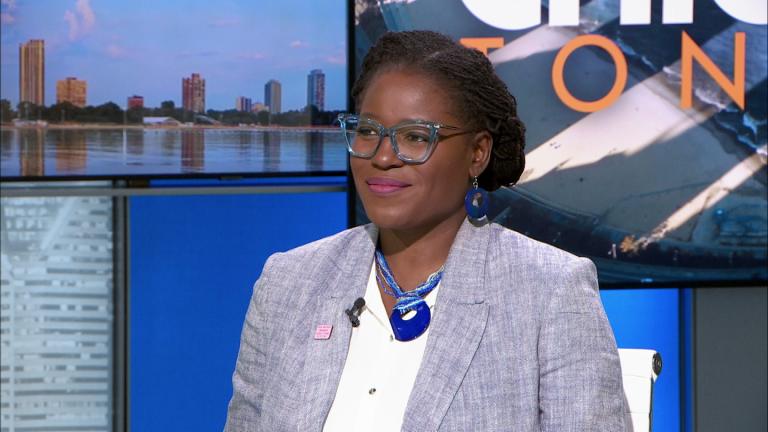
“We’re once again getting a window into how rape is mostly responded to by institutions like universities, and the state itself,” said Kaethe Morris Hoffer, executive director of the Chicago Alliance Against Sexual Exploitation (CAASE).
And while the details that have emerged put scrutiny on the response from the university and local law enforcement, Morris Hoffer said the victim’s experience is “not the exception, it is the epitome of what survivors go through.”
According to Anne Kirkner, a professor of criminal justice at Roosevelt University, the options students have to look for recourse often leave victims of sexual assault unsatisfied with the outcomes.
For Title IX investigations, the length of the process and a lack of transparency from the university “just show the survivor that the process is sort of the punishment,” Kirkner said.
“It’s not focused on their well-being, it’s more of a compliance process,” Kirkner said. This can lead to underreporting of cases.
Meanwhile, a 2020 report from CAASE found the small percentage of survivors who bring reports to the Chicago Police Department also faced long wait times and few charges brought against the accused.
CAASE offers legal representation to student survivors who do choose to seek recourse through their school — a service that levels the playing field in cases where the accused are typically more likely to have legal representation.
Beyond legal resources, the Illinois Coalition Against Sexual Assault (ICASA) coordinates rape crisis centers around Illinois. These offer 24-hour responses to sexual assault, from evidence collection to reporting support and counseling services.
ICASA is also seeking amendments to the state’s Preventing Sexual Violence in Higher Education Act, which sets requirements for universities to address sexual violence on campus.
“That’s one of the ways we can increase the accountability for universities and increase the safety for students,” said Carrie Ward, ICASA’s executive director. “This is a campus-focused issue, but I think it’s also a societal focused issue that we can’t turn our back on.”
But for Kirkner, universities have had long enough to reform their processes internally.
“I have seen better outcomes when faculty senates are involved, or when it’s more akin to a labor rights case,” Kirkner said. “What those have in common is more people aware of the situation, putting their eyes on it and coming together to demand more from the university.”
The Associated Press contributed to this report.