Crime & Law
Teen Takeovers Prompt Discussion About Community Engagement, Police Intervention
The prevalence of mass youth gatherings, known as teen takeovers, often increases with the temperature as the trend becomes more popular in summer months.
So far this year, at least four major events have taken place in Chicago.
Over Memorial Day weekend, five Chicago Police Department officers were struck by a teen driver while attempting to break up a group on the Near West Side. The following day, 53 people were arrested at a gathering in Hyde Park.
Just over this past weekend, seven young people were shot in Bronzeville.
“There have been too many unauthorized, unsupervised, and unreasonable gatherings of large groups of young people, which too often now lead to fights and shootings among young people,” Ald. Pat Dowell (3rd Ward), who represents Bronzeville, said in a statement. “We need to ask ourselves as the adults in the community: Where are their parents? Where are the role models? Why are children out at night when, quite honestly, they should be home and in bed? How are we failing our youth? Parents must be accountable. … Businesses that are complicit in hosting these events must be held responsible and, if necessary, closed. I support Governor JB Pritzker’s ban on cell phone use in schools. … We must hold social media companies accountable.”
Possible Solutions
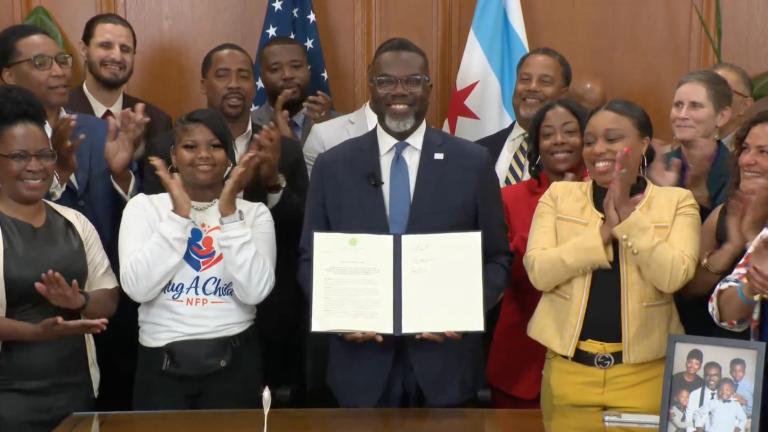
In the renewed debate over how to effectively address teen takeovers, there are a number of proposed solutions. Some local officials, like Ald. Brian Hopkins (2nd Ward), continue to voice support for a snap curfew, while some advocate for something more penal like repercussions for the participants or even their guardians. Others, like Mayor Brandon Johnson, are pushing for more youth-focused resources and activities that can serve as alternatives to takeovers.
On Monday, Chicago launched free YMCA memberships for teens throughout the summer, giving them access to the resources and programs available at their local facilities.
“It’s a good start,” said Bradly Johnson, the CEO of BUILD, referring to the YMCA summer program. “I also commend the mayor on expanding youth employment with Chicago Youth Works. What I would say needs to change is how do we extend those hours? For instance, for the employment, it ends at 5 and it’s on weekdays. … Employment does a few things for young people. It exposes them and introduces them to their future. … Also, it puts caring adults in their paths. So as they start to form those relationships, that starts to transform how they see themselves and also how they interact with the community.”
Social Media During Times of Social Isolation
The growing prevalence of teen takeovers is happening at the same time as a worldwide loneliness epidemic. Teenagers and people in their 20s are affected at higher rates than older adults. According to the latest report by the World Health Organization’s Commission on Social Connection, one in six people across the globe is affected by loneliness. People aged 13 to 17 are the most affected demographic with nearly 21% of individuals in that age range reportedly experience loneliness, followed by people aged 18 to 29 at 17.4%
“Social media, on one hand, you’ve got exposure to hundreds of thousands of followers but lack those opportunities to connect (in real life),” said Katrina Waddy, the public education director at Acclivus, a community health organization focused on violence prevention.
“A group of 15 people could turn into a group of hundreds of people,” said Waddy, explaining the appeal of teen takeovers. “That’s more folks to look at and talk to and more phone numbers to get, and more people to follow you on social media.”
Social networking, which experts cite as a contributor to the increase in social isolation, is the same tool used to organize meeting spots for the takeovers.
Police Intervention
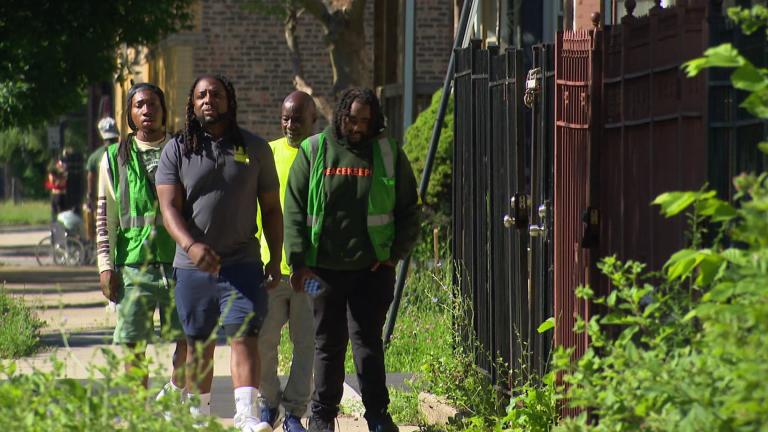
The city has previously worked with violence prevention groups and CPD’s Bureau of Counterterrorism to monitor open source social media platforms.
“What we discovered was that the majority of the time it’s actually the same kids that are coming up with these ideas and putting them out there,” said retired Deputy Chief Gilberto Calderon, who served as commander of the 10th District. “One of the things that we did that I thought was very successful was once we identified those individuals, we talked to the parents, and we discussed the possible consequences of criminal behavior and/or people getting hurt.”
By speaking with the families, parents were made aware of the situation and were able to help prevent incidents from happening.
Because the takeovers are posted publicly, it gives law enforcement and violence prevention groups the opportunity to reduce the possibility of harmful or criminal acts from occurring, said Ernest Cato, chief public safety officer at the Illinois Department of Corrections and former deputy chief commander of CPD.
“When I was the deputy chief of Area 4 and the commander of 15, and I would get intelligence of a gathering and where it was going to be held, I would provide that information to those social (violence prevention) organizations,” Cato said. “They then would provide pop-up events in those areas. So, when those gatherings would occur, that space was made into something positive. What we saw in that area at that particular time was more reductions.”
History Repeating
Large, at times unruly, youth gatherings aren’t new.
In the late 1980s and early 1990s, media outlets frequently used the term “wilding” to describe groups of mostly Black and Latino young men congregating in cities. Critics later argued the term carried pejorative racial stereotypes and contributed to fears about urban youth.
“You can go back to the 1960s when a lot was going on in the world, identical in a lot of ways to what’s happening now, socially, politically, economically,” Bradly Johnson said. “There were riots, there were all types of things happening. What happened was the city organized youth outreach, street outreach, programs, activities, employment. What they didn’t have and what we’re adding now is mental health support services. … I think that we have an opportunity not to be reactive, but to be proactive. It’s not a matter of if but when there’s going to be another event.”
WTTW News coverage of policing and police reform is supported by The Joyce Foundation.