WTTW News Explains
WTTW News Explains: What You Need to Know About Tornadoes
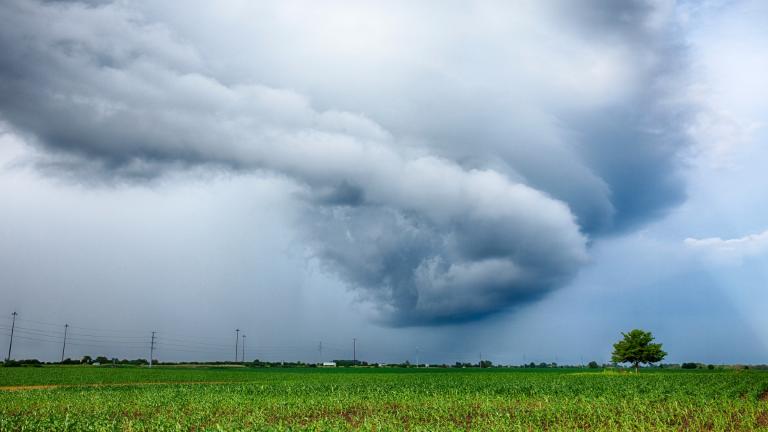
Uh oh, Toto. Is that a funnel cloud on the horizon?
But wait. How is that possible? I heard Chicago’s tall buildings keep it safe from tornadoes.
Think again, Dorothy.
No one knows when or how this myth about Chicago and tornadoes started. But “Mr. Tornado” himself flat out said a twister could hit the Loop and its skyscrapers.
Who’s Mr. Tornado? Well that would be the late University of Chicago scientist Ted Fujita. Why should we believe him? Well the scale that rates tornado intensity — from EF-0 to EF-5 — is literally named after him. The “F” is for Fujita.
Tornadoes not only can touch down in Chicago, they do.
So, what else are we getting wrong about twisters?
For starters, the term “tornado season” is kind of misleading. While it’s true that most of the tornadoes recorded in Illinois have hit between April and June, they’ve also hit the state in every other month of the year.
And tornado alley? That’s another misconception. Tornadoes have touched down in all 50 states. Twisters can form anywhere at any time.
That’s what makes tornadoes so dangerous — they’re wildly unpredictable.
All they need is the perfect storm of weather conditions, starting with a clash of dry, cold air with warm, moist air.
This is the kind of atmospheric instability that produces thunderstorms.
Now, not every thunderstorm spawns a tornado. But sometimes — and scientists don’t fully understand why — these conflicting currents start spinning inside a thundercloud and if that funnel drops down and touches the ground, it’s a tornado.
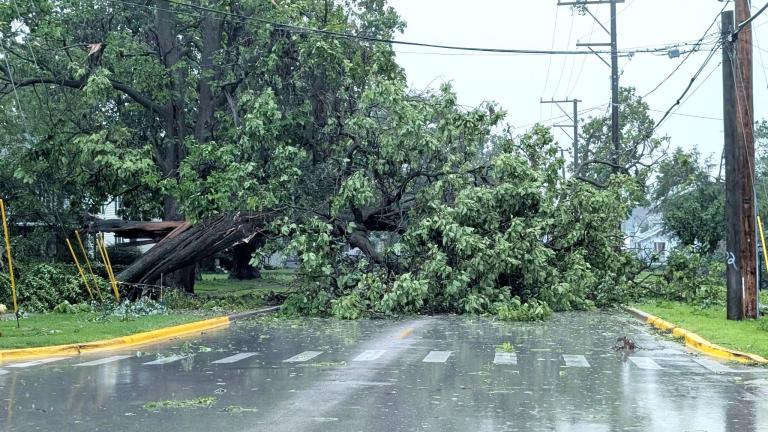
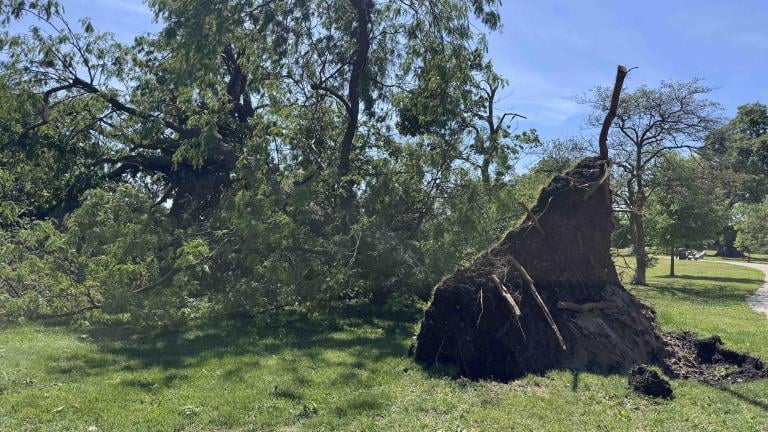
Winds inside tornadoes have been measured at more than 300 miles per hour. And even the weakest twister can pack a wallop with winds of 80 miles per hour.
It’s these gales and the debris they send flying that cause so much damage, not a change in air pressure — that’s another myth.
With advanced technology, meteorologists are getting better at predicting when a tornado might occur and warning people to take cover.
Air sirens were first used for tornado warnings in the 1970s. Chicago has 112 of them, positioned every couple of miles across the city. And when they start wailing, that’s your cue to get indoors.
Because getting caught in a tornado is a truly wicked experience.