Politics
Victory Lap on Digital Ad Tax Was Premature, Brandon Johnson Acknowledges
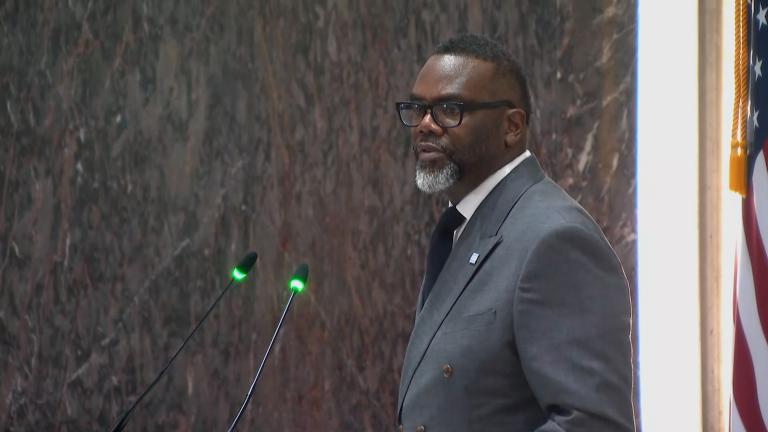
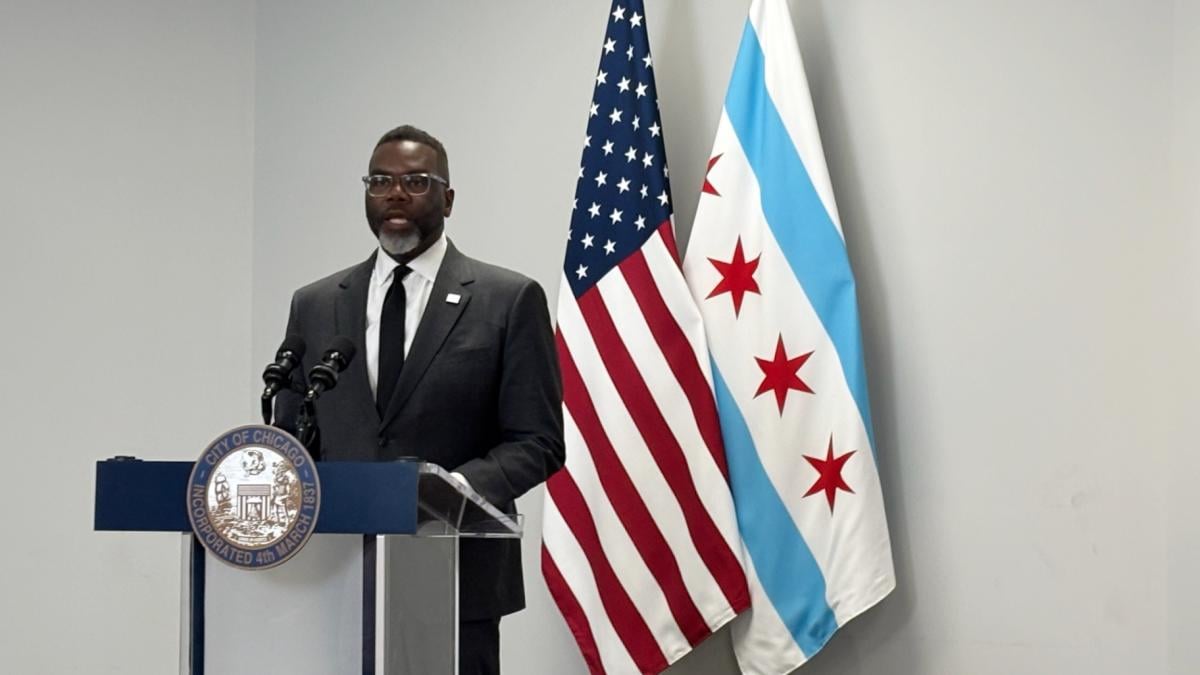 Mayor Brandon Johnson addresses the news media on May 5, 2026. (Heather Cherone / WTTW News)
The victory lap Mayor Brandon Johnson took hours after state lawmakers agreed to impose a new tax on digital advertisements was premature, with officials acknowledging Wednesday that the new revenue won’t help the Chicago City Council fill the $1.16 billion projected gap in the city’s 2027 budget.
The $56 billion spending plan awaiting Gov. JB Pritzker’s signature explicitly prohibits the Chicago City Council from imposing a version of the digital ad tax that would send new revenue into the city’s cash-strapped coffers.
Despite that, Johnson told reporters at a City Hall news conference on Monday that he would work with the City Council and “community partners” to impose a “fair” tax on digital advertisements that target Chicagoans.
A spokesperson for the mayor said he still considers the inclusion of the digital ad tax in the state budget a “win” since it is an example of the kind of “progressive revenue” that Johnson has long championed.
During his time in office, Johnson has found little success in Springfield, with state lawmakers and the governor frequently criticizing his office’s lobbying operation as ineffective and poorly orchestrated.
Johnson’s acknowledgment means that the City Council will have to figure out how to fill the massive budget gap on their own even as many prepare to face Chicago voters in February.
Johnson, along with the members of the Metropolitan Mayors Caucus, was successful in convincing state lawmakers to reject Pritzker’s proposal to cut the share of income tax revenue the state sends to local governments, saving Chicago $12.7 million.
But state lawmakers did not give the City Council the authority to impose a $1 fee on all deliveries that do not include groceries or medicine that the mayor had asked for. Nor did lawmakers grant Johnson’s request to give the City Council the authority to tax the payrolls of the largest corporations in the city.
Johnson was elected in 2023 on a campaign platform that vowed to levy $800 million in new taxes on the wealthiest Chicagoans to fund new investments designed to boost working-class Chicagoans, particularly on the West and South sides.
None of that revenue has materialized.
Contact Heather Cherone: @HeatherCherone | (773) 569-1863 | [email protected]
Related Stories