Science & Nature
Adam Bianchi Used to Manage Forests in the Rockies. Now, He’s Leading the Cook County Forest Preserves. Here’s Why
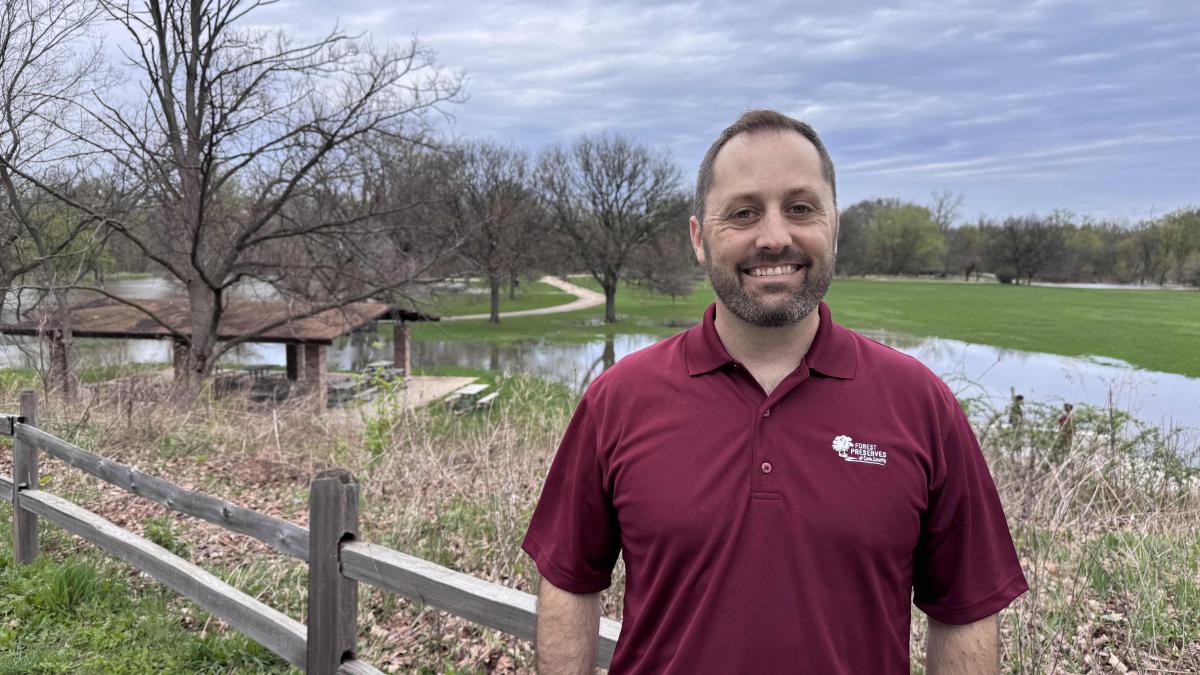 Adam Bianchi is settling into his new role as general superintendent of the Forest Preserve District of Cook County. (Patty Wetli / WTTW News)
What kind of outdoorsman leaves Colorado for Illinois? Six months into his tenure as general superintendent of the Forest Preserve District of Cook County, Adam Bianchi still gets asked that question.
A former ranger with the U.S Forest Service, Bianchi was most recently assigned to Colorado’s White River National Forest located west of Denver, where part of his job description included skiing the slopes at resorts like Breckenridge to clear them of debris. So again, there’s that question: Why leave?
What often gets lost in his resume: Bianchi grew up in central Iowa, hunting and fishing with his dad on the rare parcels of public land that hadn’t been drained and plowed under in the heavily agricultural state.
“We spent a lot of time at local parks and state parks. It made me realize just how important and vital those spaces are for communities,” Bianchi said. “I even noticed this at a young age. That’s where I saw the most deer and birds and just wildlife in general. It was in those spaces, in those parks.”
Those boyhood experiences sparked a passion that eventually led Bianchi to a career in forestry. And with each Forest Service posting — from the Black Hills to the Upper Peninsula to the Rocky Mountains — he gained greater appreciation for the ways in which public land can balance the needs of protecting natural resources while making allowance for amenities and programming.
Federal agencies like the Forest Service may have more acreage to work with, but a local land manager like Cook County forest preserves has the potential to make a greater impact, Bianchi said, whether it’s providing sanctuary for an endangered species or giving stressed-out urbanites a place to exhale because that green space is at a premium.
“When I think about the (preserves’) 70,000 acres and how it’s intertwined between the skyscrapers all the way down to the interstates — just all the communities that it’s completely intertwined with — I think that is incredibly special,” Bianchi said. “Where else can I interact with 5 to 6 million people to engage in nature? It’s an amazing space to be in.”
Bianchi inherited a district on its firmest footing in decades, courtesy of reforms undertaken by his predecessor, Arnold Randall, who transformed the forest preserves’ culture, organizational structure and approach to conservation during his 13 years as general superintendent.
The challenge, and opportunity, for the new guy is how to maintain and improve on those successes.
“For me, it’s like, ‘How do you take the next step?’” Bianchi said. “My goal really is to be the leading organization in a conservation space and bringing people to it. How do we continue to refine and tweak things to better reach that goal?”
Missing Pieces in the Forestry Puzzle
Bianchi readily admits he’s not a political insider, unlike Randall, who had strong ties within Chicago and Cook County governments. What he does bring to the table is a background in ecology and a sense of what’s needed to reach the district’s goal of having 30,000 acres restored to high-quality habitat by 2040.
With 18,000 acres already in restoration, Bianchi believes 30,000 acres is attainable, between the work of volunteers, partnerships and large-scale projects like the 1,000-acre project currently underway at Red Gate Woods.
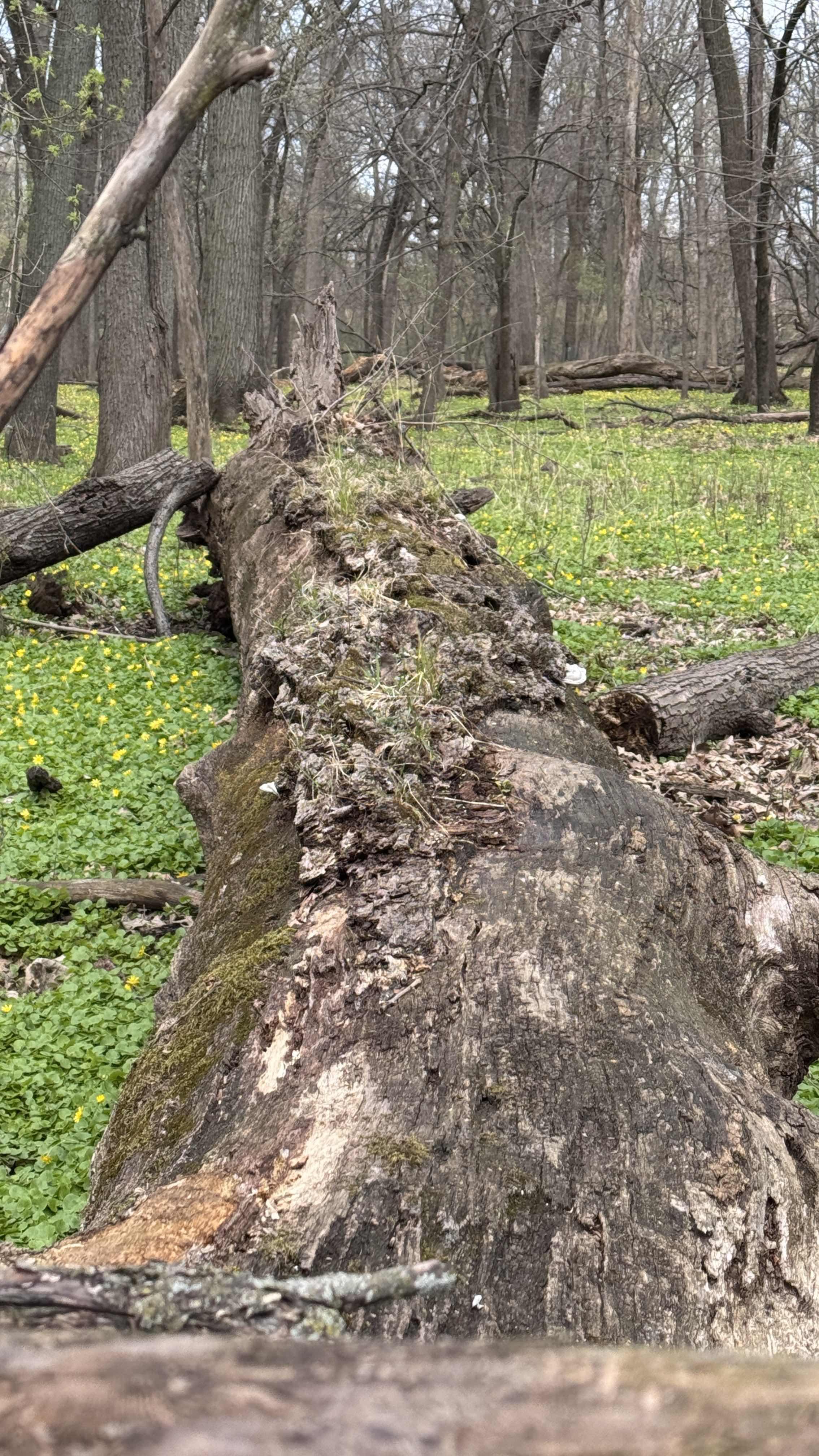 Looking at the forest preserve district with the eye of a forester, Adam Bianchi doesn't see enough young trees to succeed the old ones. (Patty Wetli / WTTW News)
The level of collaboration he’s witnessed in just his first few months is something Bianchi wants to continue to foster.
“We can’t do this work alone. And even if I had all the resources in the world, I would not want to do it alone because, again, this is shared public space and I want this to be managed in that way,” he said. “It gives people skin in the game.”
What’s impressed him most: Organizations across northeastern Illinois are “crushing it” when it comes to prairie and savannah restoration, he said, particularly their aggressive use of prescribed fire to benefit those ecosystems.
But putting on his forester hat, Bianchi sees woodlands in need of urgent attention.
“I think people assume that a healthy forest means big old trees,” he said. “What I’d like to help people understand is that we are missing a lot of different age classes.”
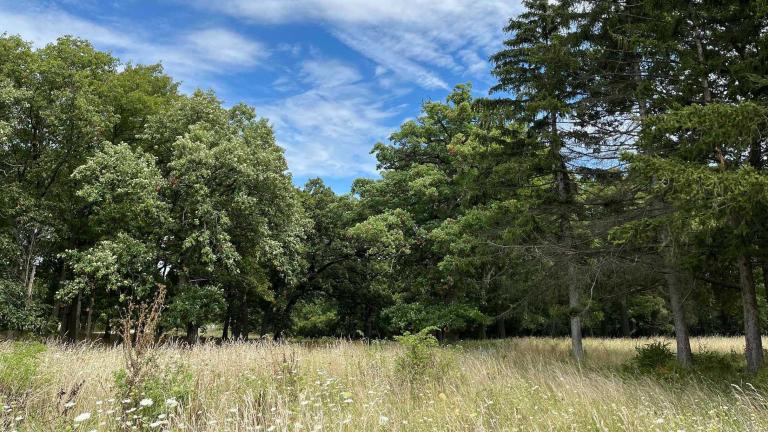
Diversity in age, height and species equates to adaptability and resilience and right now, Bianchi said, the district’s forests are heavily weighted toward an aging overstory, with few non-invasive younger trees, and nearly nonexistent mid-story and understory classes in some instances.
“I’m not noticing really any seedlings and regrowth that’s happening. So, it’s telling me, you have some older tree species here and when those die, what’s left?” he asked. “The other big piece is we’re not getting the grasses and ephemerals.”
Clearing invasives like buckthorn and honeysuckle is one piece of the restoration puzzle. Another technique — one that can be controversial with the public — is the selective thinning of canopy trees.
“People may not necessarily love this idea,” Bianchi said. “But you have to get sunlight to the forest floor to allow other species to come in too…. It’s about creating holes in the canopy.”
Perhaps the biggest challenge when it comes to woodland restoration is the time involved. Where prairies can begin to show signs of improvement within years, forests take decades, he said.
“It’s much harder to think about that and trying to get people to buy in to do the work tomorrow for 75 years down the road. That’s a really hard thing to sell,” said Bianchi. “That’s the forest issue, and that’s hard. But I think if you can get people to start thinking and understanding and seeing the value of it, you can get some of those age classes to grow.”
In Search of a Guiding Principle
Bianchi estimates he’s been to roughly 60% of the district’s forest preserves at this point. But while he’s tried to carve out time in his calendar for these visits, there’s no getting around the fact that the position of general superintendent includes a fair amount of administrative responsibilities.
Putting on that hat, Bianchi said he’s grateful for the heavy lifting done by Randall and Cook County Board President Toni Preckwinkle to steer the district toward fiscal stability, particularly their championing of a tax referendum that passed in 2022.
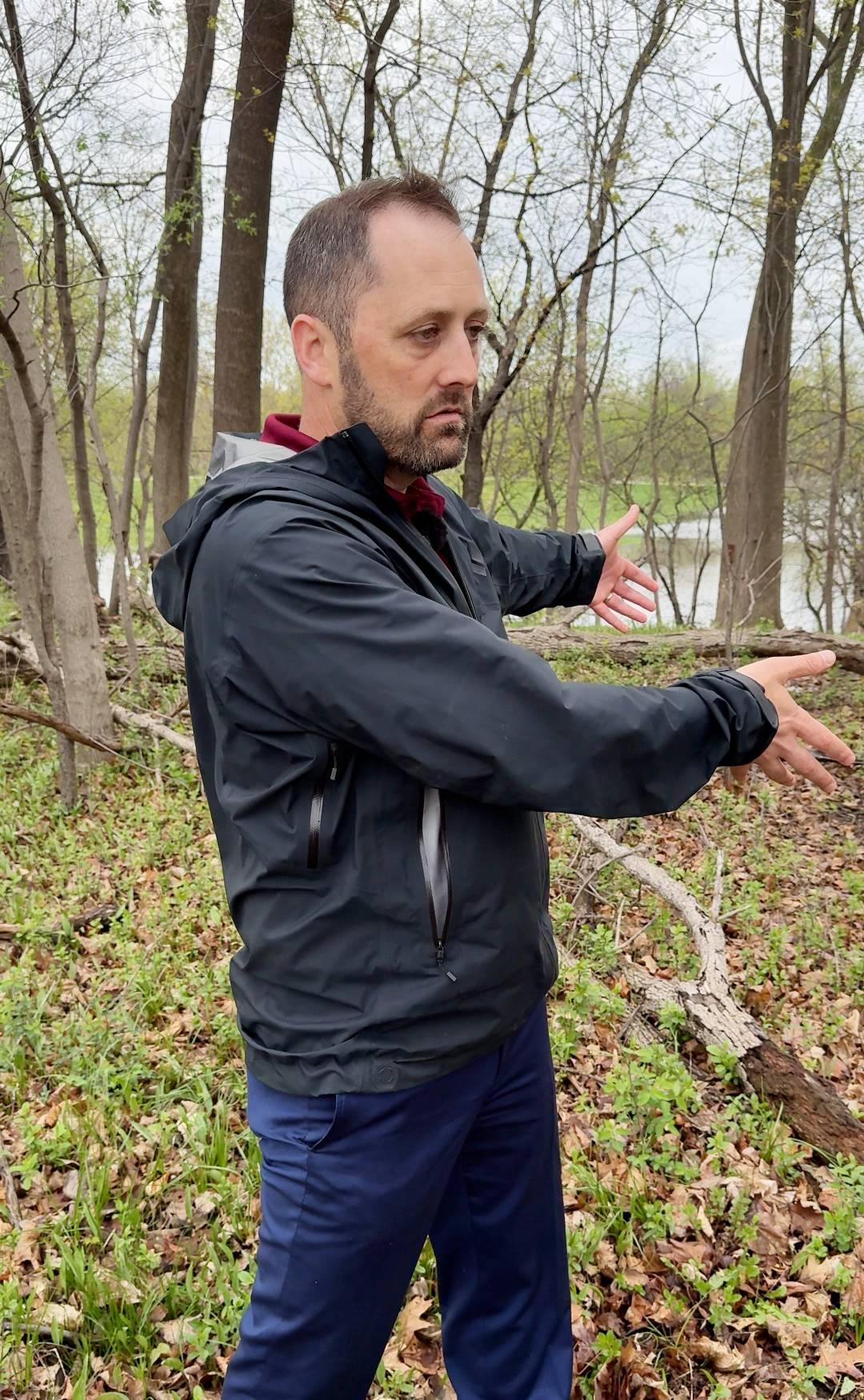 Adam Bianchi first visited the Cook County forest preserves when he was working in the Upper Peninsula and his wife was in grad school at DePaul University. (Nicole Cardos / WTTW News)
This funding has allowed the district to tackle a backlog of deferred maintenance and to lean into its mission of habitat restoration. Bianchi is cognizant of the goodwill he inherited and it’s a windfall he doesn’t want to squander.
At the same time, though, the referendum’s infusion of dollars only brings the district back up to the baseline of where it should be operating, he said.
“We don’t want to stop at the baseline, we want to keep growing and moving,” he said. “So what makes me the most nervous is thinking how we can continue to live within our mean and be financially responsible while continue to meet restoration and acquisition goals…. There’s going to have to be trade-offs. Is there an opportunity or need for us to pivot or re-engage or reprioritize? We have to keep that financial perspective, we can’t go back to where we were.”
To that end, Bianchi sees the need for more comprehensive, holistic strategic planning within the district.
Restoration and acquisition goals have been laid out in the preserves’ Next Century Conservation Plan, often referred to as the district’s North Star.
There’s also a Cultural and Natural Resource Plan, and a master facilities plan, among others.
“We’ve got planning documents all over the place but we don’t have a singular strategy or guiding principle or document that really talks about where we’re headed as an organization and how all those things fit together,” Bianchi said.
He described a scenario in which a single patch of forest preserve might be touched by three separate departments: The resource management group might be working on a restoration project on one side of a pathway; landscape maintenance might be mowing the other side; and planning and development is responsible for the pathway itself.
“We are a little siloed as an agency,” Bianchi said. “Everyone is working, doing a great job but what I’m trying to get them to understand is being able to work collaboratively together in these spaces so that we are finding opportunities together to increase efficiencies but also meeting the needs of the public.”
East vs. West
When asked to compare his experiences in the East and West, Bianchi identified differences in land managers’ approaches to the people they serve.
For one, he said, it’s sort of assumed in the West that people are comfortable in and knowledgeable about the outdoors. In Cook County, it’s the reverse.
Bianchi said he’s been impressed with the level of conservation education the forest preserves offers at its nature centers, as well as programs that teach basic skills, like how to go camping.
“I love the idea that we are really trying to create these spaces that people feel comfortable and not intimidated,” he said.
On the other hand, Bianchi said land managers in the West seem better at designing trail systems that combine minimal impact with an understanding of how people will use it.
He pointed to what he calls “social trails,” unofficial paths created by users, which indicate that the official trail isn’t meeting people’s needs.
“It can be frustrating for my employees because of the (habitat) impacts,” Bianchi said, “but what the public is telling us, they’re creating their own trail system because our trail system may not be hitting it.”
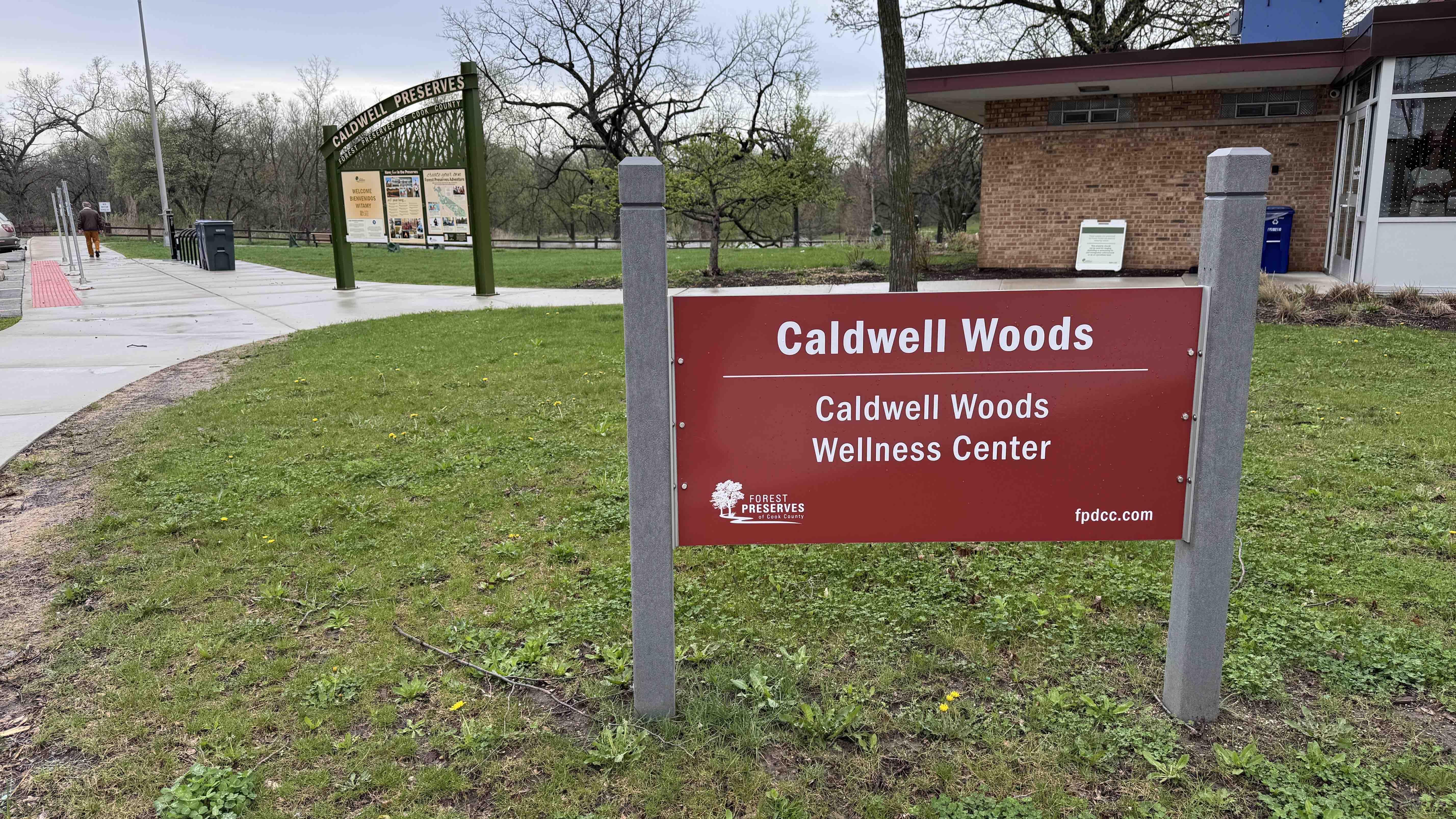 In the future, projects like Caldwell Woods new wellness center would ideally incorporate more opportunities for public input, said Adam Bianchi, Cook County forest preserve general superintendent. (Patty Wetli / WTTW News)
Another major difference between the Forest Service and forest preserve district is that federal law mandates community engagement and input on capital projects, something the forest preserve isn’t necessarily bound to do.
Take, for example, a new wellness center that just opened in Caldwell Woods, a forest preserve on the North Side of Chicago. The center will host a variety of classes and serve as community hub, and while Bianchi said he thinks the concept, which predated his tenure, is a great idea, “I don’t know what the community thought.”
“We’re doing a really good job, I think, with partners and volunteers, but if I walked across the street right now and I knocked on their door and I asked, ‘What do you think of the project we’re doing over here?' they’d say, ‘What project?’” Bianchi said. “There has to be better engagement with these communities.”
Nature Wins
For the first time in a long time, Bianchi won’t be spending the summer on assignment with a Forest Service wildfire crew.
Instead, he’s looking forward to bike rides through the preserves with his young family and rambles among forests full of his beloved hardwoods trees.
“I find this to be just as beautiful and majestic,” Bianchi said. “To me, nature is still amazing, no matter where you’re at.”
Contact Patty Wetli: [email protected]