Arts & Entertainment
Chicago Nonprofit Investing in Latino Arts Amid Funding Cuts, Shrinking Philanthropic Support
by Bianca Argüelles, Yamandú Capalbo and Juliana Proctor
Chicago is known for its diversity: its people, its stories and its art. For actor Kidany Camilo, performing on stage is an act of cultural expression. But as Latino artists continue creating their work, supporting organizations face federal funding cuts and shrinking philanthropic support.
The Destinos: Chicago International Latino Theater Festival is an initiative helping to close the gap. The festival is organized by the Chicago Latino Theater Alliance, or CLATA.
“CLATA was founded based on the idea of providing visibility and helping uplift Latino theaters and our stories at major stages across the city, both major stages and across different communities throughout Chicago,” said Jorge Valdivia, CLATA’s executive director.
According to a 2025 report by the University of Illinois Chicago Great Cities Institute, Latinos make up about 30% of the city and the majority of CPS students, yet only around 6% of philanthropic arts funding is directed toward Latino arts.
This year, CLATA awarded a $10,000 grant to Visión Latino Theatre Company to stage “Las Borinqueñas,” a play set in Puerto Rico.
“It means so much to the Latino community to see these stories on stage, to hear this history that has been kind of, like, hidden away,” said Daniela Martinez, an ensemble member at Visión Latino Theatre Company.
At the federal level, the National Endowment for the Arts awarded 424 grants to Chicago organizations between 2020 and 2024, but only 31 or about 7.3% of those grants went to Latino arts or communities.
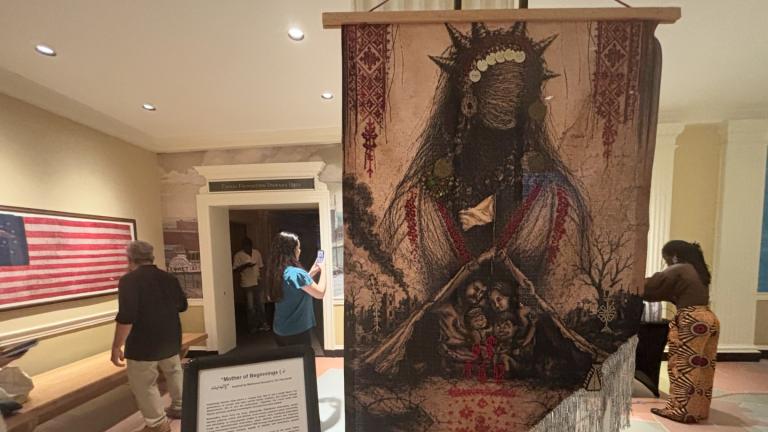
Elena Gonzales, curator of the “Aquí en Chicago” exhibition at the Chicago History Museum, said even a major institution like hers struggles to secure consistent federal support.
“It was a challenging situation trying to arrange for the funding of this exhibition,” Gonzales said. “And then as we worked on starting the building of the project actually, our federal funding was terminated from the federal government, and then part of it was reinstated.”
Gonzales said without adequate funding, many Latino arts organizations may lose the opportunity to showcase their work, which could limit cultural expression for future generations, in and beyond the Chicago area.
Those who support Latino arts say the root of the problem lies in who holds the financial purse strings. Organizations like the Paul M. Angell Foundation, which funds CLATA, agree.
“There aren’t large funders who are Latino for groups to be going to,” said Vanessa Dalpiaz, the program associate for performing arts at the Paul M. Angell Foundation. “So that means they are having to speak to power that does not look like them or represent them.”
The foundation is shifting its approach, moving away from short‑term grants and investing more in helping organizations sustain their work for the long term.
“Those are strategies that we can help them with: gaining assets, keeping funding unrestricted so that they can utilize the dollars how they see fit to try to keep them secure for the future,” said Audra Yokley, the foundation’s senior program officer for performing arts grants.