Politics
Chicago Police Leaders Must Change How Officers Are Deployed in ‘High-Demand’ Areas: Study
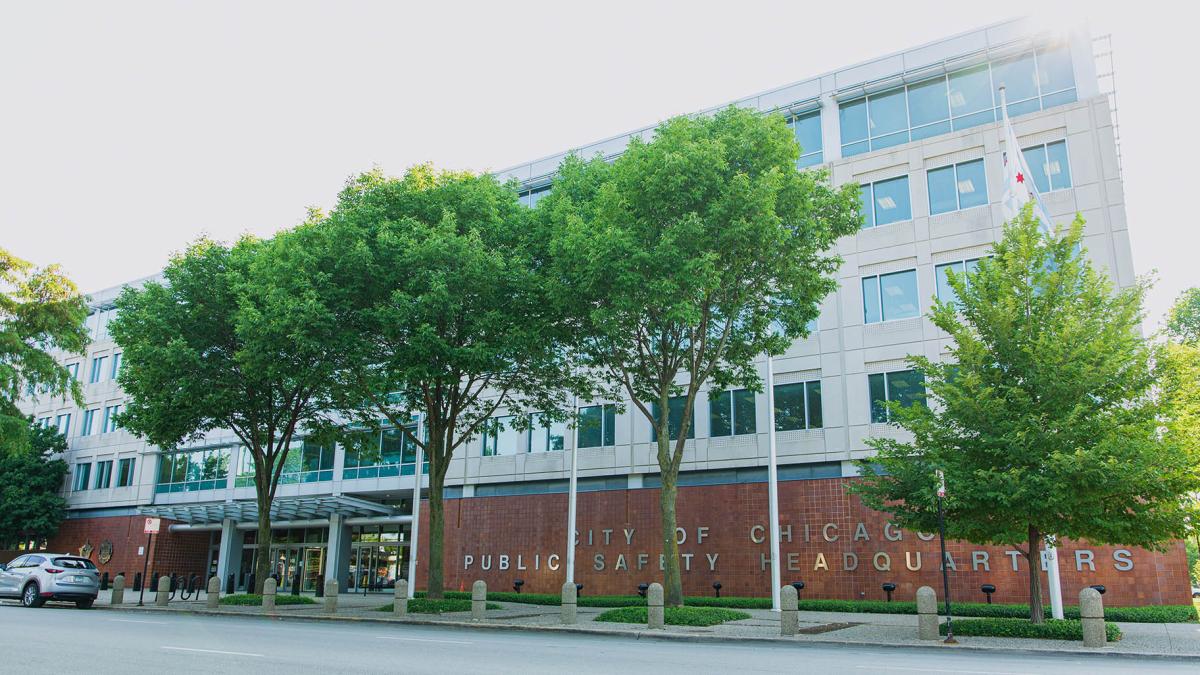 (WTTW News)
Chicago police brass must change the way officers are assigned to patrol the areas of the city with the most crime and violence, according to the executive summary of a long-awaited study required by the federal court order known as the consent decree.
The study, which examined whether officers are efficiently and effectively deployed across the city to stop crime and respond to calls for help, found “inconsistent service levels, constrained proactive time, and limited supervisory capacity in high-demand areas.”
The 21-page executive summary of the study released by CPD officials Wednesday did not define what it referred to as “high-demand areas,” nor did it detail how CPD should change how it operates in those areas.
The vast majority of violent crimes and murders occur on Chicago’s South and West sides and have for decades. Those wards, home to mostly Black and Latino residents, also have some of the highest rates of 911 calls for police service per population, according to an audit by the inspector general released in August 2023.
CPD leaders promised to release the full study — conducted by Matrix Consulting Group — in the coming weeks.
The study offers “recommendations, not mandates, that ensure staffing aligns with public safety needs,” according to a statement from the department. “These recommendations focus on balancing the workload of members, while also promoting a more effective use of resources aimed are strengthening community trust.”
The issue of how officers are deployed has long been the third rail of public safety politics in Chicago, with City Council members loathe to take any action that residents of their wards could construe as reducing the presence of officers near their homes and businesses.
Any effort to reallocate police resources to the South and West sides from the North Side or downtown will be met with fierce opposition from elected officials and their wealthier constituents, who are more than willing to exert pressure at City Hall.
The draft workforce allocation study identified “significant disparities in patrol workload across districts and sectors, despite relatively even staffing allocations by district,” according to the executive summary, which did not detail that imbalance.
The study also recommends that CPD hire more non-sworn employees to fill positions responsible for timekeeping, administrative tasks and evidence processing.
Non-sworn members of the police department do not have to attend the police academy and are usually paid less than officers, resulting in eventual budget savings.
Chicago has significantly fewer non-sworn members of its police department than some other large cities, including New York and Los Angeles. Both Mayor Brandon Johnson and Supt. Larry Snelling have endorsed that shift, but made little progress since they took office in 2023.
In all, CPD needs 405 new civilian positions and an additional 121 sworn positions, according to the study. The boundaries of the city’s 22 police districts, last revised in 2012, should not be changed, according to the study.
“The civilianization recommendations, combined with targeted increases in sworn staffing and supervision, offer a pathway to rebalance resources in a manner that strengthens operational effectiveness while supporting fiscal sustainability,” according to the study.
CPD has 12,198 active members, including 11,564 sworn officers, according to databases published by the city and the inspector general. The number of sworn officers declined by 0.6% during the past year, records show.
The study’s recommendations could start to be imposed as part of the city’s 2027 spending plan, but full implementation would require a “multi-year transformation initiative.”
But major changes will not take place anytime soon, according to the executive summary of the analysis, calling its findings a “set of complex recommendations that require further evaluation before the department can responsibly proceed with implementation.”
The study is designed to give police leaders and city officials a roadmap to change the way CPD trains, supervises and disciplines officers, as required by the consent decree, which will mark its seventh anniversary on March 1.
CPD had fully complied with 22% of the consent decree’s requirements, according to the most recent report from the court-appointed monitoring team charged with keeping track of efforts to comply with the federal court order prompted by a 2017 probe that found officers routinely violated the constitutional rights of Black and Latino Chicagoans.
The consent decree requires CPD to craft a system for officers to work with residents to address threats to public safety as part of a department-wide commitment to community policing.
A plan to implement that system is set to be released later this month or early March, according to the executive summary.
To make that a reality, officers must have ample time to “engage with community members beyond responding to calls for service,” according to the executive summary.
Every patrol officer should spend at least 40% of his or her time working proactively, focused on “community engagement, problem solving and crime prevention,” according to the executive summary, which did not detail how the study reached that conclusion or what evidence was used to develop that standard.
The consent decree also requires CPD to assign officers to patrol the same geographic area of the city and report to the same supervisor on a consistent basis, instead of moving throughout the city to chase crime.
CPD is still testing ways to meet those requirements consistently, which the executive summary calls a “prerequisite for legitimacy, effectiveness and trust.”
The cost of the study, estimated to be between $800,000 and $1 million, was covered by the Civic Committee of the Commercial Club of Chicago. The nonprofit Civic Consulting Alliance, which is funded by some of the city’s biggest corporations, helped develop the scope of the study.
The last completed CPD workforce allocation study dates to 2010, when former Mayor Richard M. Daley was in office.
Former Supt. David Brown commissioned the University of Chicago Crime Lab to complete a workforce allocation study in 2019, but shelved the analysis in 2022, telling the Community Commission for Public Safety and Accountability it was “lacking.”
Brown promised to order a new study, one that met what he said was the “gold standard” the issue required. There is no evidence Brown started that work before he resigned four months later, after former Mayor Lori Lightfoot lost her bid for reelection and before Johnson could fire him as promised.
A redacted portion of that study obtained by the Chicago Tribune found evidence that fewer officers were on the street during Friday and Saturday nights, even though that was when there were more shootings than any other time.
A complete version of that study has never been released, but the Crime Lab released a summary of its work in February 2022 that found that the allocation of police resources in Chicago, like other American cities, “is based on the desires and intuition of key decision-makers and often winds up being highly political and unequal.”
“In some areas of the city, residents receive rapid responses to both emergency and non-emergency 911 calls; in other areas, there are no officers available to respond for hours to 911 calls, sometimes even for violent incidents like robberies or shootings,” according to the summary that recommended city officials take “a data-driven approach to re-deploy officers to the busiest parts of the city.”
The results of a 2016 workforce allocation study, ordered by disgraced former Supt. Eddie Johnson, was never released.
WTTW News coverage of policing and police reform is supported by The Joyce Foundation.
Contact Heather Cherone: @HeatherCherone | (773) 569-1863 | [email protected]