Science & Nature
Homecoming in Kane County as Bison Are Returned to the Prairie and Their Indigenous Stewards
On a frigid day in December, Jessica Walks First braced herself against the minus-7-degree wind chill and stood knee-deep in snow at Burlington Prairie in the northwest corner of Kane County. Next to her, a livestock trailer was thrumming with the barely contained energy of half a dozen bison.
“It was vibrating the trailer and it was vibrating the ground underneath us,” said Walks First. “I don’t know how to explain it, but imagine the worst thunderstorm you’ve ever seen times 100. That’s how much energy they kick up. It’s kind of scary at first but then it’s a beautiful feeling — you’re feeling their energy.”
When the trailer door swung open, the largest bull in the group sprung out first. He paused to look around and licked the air a few times, almost like he was making sure the coast was clear for the rest of the tiny herd. Then he was joined by a second bison and as the pair walked off together, four stragglers finally made their appearance.
With that, bison were officially back on the prairie in Kane County after a 200-year absence.
December’s release at Burlington marked the culmination of a three-year odyssey for the Forest Preserve District of Kane County.
“I’m not a crier, but I was definitely getting misty, I was definitely feeling the magnitude of the moment. We say ‘homecoming’ but that was exactly what it felt like,” said Ben Haberthur, the district’s executive director, who had spearheaded the bison’s return.
For Walks First, an enrolled member of the Menominee Tribe of Wisconsin and president of Chicago’s American Indian Center, which now owns the herd (though they prefer “steward” to “own”), the occasion held even greater gravity.
“It’s not just to restore them to the prairie. It’s to restore them to our life,” she said of the estimated 100,000 Native people living in the greater Chicago region.
An elder had blessed the field; Walks First smudged the trailer, burning sacred herbs to cleanse and purify; and staff from the American Indian Center had sung a warrior song for the bison.
“It’s part of our reclaiming our histories and reclaiming our culture,“ Walks First said. “They were taken from us. … And for us, it’s coming full circle. We’re bringing them back, we’re bringing back that piece of ourselves.”
The real work, it turns out, is only just beginning.
These six bison — three males and three females — carry the weight of interwoven hopes: that they can heal both the land and the deep trauma borne by Indigenous people.
Keystone Species
When Haberthur was named executive director of Kane County's forest preserve district three years ago, he was ready to take some big swings.
A former machine-gunner with the U.S. Marine Corps, who served a tour in Iraq in the early 2000s, Haberthur had switched gears 20 years ago, turning to restoration ecology out of a desire to do something “unambiguously good.”
“You realize just how degraded so many things are,” he said of the country’s natural areas. “It was like, ‘OK, there’s the next mission.’”
Within the field of grassland restoration, the generation prior to his had already reintroduced Native people’s practice of prescribed fire — controlled burns that promote plant diversity and subsequently benefit insects, birds, small mammals and other wildlife.
The challenge for the current generation: how to add charismatic megafauna to the mix. “And there’s nothing more charismatic than the bison,” Haberthur said.
In prairie ecosystems, bison are considered what’s called a “keystone species,” meaning they have a disproportionately large impact on the system, creating conditions that allow other organisms to thrive. Any restoration of a prairie is incomplete without that keystone, because bison evolved with prairie, and prairie evolved with bison. The animal created a niche that no other species can fill, not even cattle.
For starters, bison graze differently than cattle, chomping on taller grasses (and keeping them under control) while leaving wildflowers intact. But the main difference is their wallowing behavior, which, Haberthur said, looks a bit like big dogs rubbing their backs on grass.
The repetitive wallowing of these one-ton creatures, in the same spot year after year, creates depressions that can act like micro-wetlands, hosting a suite of plants and critters that don’t exist without wallows.
“You bring so many other pieces back into the system with bison,” explained Haberthur.
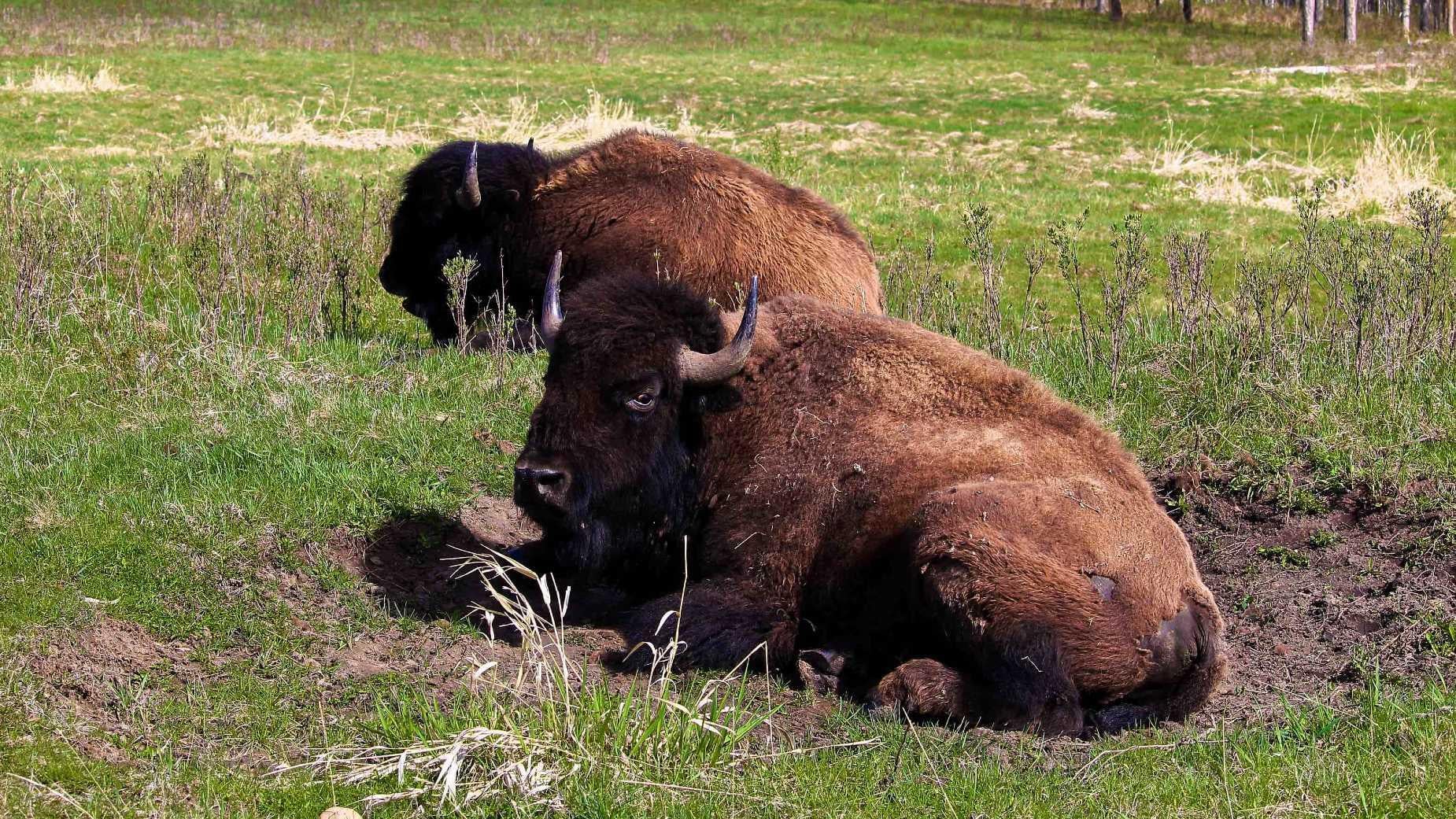 Bisons' wallowing behavior creates depressions in the landscape, something grazing cattle can't replicate. (Akchamczuk / iStock)
It was in the spirit of maximizing ecological diversity that Kane County pushed forward with its project, building on the work of other public land managers in the region that steward reintroduced bison herds, including Midewin National Tallgrass Prairie and Nachusa Grasslands.
It took some time for Kane County to pull all the pieces together, but eventually land was identified; fencing, electricity and water were budgeted for; and talks were in the works with bison farmers.
That all went out the window when Haberthur and members of the district’s board attended a screening of Ken Burns’ “The American Buffalo” documentary, followed by a panel discussion at WTTW’s studio.
“Maybe it sounds sophomoric, but I didn’t really understand how much the buffalo story was a Native American story,” Haberthur said.
Bison are North America’s largest mammal and they once numbered anywhere from 30 million to 60 million by some estimates. For Native tribes like the Lakota, Blackfoot, Pawnee and Shoshone, among others, bison were integral to their culture and survival. They provided food, clothing and shelter, and in return were revered as “relatives,” serving as the centerpiece of ceremonies and rituals.
By the late 1800s, bison were nearly extinct. In some places, as White settlers pushed further and further west, the bison’s habitat was plowed under, leaving the animals no room to graze. Countless others were hunted for their hides, which were highly desirable as cloaks and blankets.
But millions of bison were also systematically slaughtered for the express purpose of forcing members of Native tribes onto reservations.
“Removing bison was a way to starve Native nations and to dismantle economies and break that relationship to place and to our relatives,” said Jay Young, executive director of the American Indian Center. “So we can’t talk about the removal of Native folks without talking about the genocide of bison.”
Confronting this history, the Kane County team immediately knew they needed to press pause on their plan to acquire bison and revamp their approach in order to involve Indigenous people.
That’s how the American Indian Center, the unlikeliest of partners, entered the picture.
Let Bison Be Bison
Today, there are an estimated 25,000 bison in conservation herds across the U.S. and Canada, and some have outgrown the space they’ve been allotted. The InterTribal Buffalo Council, founded in 1992, has spent the last 30 years coordinating the placement of “surplus” bison with member tribal nations.
Through thousands of transfers among its 80+ members, the council has assisted in the reestablishment of tribal connections with bison.
One thing these members have in common: land.
The American Indian Center, by contrast, operates out of a storefront in Chicago’s Albany Park neighborhood.
It also lacks a single tribal identity. The center serves a fractured community that’s spread out geographically across northeast Illinois and comprises individuals from more than 150 tribes — some of them historically buffalo people, many of them not.
In short, managing a herd of bison wasn’t something the center had contemplated.
When Young first heard about Kane County’s request for proposals, as it sought an Indigenous partner for its project, he admitted his initial reaction was, “Yeah, right. We’re going to own a bison herd.”
“But we started talking about it more, and the more we talked about it and actually thought about it, it became something that was feasible,” Young said.
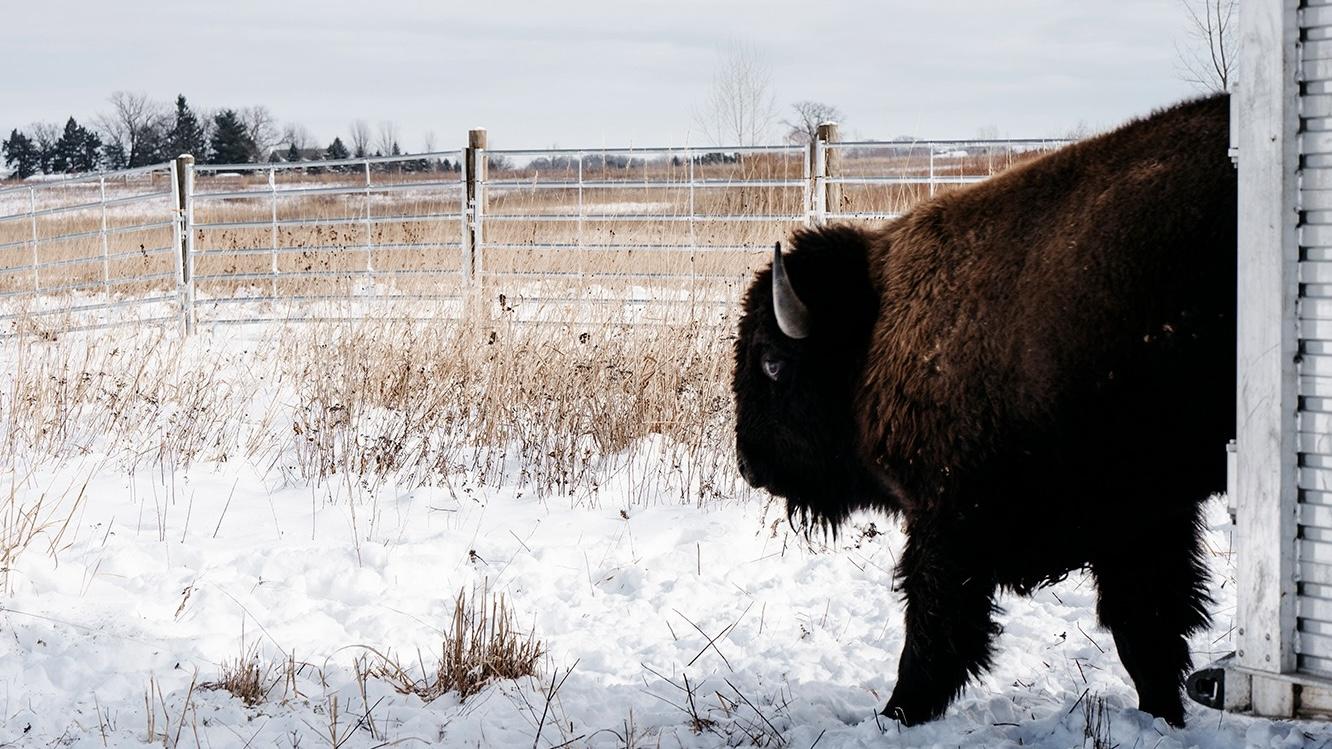 The first bull stepped out into a small corral. As the bison have acclimated, they've been moved onto larger acreage. Eventually, the forest preserve district would like to devote hundreds of acres to the bison. (Courtesy of Keeping Moments Photography / Forest Preserve District of Kane County)
Kane County was offering up the land, removing perhaps the biggest hurdle. Still, other obstacles remained, ranging from questions about how a partnership would actually work to the issue of day-to-day management of the bison.
If the American Indian Center were to become involved, Young said, they wanted to be fully engaged, not just watching from the sidelines, and they wanted their relatives, the bison, brought back properly.
For the center, that last point boils down to letting “bison be bison,” not treated like cattle or livestock or an exhibit at a zoo.
“They were wild animals, just being bison, and then they were nearly exterminated along with us,” Young said. “And so part of the responsibility is letting them be bison, letting them do their thing.”
The forest preserve district agreed, deferring to the center’s vision. As for daily care, Ruhter Bison is on board as the herd’s caretaker. The Woodstock-based company has experience raising bison on their ranch and is similarly assisting with management of a conservation herd in McHenry County. All the stars have aligned, said Walks First, who believes the serendipitous opportunity from Kane County presented itself to the center for a reason.
“I was always raised and taught that Creator gives you what you need when you need it. And if there’s something you need to do, he’s going to put you on that path,” she said. “I think a lot of us believe that.”
The Land Will Remember
For now, the bison — two adults and four calves — are acclimating to their new digs, out of sight of the general public, with Burlington Prairie closed, as is typical, for the winter.
The more comfortable the bison are in their surroundings, the less likely they are to test the fence around the 35 acres they’ve been given to roam, Haberthur explained. (Eventually the acreage will be expanded.)
Come spring, the center is planning on holding a celebration for members of its community to welcome the bison home. Only a small contingent was on hand for the herd’s release.
Then programming can begin in earnest.
For people who aren’t Native, Young said he hopes the herd can prompt productive conversations about a painful history.
“We’re not going to sugarcoat it,” he said of the bison’s near extermination and genocide of Native people. “We have to talk about what happened so we can get to a healing place. … You can’t repair without being able to tell your truth.”
The goal is to promote a greater understanding among non-Native people of the bison’s importance within Indigenous culture through education and interactions between the American Indian Center and the public.
“It’s not just the big fluffy cows to look at,” Walks First said. “There’s medicine that comes from them (bison), there’s teachings that come from them, they’re a food source. There’s a lot of components that bison is to Native people, and it’s not just to enjoy the fact that they’re back.”
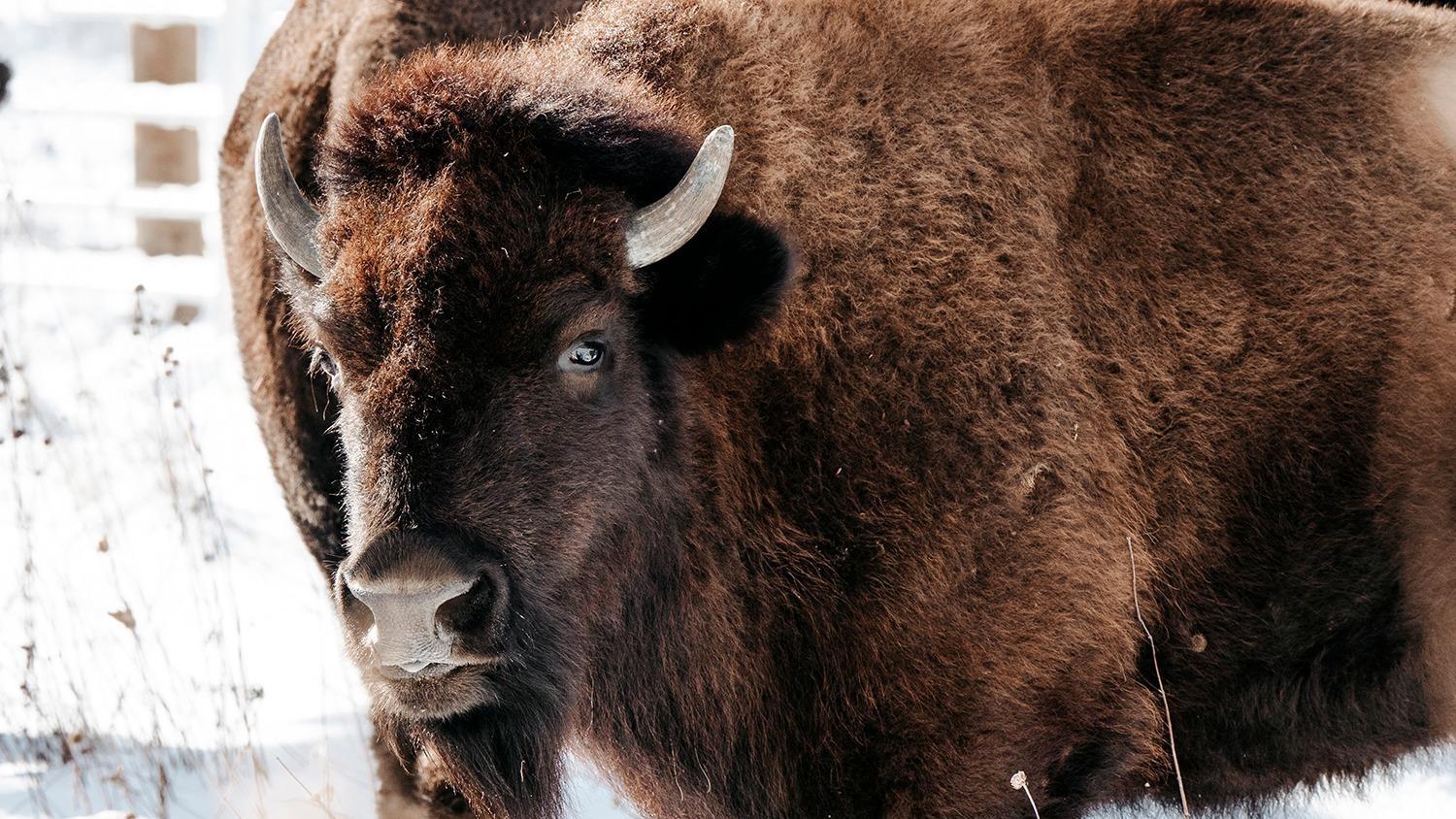 (Courtesy of Keeping Moments Photography / Forest Preserve District of Kane County)
In many ways, some of this same knowledge will be imparted to members of the region’s Native community, only on a deeper level.
“I have all these stories and I have these songs and I have these ceremonies that honor bison, but I have no connection with those bison,” Young said. “By doing this, we’re giving urban Natives a chance to reconnect with a lost relative.”
The center’s leadership is currently developing a community science project in which members of the American Indian Center will work hand in hand with forest preserve ecologists to measure and document the bisons’ impact on the prairie.
“From a traditional ecological knowledge perspective, we might say, ‘The land will remember how to function now that the bison are back,’” Young said.
There’s also thought being given to ways to tailor programming for members of different tribes — those that will be reestablishing a relationship with bison, and those who didn’t have a traditional connection.
It’s a balancing act, Walks First said, but she sees the bison herd as a binding force for the entire Native community in Chicago.
“This definitely is a way to connect us back to the land and our animal relatives,” she said. “It’s connecting them to their own indigeneity and not just a tribal affiliation.”
Full-Circle Moment
Her own tribe began stewarding a herd of bison on the Menominee reservation, northwest of Green Bay, three years ago. Walk First’s nephews run the program, giving her a first-hand look at how powerful it can be to reactivate a dormant relationship with bison.
On two occasions, she’s participated in the processing of a harvested buffalo provided to the Menominee by Nachusa Grasslands, where The Nature Conservancy maintains a large herd.
“To jump in there and start breaking down a buffalo … was probably the greatest experience of my life,” Walks First said. “For all of us to be out there in a field and to know this is something our ancestors did, this was part of our history that we’re reclaiming, this is knowledge — it was otherworldly.”
She can’t wait for other urban Natives to have the same experience.
“Getting to share that with our community, with people who are living in a concrete jungle, … it’s a beautiful thing,” Walks First said. “Kids in our community are going to get to experience this — that is such a beautiful, full-circle moment for us, something I don’t think any of us thought we’d see in our lifetime.”
Note: This article has been updated to reflect the preferred name of Jessica Walks First. This article was first published Jan. 21, 2026, and was updated with video Jan. 22, 2026.
Contact Patty Wetli: [email protected]