Politics
Johnson Says He Is ‘Bracing for What Could Be Midyear Layoffs’
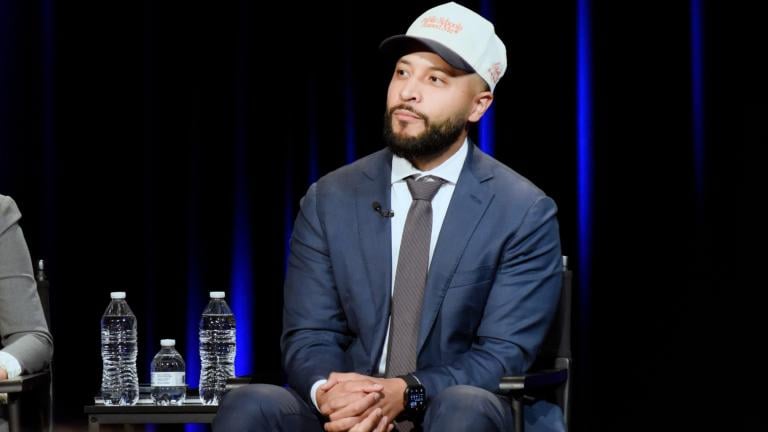
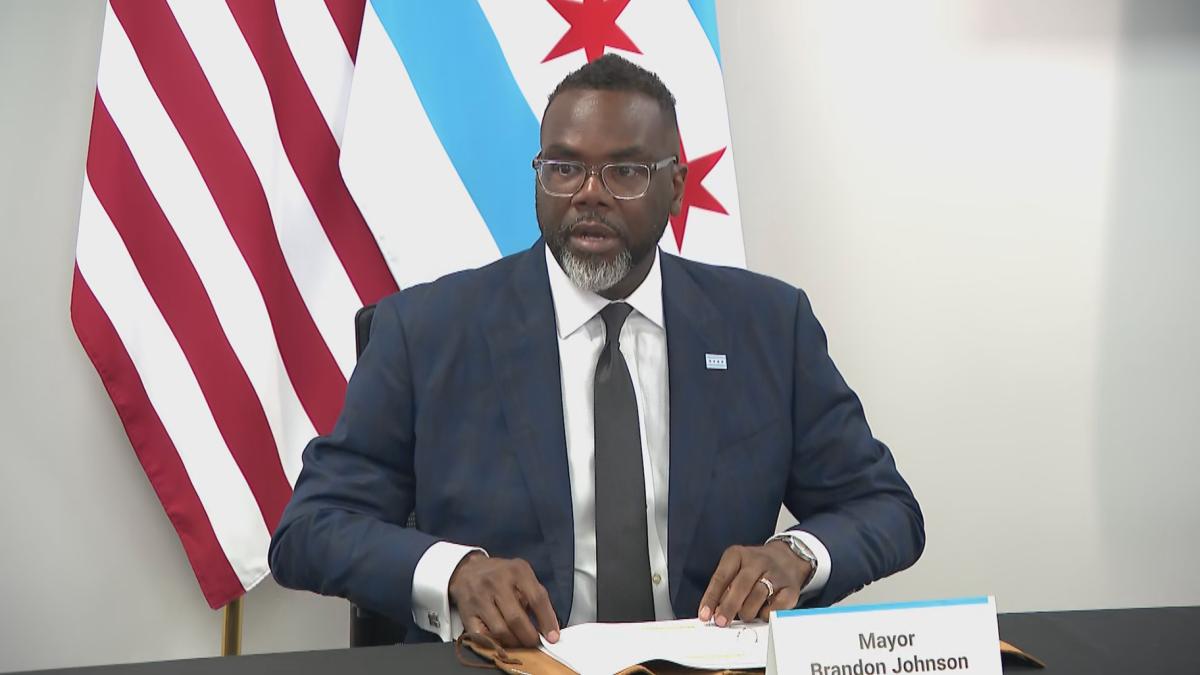 Mayor Brandon Johnson addresses the news media on June 11, 2025. (Heather Cherone / WTTW News)
Mayor Brandon Johnson warned again on Wednesday that the Chicago City Council may have to make emergency cuts if revenue baked into the city’s 2026 spending plan fails to materialize.
Johnson, who neither signed nor vetoed the spending plan approved by the City Council over his objections, allowing it to take effect, has repeatedly warned that the budget is not balanced and left the city facing a $163 million deficit.
“So now I am bracing for what could be midyear layoffs,” Johnson said. “We warned people.”
The city could have no choice but to lay off employees charged with “community safety” tasks, Johnson said.
“As far as individuals who could be laid off, I mean we’re talking about public employees, right?” Johnson said. “There could be real, serious consequences to workers who are attached to community safety.”
Chicago’s budget sets aside $2.1 billion for the Chicago Police Department, which accounts for one-third of the city’s $6 billion corporate fund, which the City Council has wide discretion to spend.
Budget Director Annette Guzman told the City Council during tense budget negotiations that the only way to make significant cuts to city operations was to reduce CPD’s budget.
“Well, if the revenues do not match the expenses, that’s what’s going to trigger it,” Johnson told reporters after being asked what would trigger layoffs.
The largest chunk of that potential deficit is made up of the additional $89 million in debt the spending plan relies on collecting from Chicagoans who owe payment on overdue utility bills and red-light camera tickets by selling that debt to a private company.
Johnson said those firms would target the poorest residents, including Black and Brown residents, and significant revenue was unlikely to materialize.
Before announcing he would not veto the budget, Johnson signed an executive order preventing the sale of $800 million in medical debt to private collection firms. It is not clear what that will mean for the revenue estimates baked into the city’s spending plan.
The budget also legalizes video poker and slot machines in every Chicago bar or restaurant with a liquor license, and projects that will bring in $6.8 million for the city in 2026.
But that move will actually cost the city $3 million by costing 400 jobs at the permanent casino set to open this fall in River West and prompting Bally’s to stop paying the city $4 million annually, as called for in the agreement it reached with Chicago officials in 2022 for the city’s first, and only, casino license.
The rival budget proposal also relies on $6 million from a 1.5% increase in the taxes on beer, wine and liquor sold at stores for consumption elsewhere.
But that change would actually cost the city $4 million and be nearly impossible to implement by Jan. 1, officials have said.
Johnson said his team would closely monitor the city’s financial condition, even as he searches for a new chief financial officer.
Jill Jaworski, who was one of Johnson’s first appointments after taking office in May 2023, will leave the city to serve as the chief financial and administrative officer at Navy Pier, as first reported by Crain’s Chicago Business.
Johnson said he wished Jaworski well in her new role and thanked her for her service to the city.
Contact Heather Cherone: @HeatherCherone | (773) 569-1863 | [email protected]