Politics
Chicago’s 2026 Budget Takes Effect, Forcing Chicagoans to Pay More for Shopping Bags, Uber Rides, Booze, Online Gaming — But Grocery Tax Eliminated
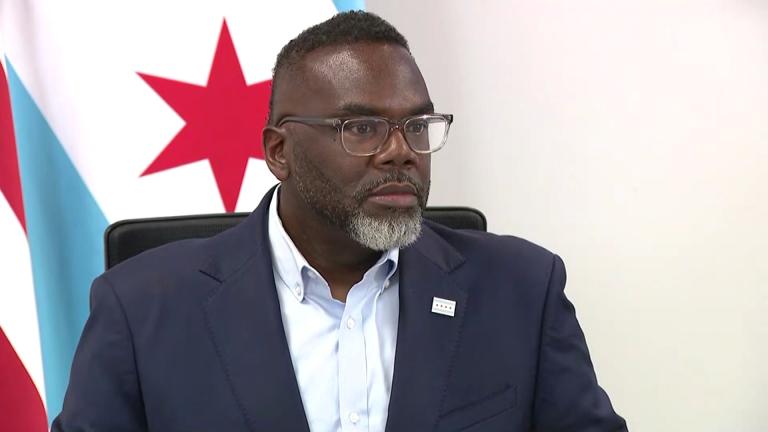
Chicagoans will get a small break on their grocery bills but be forced to pony up to cover a host of tax and fee hikes that a deeply divided Chicago City Council approved to fill a massive budget shortfall over the objections of Mayor Brandon Johnson.
The $16.6 billion spending plan, which takes effect Thursday, closed a $1.19 billion gap without imposing a per-employee tax on large firms to fund violence prevention and youth employment programs.
The City Council voted 29-19 on Dec. 19 to raise the necessary revenue for the city’s 2026 spending plan, and 30-18 on Dec. 20 to allow the city to spend those funds.
But Johnson, who neither signed nor vetoed the spending plan, allowing it to take effect, has repeatedly warned that the budget is not balanced — with a $163 million deficit — and that the City Council may have to make emergency cuts to make up for revenue that does not materialize.
The largest chunk of that potential deficit is made up of the additional $89 million in debt the spending plan relies on collecting from Chicagoans who owe payment on overdue utility bills and red-light camera tickets by selling that debt to a private company.
Johnson said those firms would target the poorest residents, including Black and Brown residents, and significant revenue was unlikely to materialize.
Before announcing he would not veto the budget, Johnson signed an executive order preventing the sale of $800 million in medical debt to private collection firms. It is not clear what that will mean for the revenue estimates baked into the city’s spending plan.
The spending plan sets aside $2.1 billion for the Chicago Police Department. CPD’s budget accounts for one-third of the city’s $6 billion corporate fund, which the City Council has wide discretion to spend.
That includes $200 million for police overtime, double what the 2025 budget earmarked.
One of the last changes made to the budget removed a requirement that CPD brass publicly ask the City Council for more money if it exhausts its $200 million budget for overtime.
A second executive order signed by Johnson imposed the requirements rejected by the City Council.
CPD is set to exceed its annual overtime budget for the ninth straight year. Through the end of November, CPD spent $233 million on overtime, according to records published by Inspector General Deborah Witzburg.
In addition, the spending plan legalizes video poker and slot machines in every Chicago bar or restaurant with a liquor license.
But Chicagoans eager to try their luck at their favorite neighborhood watering hole will have to wait until state officials grant gaming licenses, a lengthy process that will take at least six months, officials said.
The City Council’s decision to legalize video gambling machines could also upend plans to open the city’s first permanent casino to open this year in River West.
A study by a city consultant warned the decision could cost nearly 400 jobs at the casino, run by Bally’s.
In addition, city officials expect Bally’s will stop paying the city $4 million annually, as called for in the agreement it reached with Chicago officials in 2022 for the city’s first, and only, casino license.
In all, the spending plan Johnson called “morally bankrupt” imposes $473 million in new taxes and relies on $35 million in revenue from advertising on city light poles and in other public spaces.
That includes $6 million from an “augmented reality” advertising licensing program that would allow companies to impose videos and other content on city properties like Millennium Park or the Riverwalk that can be seen through a smartphone, virtual reality glasses or tablet, according to the spending plan.
By comparison, Johnson proposed a 2026 spending plan that includes more than $617 million in new taxes on the wealthiest Chicagoans and largest firms, saying it was necessary in order to blunt cuts imposed by the Trump administration while avoiding drastic cuts in city services and thousands of layoffs. Opponents of that plan contend the so-called “head tax” on large corporations would have killed jobs and stifled economic growth.
New Taxes on Tap
The largest tax hike included in the budget boosts the tax levied on software licenses, cloud services and other digital goods from 11% to 15% to generate $415.2 million. The mayor has touted that as a tax hike on “big tech.”
That tax, which city officials contend is largely paid by large corporations, like Google, Amazon and Salesforce, rather than individual Chicagoans, has risen 6% since 2024, records show.
The budget also imposes a 1.5% increase in the taxes on beer, wine and liquor sold at stores for consumption elsewhere. The city’s budget director and chief financial officer told the City Council’s Budget Committee that change will actually cost the city millions of dollars and be impossible to collect immediately.
City officials have also warned that the hike would likely be struck down by the courts, because it makes alcohol consumed on site less expensive than booze consumed elsewhere.
A plea from a coalition of retailers, suppliers, and hospitality businesses to delay the start of that tax hike until March to give businesses a chance to adjust was ignored by the City Council.
The spending plan also imposes a new local tax on online wagers to generate $26.2 million, but the Sports Betting Alliance asked a Cook County judge Wednesday to stop the tax from going into effect since the city has not yet detailed how sports betting firms can obtain a city license to operate.
The complaint also urges a judge to rule that only the state, not the city, has the power to tax gambling operations.
That legal action is not likely to be the only lawsuit prompted by the city’s new budget.
The spending plan seeks to force social media companies to pay a tax of 50 cents per month for every active user after the first 100,000 users, under the city’s amusement tax authority, officials said.
That could raise $31 million, if the first-of-its-kind tax withstands a certain legal challenge, officials said.
The budget also hikes Chicagoans’ property taxes by $9.1 million to boost the budget for the Chicago Public Library, which had been set to see 69 vacant positions eliminated in next year’s budget.
That works out to an additional cost of $12 annually for the average Chicago homeowner on their 2026 bills, which will be due in 2027, officials said.
But property tax bills in Chicago are likely to rise more because of a 4.78% property tax hike approved by the Chicago Board of Education, which receives the lion’s share of the revenue, records show.
In all, property taxes dedicated to funding Chicago Public Schools will likely rise by approximately $55 for the average Chicago homeowner, according to a WTTW News analysis.
The budget also declares $1 billion in property taxes earmarked to fight blight to be “surplus,” sending more than $550 million to Chicago Public Schools.
The CPS budget approved by the Chicago Board of Education for the 2025-26 academic year counted on getting $379 million in TIF funds in order to close a $734 million budget gap.
That means the surplus declared by the mayor will give CPS an additional $173 million, enough to cover the $175 million payment that Johnson has asked the school district to make into the pension fund controlled by the city that pays for the retirement of some of their employees.
That will help the cash-strapped city end the year in the black, officials said.
New Fees on Tap
Although Johnson twice asked the City Council to authorize the city to keep collecting a 1% tax on groceries eliminated by state lawmakers, the tax will expire Wednesday, saving most families $115 per year.
But shoppers who fail to bring their own bags will also pay 15 cents for every paper or plastic sack, with retailers keeping 1 cent to cover costs, starting Thursday.
In 2024, single-use plastic or paper bags cost 7 cents, while store owners kept 2 cents.
In addition, Chicagoans will pay more for all Uber and Lyft rides to and from an expanded area downtown under the spending plan.
The budget also calls for an expansion of an effort to crack down on owners of cars parked in bicycle and bus lanes. Cameras mounted on city vehicles and buses will capture the infraction and a ticket will materialize in the mail.
More Debt, Still Structurally Imbalanced
Chicago’s finances have long been out of whack, pinched by soaring pension costs, spiraling personnel costs and a massive amount of debt. Officials are staring into a financial abyss after hitting the so-called “fiscal cliff,” with Chicago’s federal COVID-19 relief funds exhausted and tax revenues lagging after a period of high inflation.
The budget sets aside $238.6 million to make an additional payment into the city’s woefully underfunded pension funds in an effort to avert a second consecutive credit rating downgrade.
Johnson had initially proposed paying just $120.8 million more to the city’s four pension funds, citing the city’s financial woes.
As part of the spending plan, the City Council approved a plan backed by Johnson to borrow $1.8 billion.
That includes $166 million to cover the cost of raises for firefighters who worked without a contract for four years, $283 million to cover the escalating cost of police misconduct settlements and fund the city’s infrastructure program for 2026 and 2027, which includes $144.6 million to repair bridges and viaducts, $174 million for street resurfacing and $173 million to replace lead service lines.
Chicago had $10.6 billion in outstanding debt backed by the city’s property tax and sales tax receipts at the end of 2024, according to the city’s 2024 Annual Comprehensive Financial Report.
In addition, the City Council approved a measure that would allow city officials to refinance $1 billion of the city’s debt during 2026.
The Civic Federation, a nonpartisan fiscal watchdog group, offered only tepid praise for the proposed spending plan, the first to be crafted by members of the City Council without the support of the city’s budget and finance teams, asking whether the rebuke of the mayor amounted to a “hollow victory.”
“Unfortunately, even with these changes, the budget does not move Chicago appreciably toward long-term fiscal stability,” according to a statement from the organization led by former Inspector General Joseph Ferguson who has been fiercely critical of Johnson’s financial stewardship of the city. “The threat of a credit downgrade remains real.”
Contact Heather Cherone: @HeatherCherone | (773) 569-1863 | [email protected]