Politics
Cost to Settle, Defend Lawsuits Accusing CPD Officers of Misconduct During 2020 Unrest Hits $12.8M: Analysis
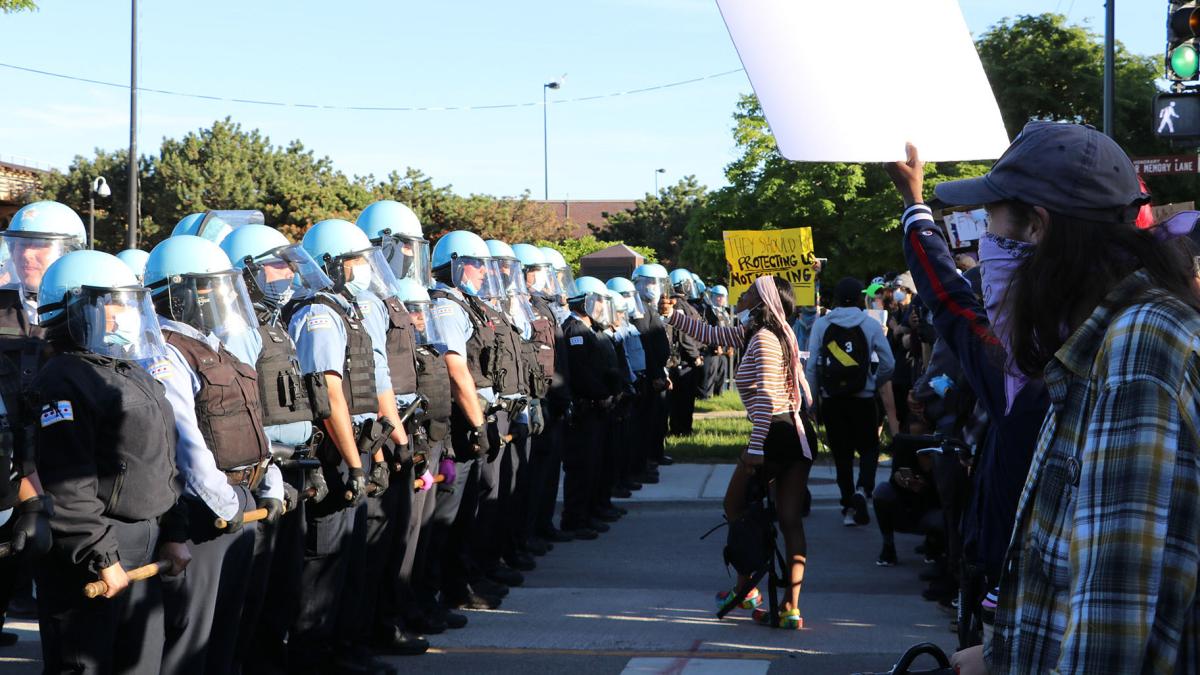 Protesters yell at a line of police officers at State and 35th streets, about 3 miles south of the Loop, where police set up a blockade on Sunday, May 31, 2020. (Evan Garcia / WTTW News)
Chicago taxpayers have spent $12.8 million to defend and settle lawsuits alleging Chicago police officers committed a wide range of misconduct during the 2020 protests and unrest that were triggered by the police murder of George Floyd, according to an analysis by WTTW News.
In the latest case to be settled, the Chicago City Council voted 28-16 Wednesday to pay $875,000 to 21 people who each say they were brutalized by Chicago police officers during the 2020 protests. The plaintiffs will get an average of $41,667, Assistant Corporation Counsel Caroline Fronczak told the City Council’s Finance Committee on Jan. 14.
It cost taxpayers nearly $680,000 to defend the lawsuit that claimed officers repeatedly used excessive force at protests that erupted across the city throughout the summer of 2020 — in the shadow of Trump Tower on May 30; in River North on May 31; in Uptown on June 1; in Grant Park on July 17; and on the Wacker Avenue bridge over the Chicago River on Aug. 15, records show.
None of the officers, some of whom were captured on video striking the plaintiffs, were ever identified, Franczek said. Nor is there any evidence that any of the plaintiffs contributed to the unrest that accompanied the protests, Franczek said.
Ald. Brian Hopkins (2nd Ward) said he voted against the settlement even though he believed it would cost taxpayers more to take the lawsuit to trial.
“This is a reasonable sum, given what’s at stake here,” Hopkins said.
In all, Chicago taxpayers have already paid more than $7.6 million to resolve 60 lawsuits identified by WTTW News that were filed by individuals who said they were the victims of misconduct by CPD officers during the protests and unrest, according to federal court documents and records from the Chicago Department of Law.
An additional $5.1 million went to pay private lawyers to defend the conduct of CPD officers from late May until mid-August 2020, one of the most tumultuous periods in Chicago history, according to records obtained by WTTW News through a Freedom of Information Act request.
Two probes found officers beat protesters with batons, doused their faces with pepper spray, used racial slurs and mocked the push for racial justice and police reform. In many cases, that conduct violated protesters’ First Amendment rights and involved unjustified and excessive force, according to the probes.
Two federal lawsuits alleging Chicago police officers committed a wide range of misconduct during the 2020 protests remain pending, records show.
Just seven of the settlements were for more than $100,000 and were approved by the Chicago City Council, records show. Settlements of less than that amount can be approved by Corporation Counsel Mary Richardson Lowry, with little or no public oversight.
Nearly 65% of the cases that have been settled were defended by lawyers who work directly for the city, who are often paid much less than lawyers who work for private firms, records show. It is unclear how many lawsuits alleging police misconduct have been dismissed by judges or withdrawn. None of these cases have gone to trial, records show.
Chicago taxpayers paid more than $100,000 to private lawyers hired to defend the officers named in 12 lawsuits, and more than $300,000 to defense lawyers in seven of those cases. In three cases, taxpayers have paid more than $600,000 per case to outside law firms, records show.
It is unclear how many lawsuits alleging officers committed misconduct remain pending in Cook County Circuit Court.
The city’s inspector general concluded that the Chicago Police Department botched nearly every aspect of its response to the protests and unrest, while the independent monitoring team charged with enforcing the federal court order requiring CPD to change the way it trains, supervises and disciplines officers found the department was “unprepared for the level of sustained protests and unrest downtown and throughout its neighborhoods.”
Court records show that lawyers for the plaintiffs and the city told U.S. District Court Judge Jorge Alonso that they had reached an agreement to settle the case on the same day former Mayor Lori Lightfoot was set to be deposed, and one day before Chicago Police Supt. Larry Snelling was set to answer questions under oath.
Lawyers for the city lost a bid to limit Lightfoot’s deposition less than a week before the settlement agreement was reached, court records show.
Former Chicago Police Supt. David Brown had been scheduled to be deposed as part of the lawsuit in September, according to court records.
It is unusual for such high-ranking former and current officials to be deposed in ongoing litigation, since their sworn testimony could expose the city to greater liability.
In the wake of officers’ actions, Chicago faced “an unprecedented volume of civil litigation,” which required city officials to pay private lawyers to defend the officers named in the lawsuits, according to a statement from the Chicago Department of Law.
That expertise comes at a significant premium, costing Chicago taxpayers four to five times more than in-house lawyers, according to estimates offered during City Council budget hearings where these costs are a perennial sticking point for budget-conscious alderpeople.
WTTW News coverage of policing and police reform is supported by The Joyce Foundation.
Contact Heather Cherone: @HeatherCherone | (773) 569-1863 | [email protected]