Science & Nature
From Gardens to Large-Scale Restoration Projects, Native Seed Is the Gift That Keeps on Giving
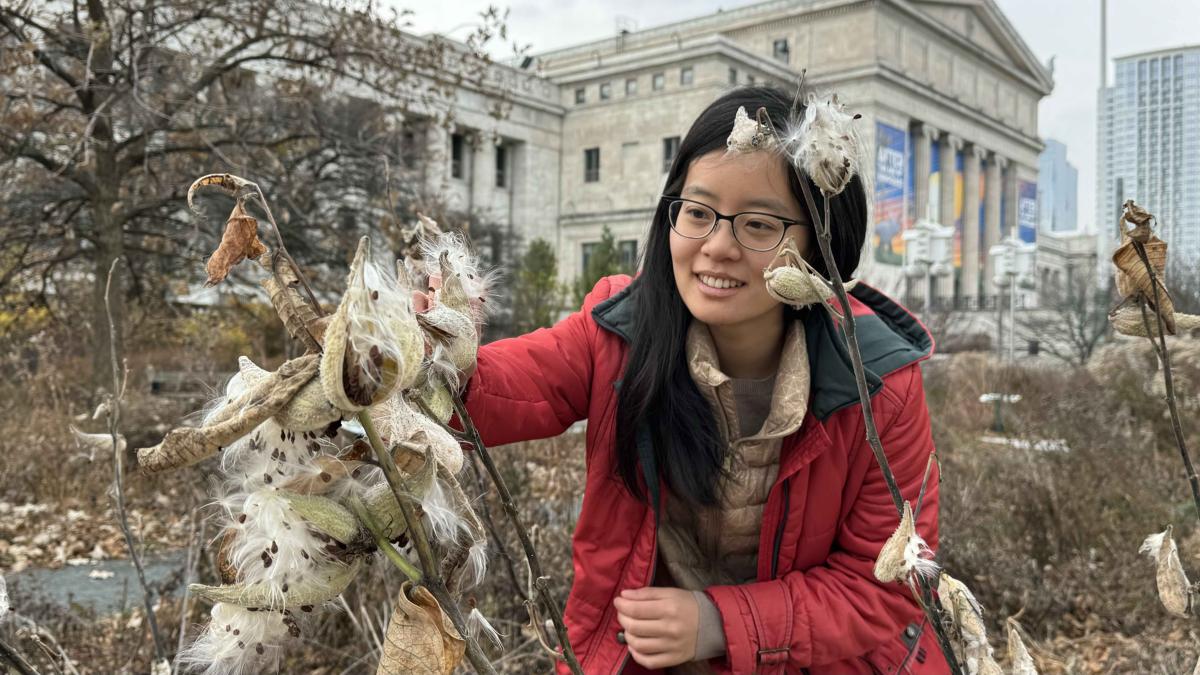 Catherine Hu, conservation ecologist at the Field Museum, gathers milkweed seed in the Rice Native Garden. (Patty Wetli / WTTW News)
It’s a little-known fact, but the Field Museum’s largest exhibit isn’t its grand dinosaur hall.
It’s the Rice Native Garden: 100,000 square feet of plantings that wrap around the museum’s exterior. Installed in 2016-17, the garden replaced swaths of lawn and impermeable pavement with a more sustainable living exhibit.
“It’s a really beautiful demonstration of what native landscaping and habitat can look like in an urban area,” said Catherine Hu, a conservation ecologist in the Field’s Keller Science Action Center.
“We have gotten a lot of feedback from people pointing to us as an example, when they’re trying to start their own native gardens in their community, saying, ‘Look, the Field Museum can do it, we can do it too,’” Hu continued. “So I think it has been a really important inspiration for others.”
And the Field gives away pieces of this display to the public, for free.
Every fall, Field staff brings groups of volunteers into the Rice garden to harvest ripened seed, collecting roughly one-third to donate and leaving the remainder for wildlife and for the plants to reproduce.
The work is labor intensive and often prickly as seed heads are separated from stalks by hand. Hu has learned over the years to bring pruners for plants like the spiky rattlesnake master.
Once the seeds have dried and been processed — sifted through screens to remove excess plant material — they’re packaged and labeled for sharing with the Field’s partners including Chicago Public Library branches, community gardens and school gardens.
") Free native seed packets from the Field Museum include loads of information, including whether the seed needs "stratification," meaning it should be sown in winter in order to germinate. (Patty Wetli / WTTW News)
Free native seed packets from the Field Museum include loads of information, including whether the seed needs "stratification," meaning it should be sown in winter in order to germinate. (Patty Wetli / WTTW News)
This year, the team assembled more than 700 envelopes of seeds, each containing kernels of a single species, to be distributed in January. Some partners will divide these envelopes into even smaller packets, and still they run out, Hu said.
“It’s great to hear it’s super popular,” she said. “It is a really impactful program because it is hard to source native seed — it’s expensive and a lot of people rely on us as a source.”
The cost and relative scarcity of commercially grown native seed, particularly rarer species, is the kind of thing that keeps natural resource professionals awake at night.
Whereas a project like Rice garden, or a residential garden, can get away with sourcing seeds native to Illinois — “It’s less crucial that your seed is coming from hyper-local,” Hu said — for habitat restoration, the requirements are far more stringent.
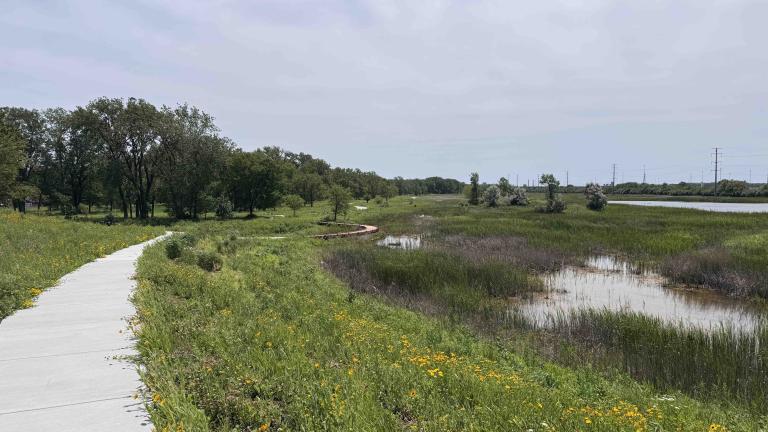
When Iza Redlinski, deputy director of resource management for the Forest Preserve District of Cook County, heard that the district had received funding for an ambitious 1,000-acre restoration project at Red Gate Woods in the Palos region, she was thrilled — at first.
“Then we started thinking about the seeds and I would literally wake up in the middle of the night,” Redlinski said. “If you’re seeding at six pounds per acre, that’s 6,000 pounds of seed. That’s a lot.”
None of it could be purchased for Red Gate due to various restrictions and sure, seed has been collected from within the preserves for decades, but the scope of Red Gate posed a unique challenge.
Cook County forest preserves are divided into zones and ecologists can’t move seed between zones, meaning only a fraction of the county’s acreage could even been considered as “donor” sites. For example, preserves like Red Gate that are in the Palos region — the highest priority area for the forest preserve district, as laid out in its Next Century Conservation Plan — can only be seeded from plants originating in Palos.
That left Redlinski with limited options for collecting.
“If we were to go year after year to a preserve nearby to collect for this thousand acres, we would be depleting the seed on site, and hurting that site in the long-term,” she said.
But if areas at Red Gate were cleared of invasive species and not immediately covered in native seed, chances were high invasives would come right back, particularly in more degraded parts of the preserve.
“And we don’t want it to be tall goldenrod and Canada thistle,” Redlinski said.
Necessity proved to be the mother of invention. The district is now in the second year of a multi-pronged “seed amplification program,” which is beginning to reap rewards.
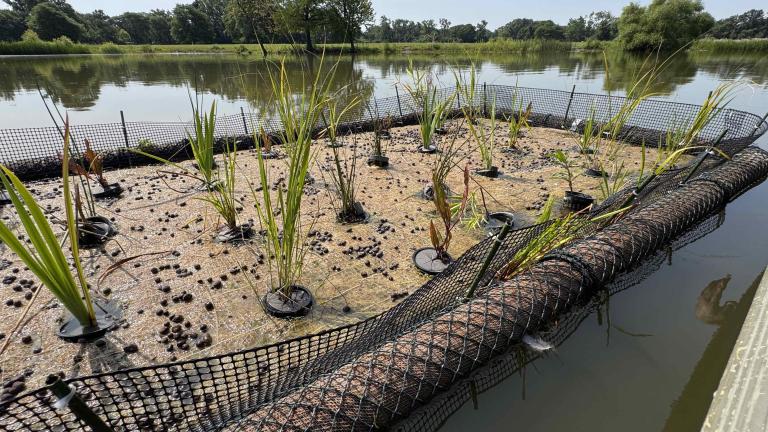
Among those prongs: Seeds collected in Palos were sown in purpose-built raised beds, creating a seed nursery. In other words, seeds begetting plants begetting seeds. If you can’t buy it, grow it.
At other sites, wild seed gardens were planted directly into soil, and collecting from the field is continuing to the extent possible.
Molly Marz, manager of the seed amplification program, recently tallied up this year’s efforts.
The seed nursery yielded 92 pounds of seeds, four times as much as its inaugural year in 2024, including some rarities such as the state-endangered small sundrops (Oenothera perennis). (“Good luck” getting those through a commercial source, Redlinski said.)
Another 58 pounds were gathered in the wild; and Virginia wild rye and little bluestem grasses sown in 2023 produced 50 more pounds. A new seed garden planted this spring near Orland Grassland needs to mature, but once it does, Marz expects harvests to jump exponentially.
All told, the seed amplification program notched roughly 300 pounds of seed, and additional collection efforts outside of the project brought in another 260 pounds or so, Marz said. It’s a good start toward reaching the district’s ultimate objective of collecting 6,000 pounds a year.
“It’s all incremental. Nothing goes fast,” Marz said. “I think you just have to keep that in mind. I might be working toward something I won’t even see the actual full effects till … a very long time. You just have to trust what you’re doing and kind of work toward that goal.”
Success poses its own set of problems, though. And now Redlinski has another nagging worry.
As nursery beds and wild seed gardens become more and more productive and yields rise — which is the hoped-for result — “hands to do the work will be a limiting factor at some point,” she said. “Put a shout-out for volunteers.”
Contact Patty Wetli: [email protected]