Science & Nature
Steel Slag Meets Prairie at Chicago’s Marian Byrnes Park, See This Natural Wonder in an Unnatural Setting
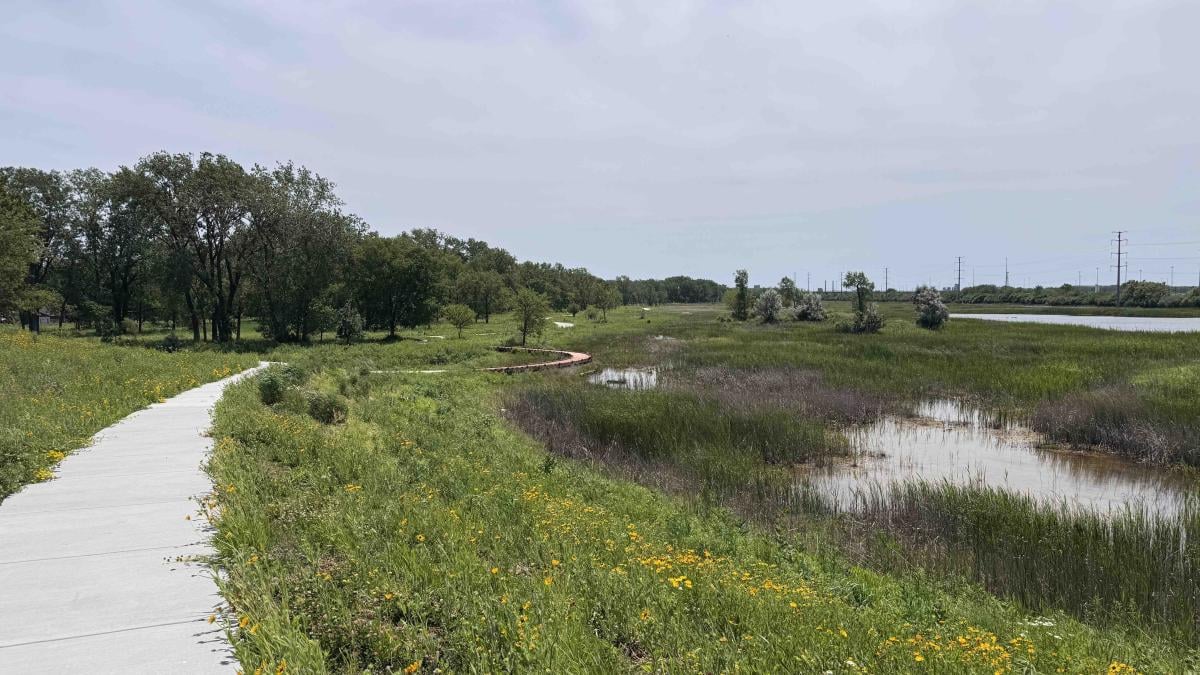 A new overlook gives visitors a panoramic view of Marian Byrnes Park’s 140 acres, a mix of woodland, wetland and slag prairie. (Patty Wetli / WTTW News)
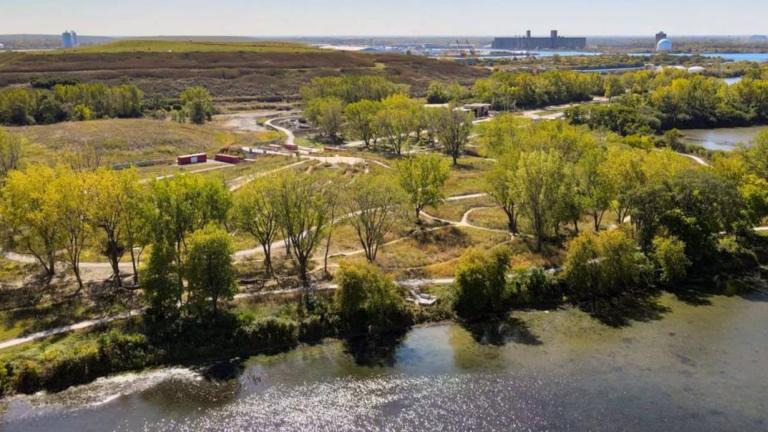
One of Chicago’s most significant natural areas is also in many ways its least natural.
There are places in Marian Byrnes Park — 140 acres of woods, wetland and prairie in the Jeffery Manor community on the Southeast Side — where shovels clank against a layer of impenetrable steel slag.
Slag, a byproduct of the steelmaking process that hardens into a rock-like form, was once dumped here by the trainload, back in the days when the area’s wetlands were considered a wasteland not worth protecting.
“We’ve tried to do some planting in the slag but we can’t dig into it,” said Lauren Umek, project manager with the Chicago Park District, who’s been leading restoration work at Marian Byrnes for more than a decade.
And yet, life finds a way.
There are species uniquely adapted to these “soil” conditions, the same plants found in remnant gravel hill prairies and dolomite prairies. And their seeds, whether blown in by the wind or deposited by birds, have taken root at Marian Byrnes.
“Those seeds come in and they do not care. They are totally happy to be growing in this sort of gravelly matrix,” Umek said, pointing to stems of echinacea, clusters of coreopsis and blazing star. “We don’t really know where they came from. But they found a way and when they’re here, they do really well.”
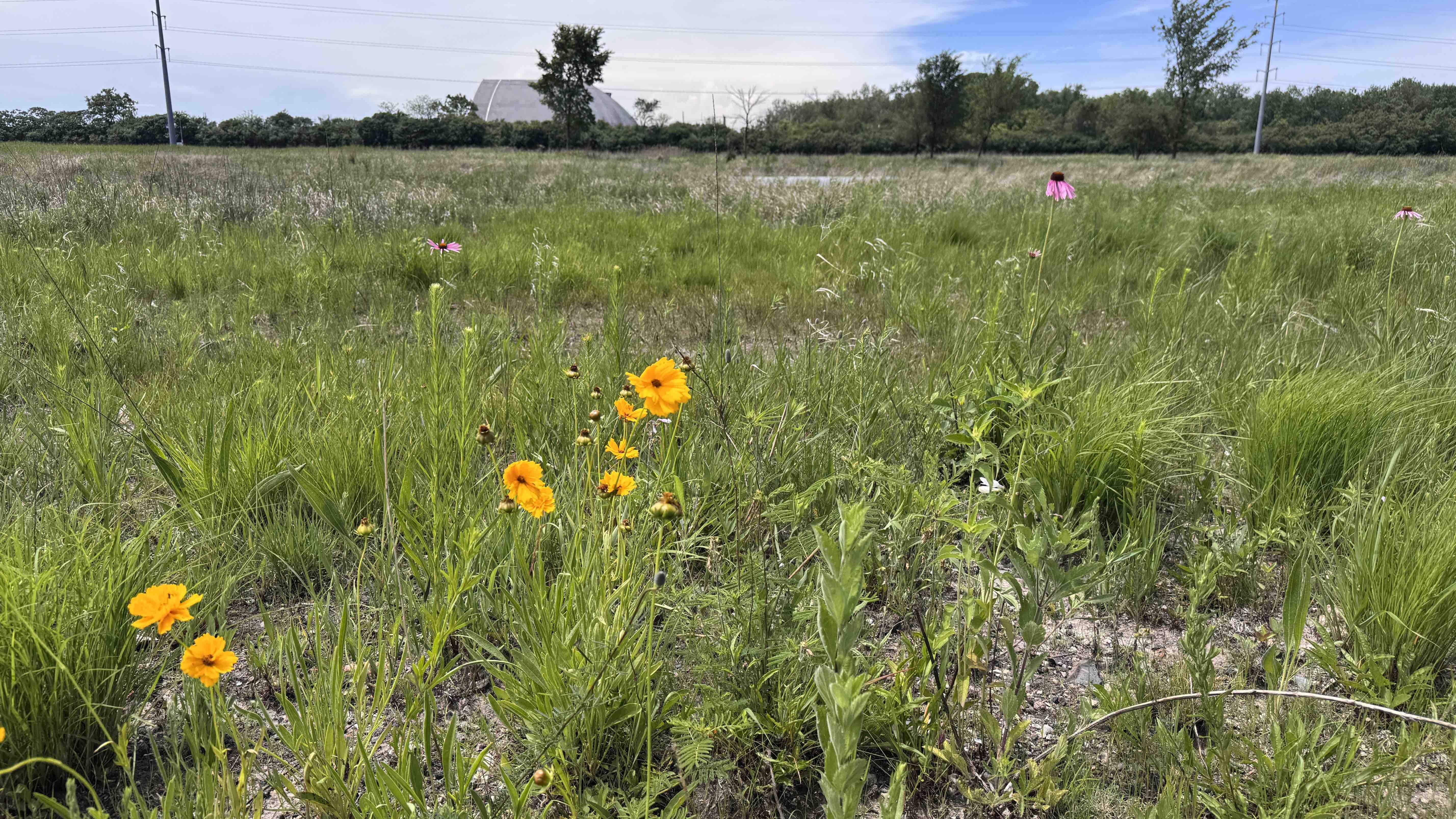 Plants adapted to gravel hill and dolomite prairies have established themselves in the rock-like slag at Marian Byrnes Park. The parks wooded areas indicate places where slag wasn't dumped. (Patty Wetli / WTTW News)
In ecological terms, the slag prairie that’s spontaneously formed at Marian Byrnes is what’s called a “novel ecosystem.”
“This ecosystem doesn’t exist in any textbook. This doesn’t exist in ‘regular’ nature outside of the city,” Umek explained.
The singular beauty on display at Marian Byrnes is now more accessible than ever, thanks to new amenities added by the Park District.
Visitors will find a shade pavilion and picnic tables near the entrance off East 103rd Street, and a boardwalk and overlook at the far opposite end of the park, where people can take in a panoramic view of the entire 140 acres.
“Most of the improvements the last 10 years have really been ecologically focused,” Umek said. “We sometimes hear from people, ‘Nature’s great but what do I do there?’ So now there’s more of a space you can have a picnic, you can read a book — there’s an invitation to be in the space a little bit more.”
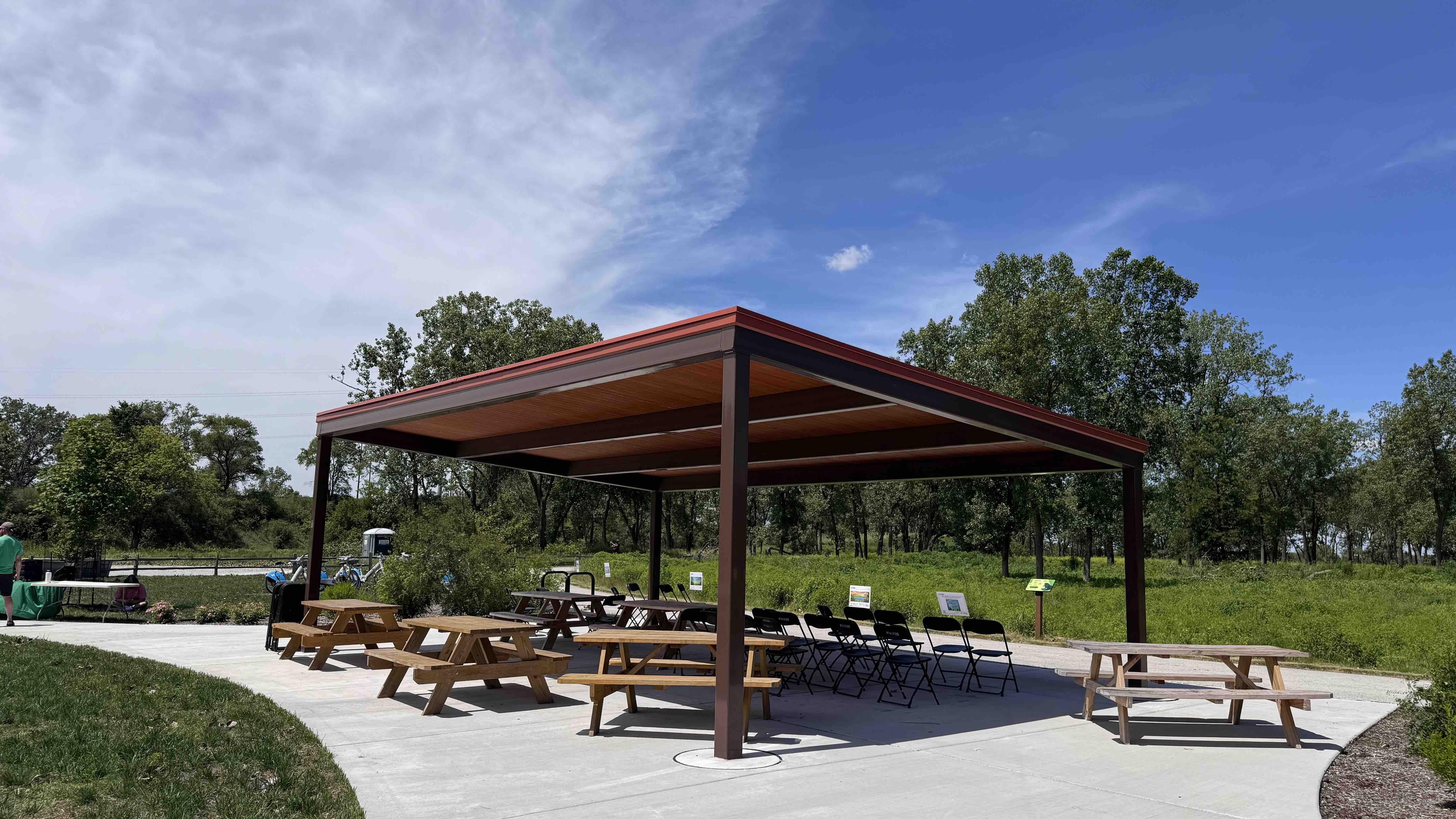 New amenities at Marian Byrnes Park include a shelter and picnic tables, inviting visitors to spend more time at the natural area. (Patty Wetli / WTTW News)
At a recent ribbon-cutting event, community members praised the upgrades, including Ald. Greg Mitchell (7th Ward), a lifelong Jeffery Manor resident.
“To see it get transformed … to see this, this is absolutely beautiful for the neighborhood,” Mitchell said. “And the naming could not be more appropriate.”
Because without activist Marian Byrnes, there’d be no park.
For generations, this patch of wild land — bounded by steel mills, rail lines and expressways — had been a playground for the neighborhood’s kids including, by sheer coincidence, Umek’s in-laws.
“Before I came to the Park District,” Umek said, “I kept hearing all these stories about ‘the prairie,’ this magical place in the back yard of where they grew up, where they would ride their bikes and make forts and wear snakes as necklaces and play with matches and catch tadpoles, and just do things kids do.”
The Chicago Transit Authority looked at this same land, back in the 1970s, and saw the perfect location for a bus barn.
Byrnes, whose home was adjacent to “the prairie,” fought the development, launching the Committee to Protect the Prairie.
“She worked and organized and created community and connected folks,” said Bobbi Wexler, a member of Umek’s extended family. “We would come here to be free, to play, and Marian Byrnes saw the value of that and said, ‘We need to keep that for city kids.’”
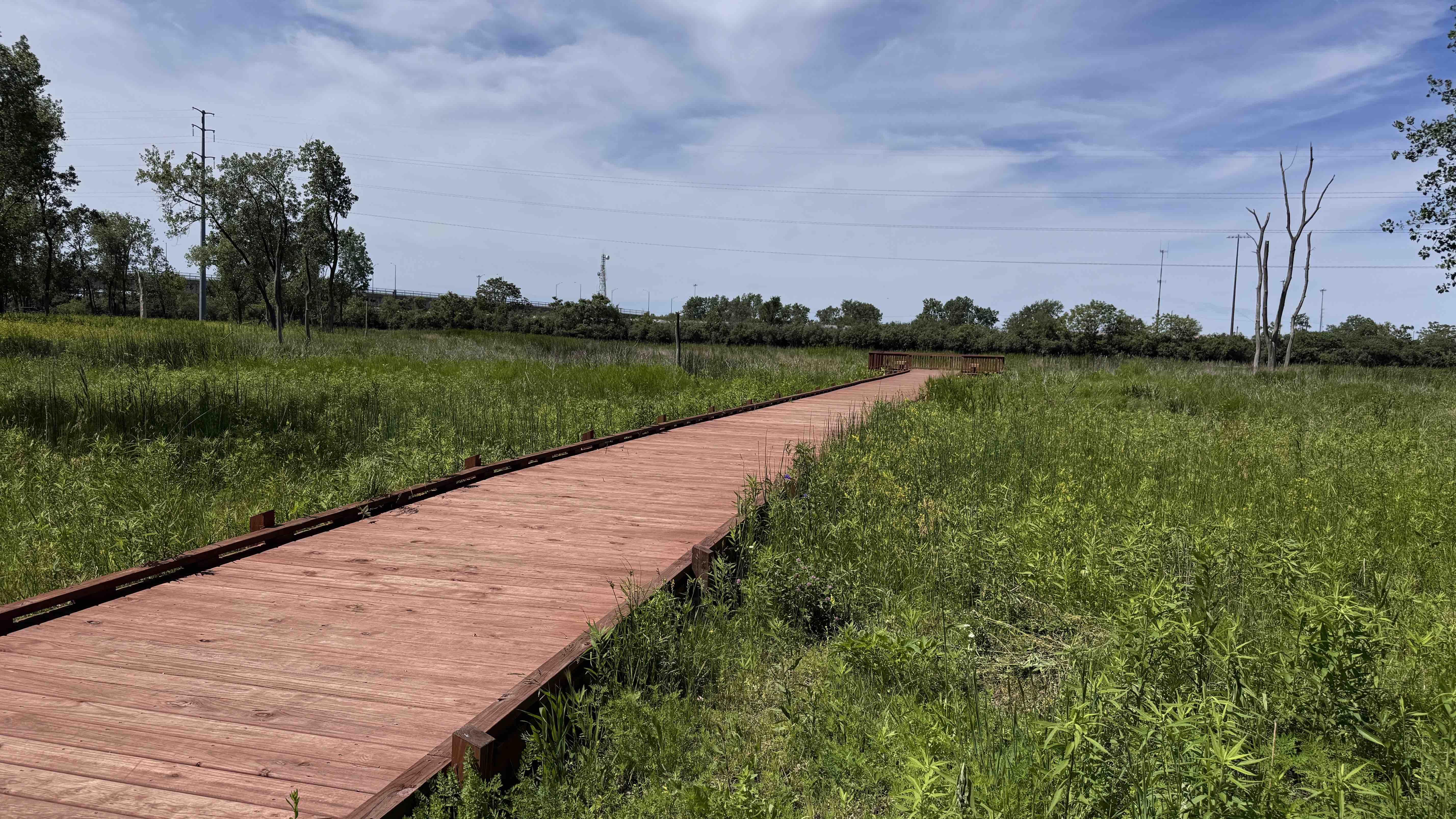 A new boardwalk leads to an overlook of the park's marshland. Native wetland plants popped up here once invasives were removed. (Patty Wetli / WTTW News)
Echelle Mohn, president of the South Deering Manor Community Association, remembers meeting a “very feisty” Byrnes as a child.
“This is her space,” said Mohn. “In terms of a healthy space, quality of life, this is exactly the embodiment of Marian Byrnes and what she advocated for this community.”
Byrnes died at the age of 84 in 2010, one year before the Park District took over management of the park, known at the time as Van Vlissingen Park. In 2018, the park was renamed in her honor.
“I can hear Marian saying, ‘Oh they shouldn’t have done that,‘” said Byrnes’ longtime friend and fellow activist Joann Podkul. “Yes, Marian, they should have.”
Byrnes likely wouldn’t recognize “the prairie” today.
A little league field is gone — even Mitchell, who played ball on the diamonds, admits that was the right call by the Park District — and so are large swaths of invasive species like buckthorn and phragmites, a tall grass.
Most of the areas that are now woodlands, full of cottonwoods that shimmer in the wind, were overrun with buckthorn when Umek began working on the site. To walk from the entrance to the overlook, a distance of a mile or so, would easily take an hour to wade through the thicket, she said.
Harry Thomas, who joined a tour of the park during the ribbon-cutting celebration, said people used to hunt rabbits and deer in that thicket years ago.
“All those trees and bushes? That’s what you saw, other than the steel mill,” Thomas said. “To see it like this, that’s an amazing sight to behold.”
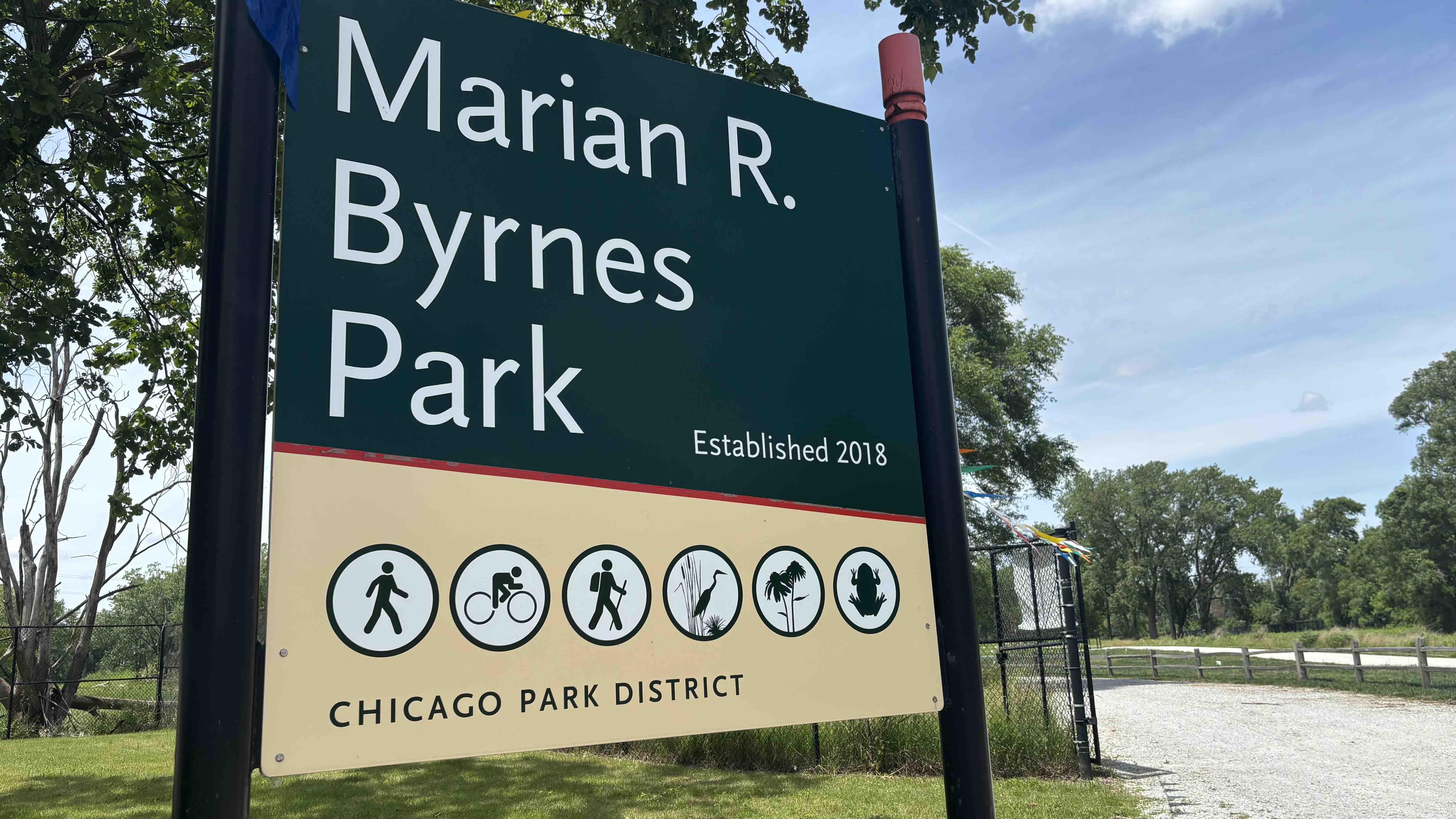 Environmental and community activist Marian Byrnes fought to save this land from development and now the park is named in her honor. (Patty Wetli / WTTW News)
At smaller sites, the Park District might organize groups of volunteers to tackle buckthorn, but due to the size of Marian Byrnes Park and the extent of the invasive shrub’s spread, the district brought in a contractor with heavy equipment to make quicker work of the removal.
Keeping the buckthorn in check is a constant battle, Umek said, and the same goes for phragmites, the aggressive reed that’s the bane of all wetland land managers.
The results of those efforts, though, are tangible.
The wettest area of Marian Byrnes, where researchers come to monitor secretive marsh birds, is bisected by a new boardwalk that’s lined with sedges, grasses, water plantain and horsetail — none of which would be here if phragmites were still present.
“It’s really amazing that once you remove the invasive pressure and give whatever’s in the seed bank a chance, you can see what comes up,” Umek said. “Most of this wasn’t re-introduced by seeds or plugs. A lot of it you can’t buy, I couldn’t get them if I wanted to.”
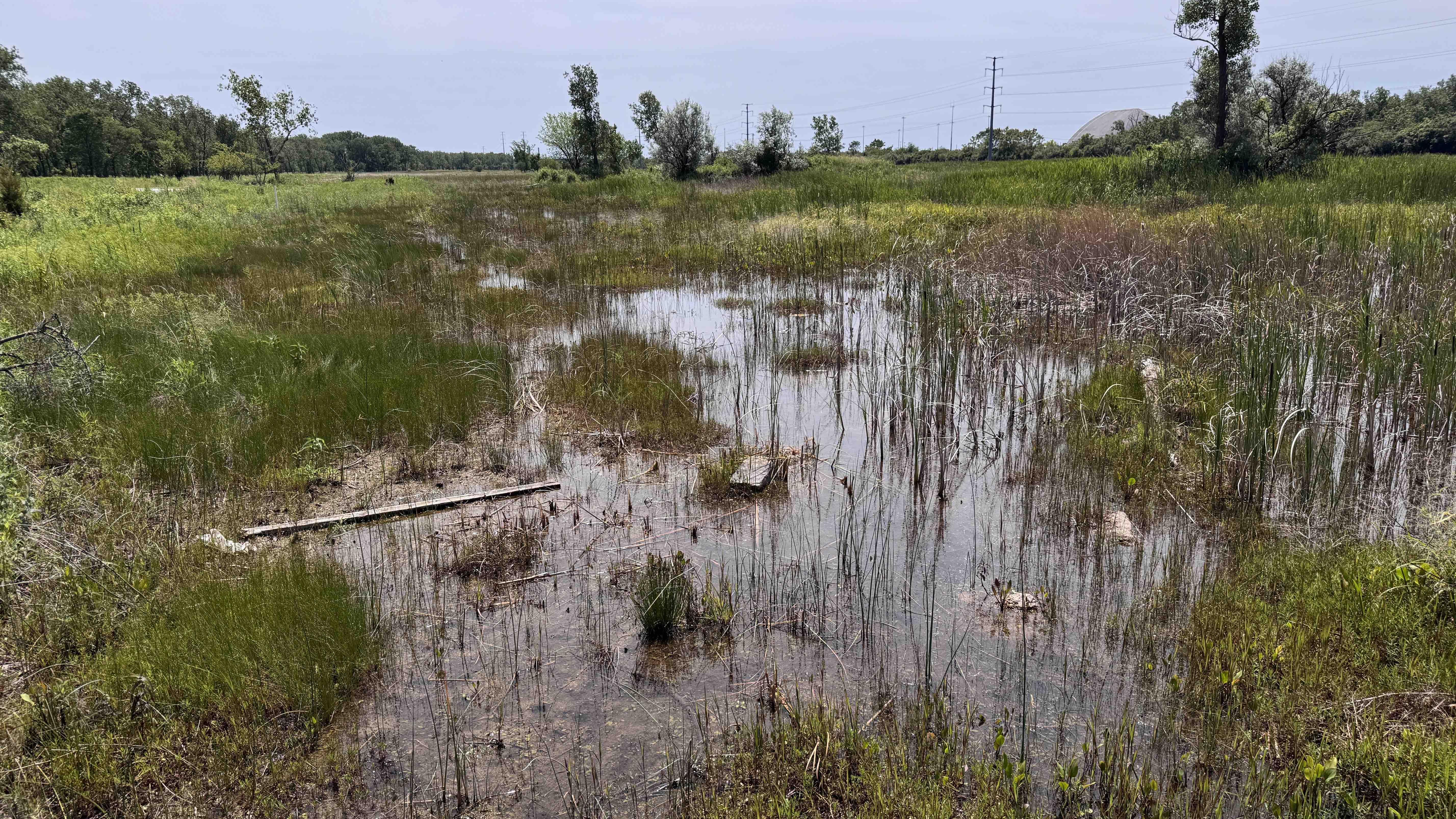 Some of the wetlands at Marian Byrnes Park are ephemereal and some are wet all year. Lauren Umek, ecologist with the Chicago Park District, asked long-time residents to share their memories of the site, which helped her create an ecological history of the land. (Patty Wetli / WTTW News)
Word is spreading about how special a place Marian Byrnes Park is as a natural area.
A couple of years ago, ecologist colleagues of Umek’s were botanizing in the park and came across a sedge species they couldn’t immediately identify — because no one had seen it Illinois since the late 1800s.
“It was considered locally extirpated (a local extinction). And it’s possible that it had been here the whole time, just no one had looked for it,” Umek said. “We’re starting to work with the (Chicago) Botanic Garden to try to see what other plants could be here, that are maybe rare and otherwise their natural habitat could be diminishing.”
Birders have long been aware of the biodiversity at Marian Byrnes but are now beginning to visit the site in larger numbers, according to Edward Warden, president of the Chicago Ornithological Society.
“If you talk to old timers, who were birding back in the ‘50s, ‘60s, whatever, they’ll tell you that they used to go to this place called the Calumet cinder flats. It was one of the best places in Chicago to see shore birds — this slag dumping ground,” Warden said. “And it took me a long time to figure this out but … the Calumet cinder flats is here. This (Marian Byrnes Park) is the place. So even back then, when there was no park, when it was an active dumping site, it was still a magnet for bird life.”
The park’s mix of habitats — woodland, prairie and wetland — makes for a diversity of species, be it plants or birds, not typically found in the same place.
“This is one of my favorite spots in the whole city,” Warden said. “I remember just looking at it and going, ‘Holy cow, more people need to know this is here.’”
For Umek, the park is a sign of nature’s resilience and ability to improvise.
“Nature is still making it through and dealing with the conditions it has,” she said, “in a really beautiful way.”
Contact Patty Wetli: [email protected]