Politics
CPD Officers Can Turn Off Cameras While Being Questioned About Shootings, Federal Judge Rules
 (WTTW News)
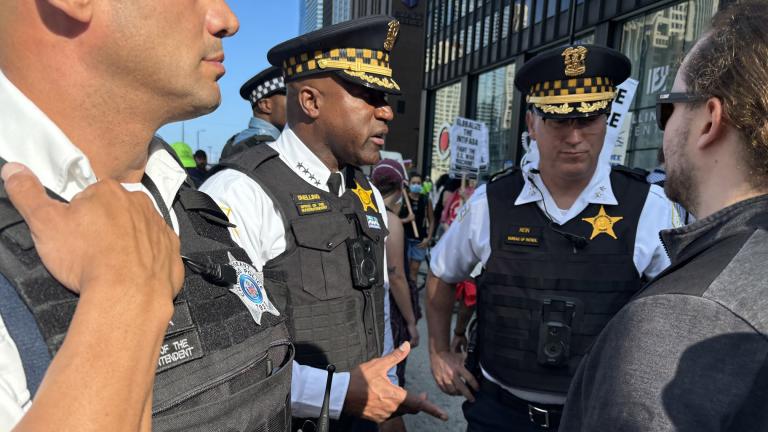
Chicago police officers can turn off their body-worn cameras while being questioned by their supervisor immediately after they shoot a member of the public, the federal judge overseeing efforts to reform the Chicago Police Department ruled Friday.
However, U.S. District Court Judge Rebecca Pallmeyer ruled that officers must have their cameras on if a deputy chief asks them to answer additional questions about the shooting.
Illinois Attorney General Kwame Raoul’s office had urged Rebecca Pallmeyer to order CPD officers to keep their cameras on throughout the aftermath of a shooting. CPD leaders and city lawyers asked the judge overseeing the consent decree, the federal court order requiring CPD to change the way it trains, supervises and disciplines officers, to allow officers to keep their cameras off, as allowed by current policy.
After months of negotiations between the Office of the Attorney General and CPD failed to resolve the deadlock, it was up to Pallmeyer to resolve the issue.
Pallmeyer’s ruling is the first time she has been forced to intervene in a dispute between the department, led by Mayor Brandon Johnson’s hand-picked top cop, Supt. Larry Snelling, and Raoul, the state’s top law enforcement officer. Both Johnson and the attorney general are members of the Democratic Party.
Representatives for Raoul and Snelling did not immediately respond to a request for comment from WTTW News.
A spokesperson for Corporation Counsel Mary Richardson-Lowry thanked Pallmeyer for her “careful consideration of these complex issues.”
“This ruling affirms the city’s commitment to transparency and accountability, while also recognizing the importance of protecting the rights and well-being of officers involved in traumatic incidents,” according to the statement.
CPD officers so far this year have shot 19 people, killing eight, more than in all of last year, records show. In 2024, CPD officers shot 12 people, killing six, records show.
A coalition of police reform groups and the Office of the Attorney General sued the city in 2017 after a probe by the U.S. Department of Justice found CPD had engaged in a pattern of unconstitutional use of force that led to the murder of Laquan McDonald by former Officer Jason Van Dyke.
Former Inspector General Joseph Ferguson found 16 CPD officers engaged in what he called an elaborate cover-up of the murder. Three were charged criminally, but acquitted.
After a police officer shoots an individual, they must answer seven specific questions during a “public safety briefing” that focuses “on immediate safety concerns,” including if the officer has any information about anyone who is “armed or present a public safety risk,” according to Pallmeyer’s order.
CPD policy orders both officers and the supervisor involved to deactivate their body-worn cameras before that briefing takes place. After it is complete, the supervisor takes custody of the officer’s body-worn camera and turns his camera back on, according to department policy.
“The Public Safety Briefing is an internal conversation between police officers; it is attenuated from an officer’s typical job responsibilities and presents little genuine risk of interaction with the public” and does not need to be recorded, Pallmeyer wrote.
The public safety briefing is no different than when “two police detectives tasked with solving an armed robbery sit down in a room at the police station and sift through all the physical evidence collected from the scene of the crime and re-read the written records of every statement given to police by witnesses,” Pallmeyer wrote.
The attorney general urged Pallmeyer to order the public safety briefing to be recorded because it is distinctly different than a typical police investigation and could at least create the appearance that officers are colluding after the fact to concoct a false version of what happened.
“This is a matter of genuine concern,” Pallmeyer wrote, but does not alter her conclusion that neither state law nor the consent decree requires the public safety briefing to be recorded.
CPD policy also requires a deputy chief to report to the scene and begin an investigation. As part of that investigation, the deputy chief can conduct a “walkthrough” with the officers involved in the shooting if they deem it necessary.
While officers cannot decline to participate in the walkthrough, nothing they say can be used against them during a criminal proceeding, according to CPD policy. However, if an officer refuses an order to participate in the walkthrough, they can face discipline, according to CPD policy.
While state law does not require the walkthrough to be recorded, the consent decree does, Pallmeyer ruled.
“The briefing is designed to ensure public safety by asking the involved officer urgent questions about injuries, threats to the public, and related time-sensitive matters,” Pallmeyer wrote. “The walkthrough, on the other hand, does not involve these same exigencies; the purpose is not simply to ensure that the scene is safe, but rather to begin collecting a record for an internal investigation.”
Pallmeyer’s split ruling is likely to please neither the attorney general nor the city.
Lawyers for the city warned Pallmeyer that the union representing Chicago police officers will likely argue the walkthrough is now part of the disciplinary proceedings, allowing officers to request a delay before answering any questions and request an attorney be present.
“That would cause critical delays, undermining the very purpose of the public safety briefing and the walkthrough,” according to lawyers for the city and CPD.
WTTW News coverage of policing and police reform is supported by The Joyce Foundation.
Contact Heather Cherone: @HeatherCherone | (773) 569-1863 | [email protected]