Science & Nature
Snowy Owls Delighting Birders on Chicago’s Lakefront
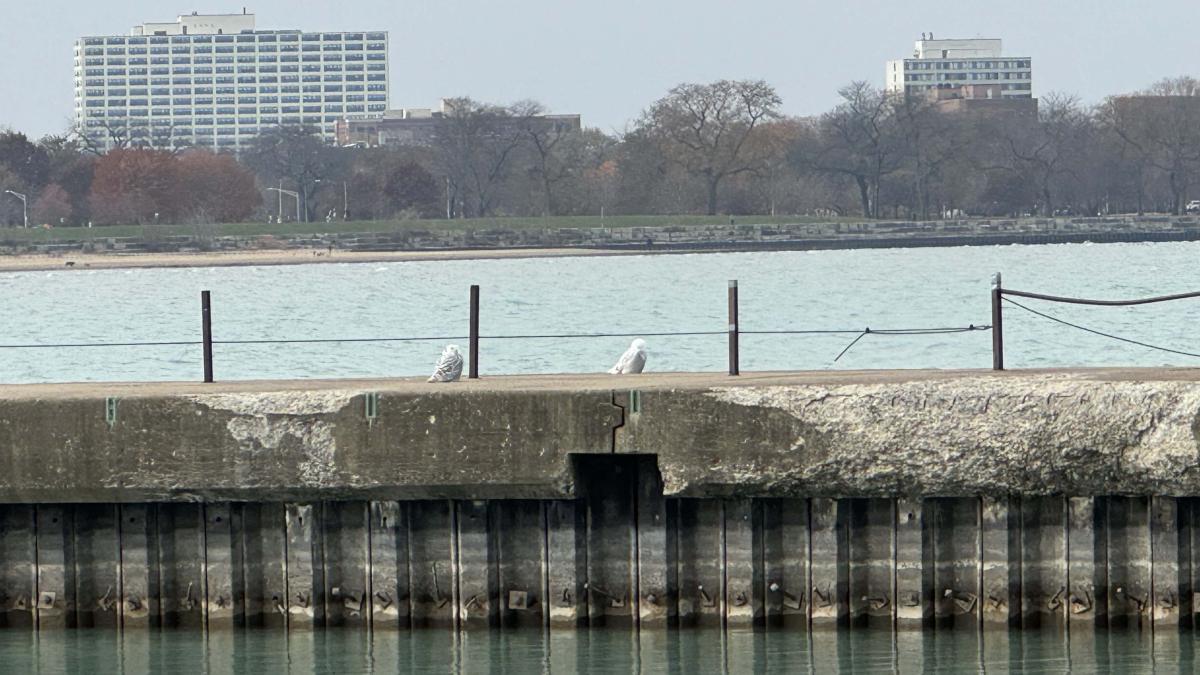 Realistic view of snowy owls at Montrose Beach, seen with max iPhone zoom, without binoculars or telephoto lens, on Nov. 21, 2025. (Patty Wetli / WTTW News)
John Shirey stood on the pier at Montrose Beach, bundled up in layers against the chilly wind blowing off Lake Michigan. Friday was his fourth day in a row keeping a sort of vigil.
Two snowy owls had arrived and were lingering at Montrose.
“I’ve been waiting 12 years to see this,” said Shirey. “They’re so beautiful. It’s one of the greatest ‘lifers’ ever.” (“Lifer” is a term birders use to describe the first time they spot a certain species.)
Snowy owls breed in the high Arctic and some of them even spend the winter there. Others dip into Canada and the northern U.S. between November and March searching for treeless areas that mirror the barren tundra of their breeding grounds — places like shorelines, open fields and even airports.
They’re considered “irruptive” in the Midwest, meaning some years they show up in winter and some years they don’t. This unpredictability is one of the reasons a snowy owl sighting carries such a “once in a lifetime” sense of excitement.
Shirey was joined Friday afternoon by a small group of his fellow enthusiasts, who came armed with binoculars and telephoto lenses in order to gain a closeup view of the birds while maintaining a healthy distance.
Emily Voveris, a Chicago transplant from Arizona, sat on the cold concrete pier next to Heidi Paul, who had traveled in from Lowell, Indiana. The two, complete strangers, were perched directly opposite the arctic visitors.
“My gosh, they come from so far,” marveled Paul. “It’s so rare to see one.”
While it was Paul’s second-ever snowy sighting, these were the first owls, period, Voveris had observed.
“I’ve been birding less than a year,” she said. “Every experience is new.”
Video: Birders gather to see a pair of snowy owls at Montrose Beach on Nov. 21, 2025. (Patty Wetli / WTTW News)
Even as a newcomer, Voveris was aware of the debate surrounding snowy sightings, and whether it’s appropriate to share photos or information about their locations. The concern, among some factions of the birding community, is that the charismatic owls will draw crowds that will in turn harass the birds and cause them stress.
It’s a fine line, Voveris conceded, but in this instance, keeping the owls’ whereabouts was moot, given that they were out in the wide open, on a beach where anyone could see them.
“They look pretty chill,” she said of the birds, which were hunkered down near the tip of the pier.
Rather than policing interactions online, Voveris said, “the respect of people when they’re here is what’s important.”
The cluster of birders at Montrose were all quietly observing the birds from afar and keeping relatively still.
Shirey had taken up the cause of alerting cyclists and joggers on the pier to the owls’ presence, explaining the birds’ significance, and asking folks to turn back rather than completing their circuit. Many obliged, but some continued on, he said, and one jogger flushed one of the owls three times.
At the end of the day, “it’s a public pier,” Shirey said.
No one was sure how long the owls would stick around, and one of the pair had already disappeared for a couple of days before returning to Montrose, he said.
But one thing was certain, the birds’ presence was a gift not to be taken for granted.
As Shirey summed it up: “This is amazing.”
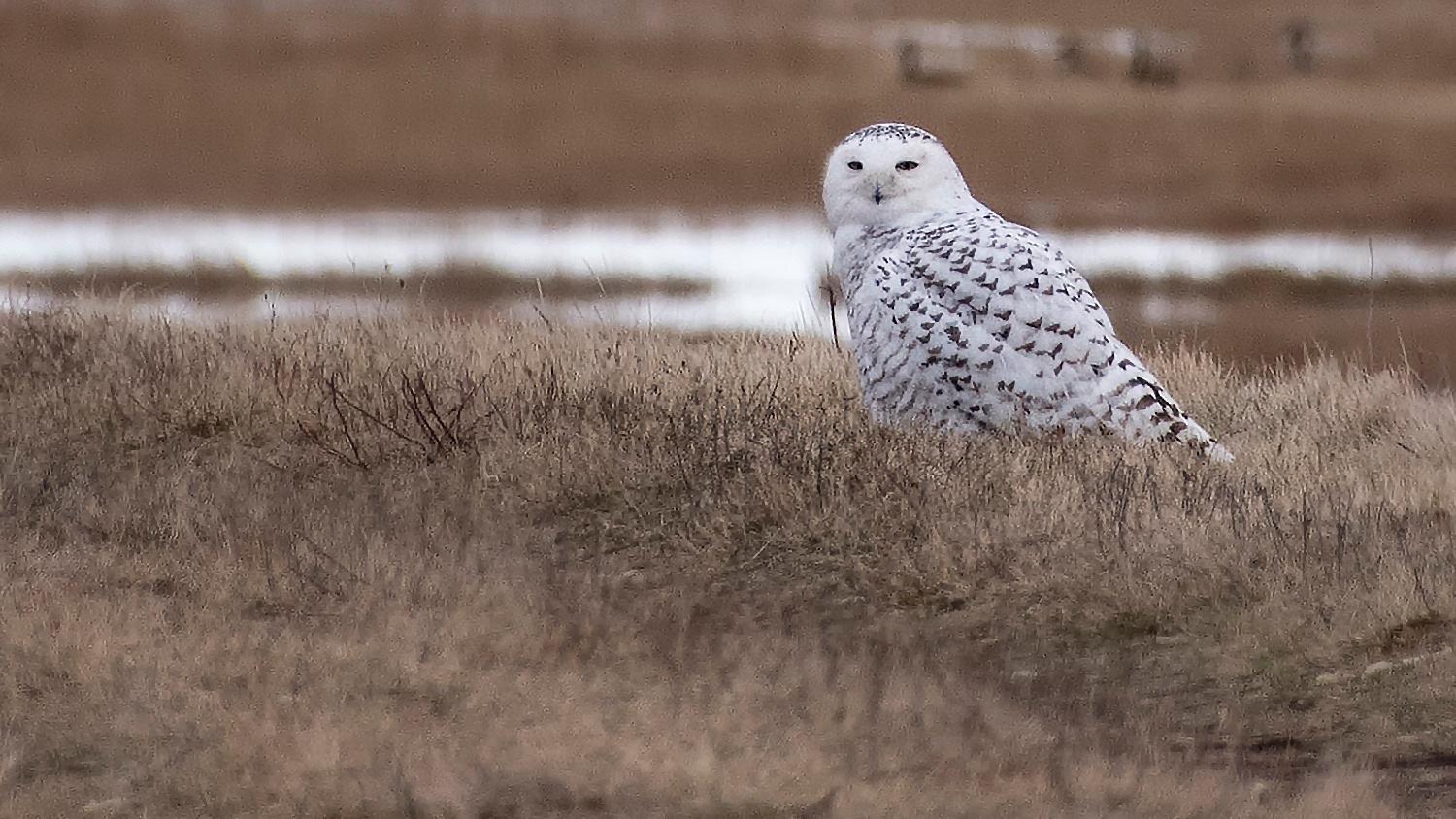 The snowy owls at Montrose are flecked with brown, like the one seen above. Only mature adult males are pure white. Females and juveniles of both sexes have brown and white plumage. (U.S. Fish and Wildlife Service)
Contact Patty Wetli: [email protected]