Politics
Program Allowing CPD Officers to Directly File Felony Gun Charges to Expand Citywide, Top Prosecutor Announces
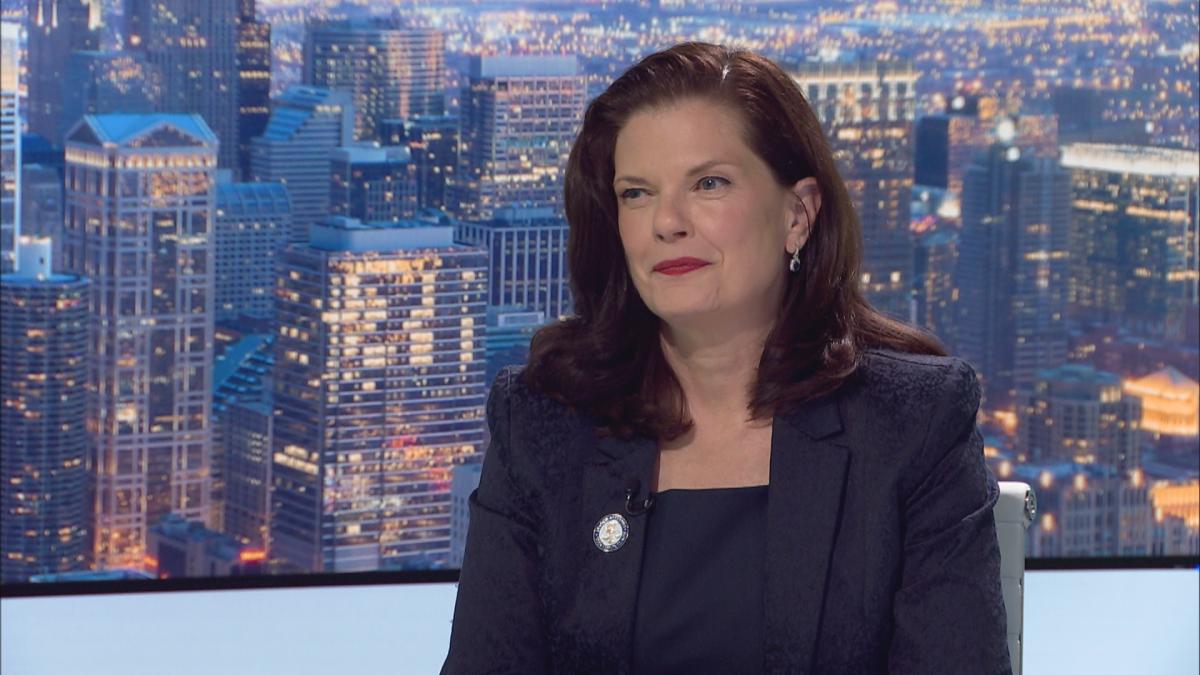 Cook County State’s Attorney Eileen O’Neill Burke appears on “Chicago Tonight” on May 27, 2025. (WTTW News)
Chicago police officers will be allowed to file felony gun charges without first getting approval from a prosecutor throughout the city, Cook County State’s Attorney Eileen O’Neill Burke announced Friday.
The change allows Chicago police officers to charge those arrested with unlawful possession of a weapon, unlawful possession of a weapon by a felon and aggravated unlawful possession of a weapon — which are felonies — without getting the approval of an assistant state’s attorney after a CPD lieutenant signs off. The arrests must have been captured on officers’ body-worn cameras, according to the guidelines.
The program has the support of Mayor Brandon Johnson and Chicago Police Supt. Larry Snelling.
The Felony Review Bypass Pilot Program, which launched in January in the South Side’s Englewood (7th) Police District and expanded to the Calumet (5th) Police District in April, was “an unqualified success,” O’Neill Burke said in a statement that renamed the program Expedited Felony Review.
“The goal of this initiative is straightforward: to get police officers back on their beats, not tied down at their desk waiting on a phone call,” O’Neill Burke said. “It also allows our office to dedicate prosecutorial time and attention to more complex cases, where evidence needs to be reviewed in person and victims and witnesses need to be spoken to as quickly as possible.”
Cook County Public Defender Sharone Mitchell Jr. said he opposes any expansion of the felony bypass review program, saying it “runs a significant risk of unnecessarily involving people in the criminal legal system.”
“Chicago police have a long history of misconduct connected with the types of traffic stops that usually initiate these nonviolent possession charges, including racial profiling and conducting unconstitutional searches,” Mitchell said, adding that officers “have an obvious incentive to bring charges in cases whether there is evidence to support them or not.”
Officers assigned to the Englewood District used the pilot program to charge 95 people with gun possession since January, according to data provided to WTTW News by the State’s Attorney’s Office.
In the Calumet Police District, officers charged 51 people with gun possession since April, according to the State’s Attorney’s Office.
Of the 123 cases that have been reviewed, one case did not result in an indictment, or a finding of probable cause by a judge, according to the State’s Attorney’s Office.
Eighteen cases are pending, three cases have not yet been charged, and two cases were reduced to misdemeanor complaints, according to the State’s Attorney’s Office.
Eighteen people have pleaded guilty to charges brought as part of the pilot program and one was referred to the Restorative Justice Community Courts, according to the State’s Attorney’s Office.
That data is not publicly available and is not updated regularly.
“This program strengthens safety in our city by getting our officers back on the street faster, while making the process to hold gun possession offenders accountable (and) more efficient,” Snelling said in a statement released by the State’s Attorney’s Office.
More than 85% of the residents of the two police districts where the pilot program operated are Black, according to city data.
O’Neill Burke made no changes to the pilot program after a coalition of 136 organizations and people, including the American Civil Liberties Union of Illinois, the Chicago Appleseed Center for Fair Courts, the Better Government Association and the Rainbow PUSH Coalition, sent her a letter in May urging her to halt the program.
“It undermines fundamental principles of equal justice and due process, erodes public trust, and poses serious risks to communities who are already overpoliced,” according to the letter. “Lack of independent review at this stage increases the risk of unconstitutional arrests being taken to court and shaky legal cases proceeding to prosecution, and it undermines accountability and trust within the legal system.”
The number of homicides in Chicago dropped 30% in 2025, as compared with the same period in 2024, according to Chicago police data. The number of shootings is also down 36%, according to police data.
WTTW News coverage of policing and police reform is supported by The Joyce Foundation.
Contact Heather Cherone: @HeatherCherone | (773) 569-1863 | [email protected]