Politics
Mayor Brandon Johnson Reduces Corporate Tax Hike Proposal as Crucial Votes Loom
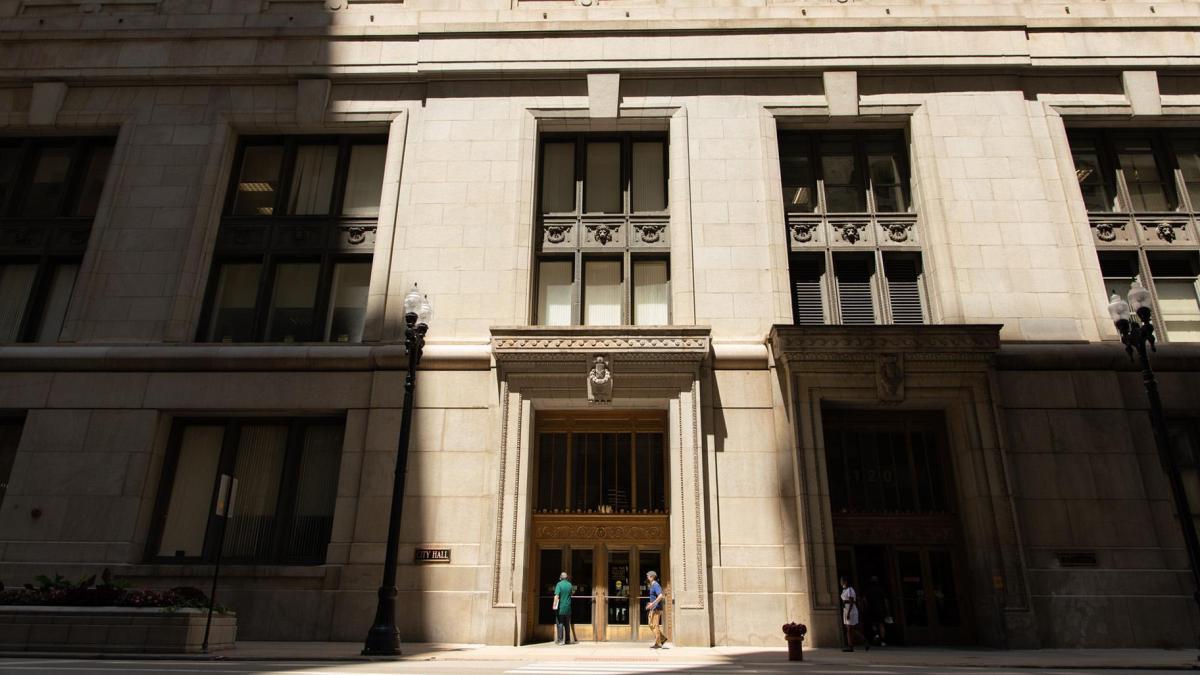 (Michael Izquierdo / WTTW News)
Mayor Brandon Johnson revised his proposed spending plan for 2026 to reduce his proposed corporate tax hike to spare companies with fewer than 200 employees, as officials scheduled a pair of crucial votes for Monday.
The current proposed budget would impose a monthly $21 per employee tax on companies with 200 or more employees to generate $82 million to fund violence prevention and youth employment programs.
Originally, the so-called head tax would have applied to businesses with more than 100 employees to generate $100 million.
Johnson has steadfastly campaigned for the tax, noting that business leaders have told him his highest priority should be public safety. Johnson said again Friday it only makes sense for Chicago’s largest companies to “put more skin in the game” in order to allow the city to “double down” on efforts that are working to reduce violent crime.
On Friday, Johnson told reporters it was time for members of the City Council who don’t like his spending plan to make the case for their own budget proposal.
“If alders have other ideas, it is time to bring them forward so we can debate them,” Johnson said.
The mayor has also downplayed the size of the head tax, noting that it is the equivalent of big firms buying their employees lunch once or twice a month.
That proposal immediately triggered outrage in the city’s business community, which blasted the head tax as a job killer. The change to apply to just 1.5% of Chicago businesses instead of 3% of city firms was unlikely to mute that opposition.
“The numbers don’t add up,” Ald. Matt O’Shea (19th Ward) said. “We need to go back to the drawing board.”
To make up the difference, the revised budget proposal would boost the tax levied on software licenses, cloud services and other digital goods from 11% to 15% to generate $416 million, according to the proposal. The mayor has touted that as a tax hike on “big tech.”
“That sends a message that we are not a good place to do business,” Ald. Samantha Nugent (39th Ward) said.
Johnson’s $16.6 billion proposed spending plan for 2026, which eliminates a $1.19 billion projected shortfall, is set to face its first test Monday, when it is set to be considered by the City Council’s Budget and Finance committees.
“I’m nowhere near ready to vote on this on Monday,” said Ald. Nicole Lee (11th Ward) as 12 hours of budget hearings ended just before 9 p.m. Thursday.
In all, the revised spending plan imposes approximately $623 million in new taxes on the wealthiest Chicagoans and largest firms as part of what Johnson has said was an effort to blunt cuts imposed by the Trump administration while avoiding drastic cuts in city services and thousands of layoffs.
Officials also plan to close a $146 million deficit the city was facing this year by declaring $1 billion in property taxes earmarked to fight blight to be “surplus,” sending more than $550 million to Chicago Public Schools. CPS will use those funds to make a required pension payment, easing the city’s financial crunch, officials said.
Johnson’s proposal to declare that $1 billion “surplus” received a cool reception from several alderpeople, who warned that could thwart badly needed economic development projects on the South and West sides.
Budget Director Annette Guzman said officials from her office are working with alderpeople to ensure that none of their projects are delayed, but the amount of TIF funds declared to be surplus is unchanged.
The city will borrow $283 million to cover the massive cost of resolving police misconduct lawsuits, Chief Financial Officer Jill Jaworski said. That debt will be paid off during the next five years, Jaworski said.
Ten months into the year, Chicago taxpayers have spent at least $267.8 million to resolve nearly two and a half dozen lawsuits, exceeding the city’s annual budget to resolve lawsuits alleging police misconduct by more than $185 million, city records show.
In 2026, taxpayers will pay an additional $90 million to 180 people who spent a combined nearly 200 years in prison after being wrongfully convicted based on what they allege was fabricated evidence gathered by former Chicago Police Sgt. Ronald Watts, who was convicted in 2013 of taking bribes, and other officers.
Despite that, the 2026 budget sets aside just $82.5 million to cover the cost of resolving police misconduct lawsuits.
It will cost the city at least $20 million in interest to borrow $90 million to pay those who sued Watts, Jaworski said.
The city will also borrow $166 million to pay Chicago firefighters and paramedics what they are owed after working without a contract for four years. That debt will be paid off over three years and cost the city $30 million in interest, Jaworski said.
In all, the spending plan proposes borrowing a total of $1.8 billion to cover those expenses and fund the city’s infrastructure program for 2026 and 2027, which includes $144.6 million to repair bridges and viaducts, $174 million for street resurfacing and $173 million to replace lead service lines.
O’Shea called that amount of borrowing “crushing.”
Chicago had $10.6 billion in outstanding debt backed by the city’s property tax and sales tax receipts at the end of 2024, according to the city’s 2024 Annual Comprehensive Financial Report.
The revised spending plan would also hike the congestion surcharge for all rides to and from an expanded area downtown to generate $17 million. Johnson’s original plan would have generated $65.4 million, but faced intense opposition.
The budget still calls for the city to impose a local tax on online wagers to generate $26.2 million, but would no longer seek to tax the sale of intoxicating hemp products.
The agreement to reopen the federal government after a shutdown of nearly a month and a half bans the sale of products that contain less than 0.3% delta-9 tetrahydrocannabinol, the main intoxicating compound in cannabis better known as THC, in one year.
Guzman said that legislation was “disappointing” and city officials were still analyzing what it means for intoxicating hemp businesses in Chicago.
S&P, one of a handful of major ratings agencies, revised its credit rating outlook for Chicago from stable to negative earlier this month.
The ratings agency was alarmed by Johnson’s decision to make an additional payment of just $120.8 million to the city’s four underfunded pension funds. That additional payment is more than 55% smaller than the additional payment made in 2025, records show.
In August, the city had planned to make an additional payment to the city’s four pension funds of $219.4 million, records show.
The city now plans to make an additional pension payment of $130 million in 2026, Jaworski said.
The city faces a nearly $2.76 billion pension bill in 2026 in order to comply with a state law that requires two of Chicago’s pension funds be funded at a 90% level by 2055 and the other two by 2058.
Note: This article was published Nov. 13, 2025, and updated with comment from Mayor Brandon Johnson on Nov. 14, 2025.
Contact Heather Cherone: @HeatherCherone | (773) 569-1863 | [email protected]